Was Ayatollah Ali Khamenei Really Pro-India? A Complex Relationship Explained
Synopsis
Khamenei’s remarks on Kashmir and CAA have sparked debate over foreign interference. India called them unacceptable but responded cautiously to protect strategic ties with Iran, including energy interests.
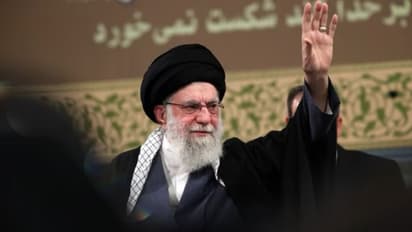
Recent remarks by Ayatollah Ali Khamenei have stirred fresh debate in India, after he commented on sensitive domestic issues including Kashmir, the Citizenship Amendment Act (CAA), and the Delhi riots. His statements, perceived by many as interference in India’s internal affairs, have reignited discussions around diplomatic boundaries and geopolitical messaging.
Khamenei’s comments referenced the situation in Kashmir following the abrogation of Article 370, as well as concerns over minority rights in India. He also alluded to the protests and violence linked to the CAA and the 2020 Delhi riots. While he framed his remarks within a broader narrative of justice and human rights, Indian observers have viewed them with caution, noting that such statements from foreign leaders can complicate bilateral relations.
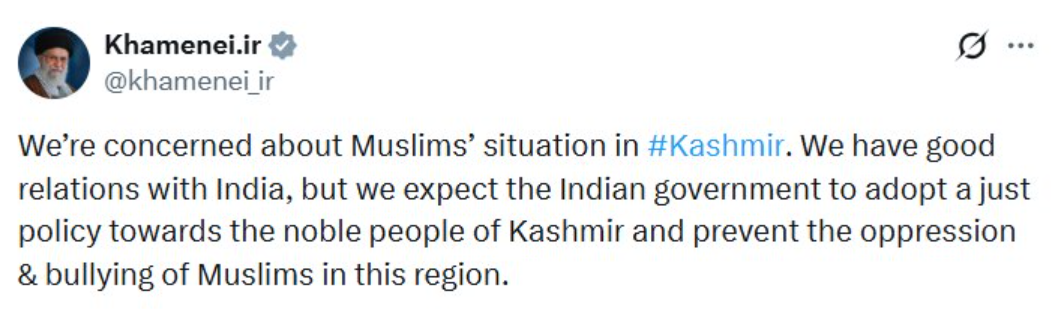
India has traditionally maintained that issues like Kashmir are strictly internal matters and has consistently rejected external commentary. The Indian government’s approach in such situations has been measured, often avoiding direct escalation while reiterating its sovereignty. Analysts believe this calibrated response reflects India’s strategic balancing act—preserving diplomatic ties with countries like Iran while firmly opposing perceived interference.

The timing of Khamenei’s remarks is also significant. They come amid heightened geopolitical tensions in West Asia and shifting alliances involving Iran, the United States, and regional powers. India, which maintains strong ties with both Iran and Western nations, is particularly sensitive to such developments. Its interests in Iran include energy security and strategic projects like the Chabahar Port, making it important to avoid unnecessary diplomatic friction.
Experts suggest that Khamenei’s statements may be aimed at a broader international audience, rather than India alone. By highlighting issues related to Muslim communities globally, Iran often positions itself as a defender of Islamic causes. However, such positioning can sometimes clash with the domestic policies of other nations, leading to diplomatic discomfort.
Public reaction within India has been mixed. While some groups have echoed concerns about minority rights, others have strongly criticized the remarks as unwarranted interference. Social media platforms have amplified these divisions, reflecting the complexity of public opinion on both foreign policy and domestic governance.
Ultimately, the episode underscores the delicate nature of international diplomacy in an interconnected world. As global leaders increasingly comment on each other’s internal affairs, countries like India are tasked with responding in ways that protect national interests without escalating tensions. The situation also highlights how domestic policies can have international resonance, influencing perceptions and diplomatic discourse far beyond national borders.
Stay updated with the Breaking News Today and Latest News from across India and around the world. Get real-time updates, in-depth analysis, and comprehensive coverage of India News, World News, Indian Defence News, Kerala News, and Karnataka News. From politics to current affairs, follow every major story as it unfolds. IMD cities weather forecastsRain Cyclone Asianet News Official App