Uttarakhand's new Science Policy to steer state towards new economy
Synopsis
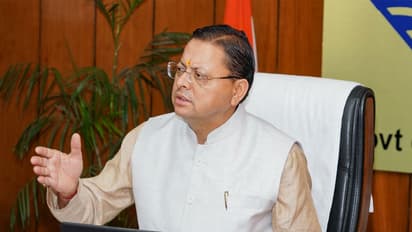
Uttarakhand CM Pushkar Singh Dhami launched the Science, Technology and Innovation Policy-2026. It aims to create a knowledge-driven economy by integrating science into daily life, governance, and addressing local needs like disaster management.
Uttarakhand Chief Minister Pushkar Singh Dhami on Wednesday said that the Uttarakhand Science, Technology and Innovation Policy-2026 is a landmark document that will steer the state towards a knowledge-driven, research-oriented and innovation-based economy.
He stated that the objective is not merely to expand science and technology, but to integrate them with everyday life, good governance, disaster management, education, agriculture, healthcare and employment generation. The policy will provide a common platform for youth, researchers, startups, scientists and grassroots innovators. It will also accelerate the vision of a self-reliant and developed Uttarakhand by promoting the convergence of traditional knowledge and modern technology.
Policy Aims and Vision
In line with the announcement made by Chief Minister Pushkar Singh Dhami, the Department of Information Technology, Good Governance, and Science & Technology has officially released the Uttarakhand Science, Technology and Innovation Policy-2026. The policy aims to promote science and technology-led development and innovation in the state while establishing Uttarakhand as a major hub for science, technology and information technology. The new policy emphasises encouraging research, innovation and scientific thinking, while ensuring the effective use of science and technology to address local needs and challenges. It seeks to advance sustainable development by balancing economic growth, social inclusion and environmental sustainability.
Implementation and Governance
For effective implementation, a state-level advisory body will be constituted to oversee policy execution, monitoring and evaluation. In addition, a decentralised institutional framework will be developed to strengthen research and innovation activities across the state. Under the policy, a comprehensive collaborative mechanism will be established to strengthen cooperation among stakeholders at the state, regional and national levels. A State-Level Coordination Committee will also be formed to facilitate the establishment of Science, Technology and Innovation (STI) units across government departments, public sector undertakings, private companies and startups.
Promoting Research and Accessibility
The policy will ensure easy access to scientific information, research findings and resources for all stakeholders. Data generated through publicly funded research projects will be digitally archived and made securely accessible to all stakeholders. Researchers and institutions will also benefit from access to scientific journals and archives through the Government of India's "One Nation, One Subscription" initiative. To realize the vision of "Atmanirbhar Uttarakhand," special emphasis will be placed on the indigenization and localization of technology. The policy envisages the development of local technological solutions tailored to the state's specific needs and challenges while integrating traditional knowledge systems with modern research and innovation.
Education and Capacity Building
It also focuses on strengthening science, technology and innovation education through the development of necessary infrastructure in educational institutions. Capacity-building programmes will be conducted for students, researchers and teachers. In line with the National Education Policy, state-of-the-art Teaching-Learning Centres will be established to enhance teachers' skills and capabilities.
Public Engagement and Emerging Technologies
To promote science communication and public participation, efforts will be made to establish Science Cities, Science Centres, Planetariums, Atal Tinkering Labs, Artificial Intelligence (AI) Laboratories, Astronomy Observation Associations and Centres of Excellence across the state. The policy gives special importance to emerging technologies such as Artificial Intelligence (AI), Blockchain, Robotics, Drones, Augmented Reality (AR), Virtual Reality (VR) and Mixed Reality (MR). It also seeks to encourage research and development in areas including space technology, biotechnology, nanotechnology, digital technologies, food-water-energy security and disaster management.
Fostering Collaboration and Innovation
To strengthen collaboration between grassroots innovators, scientists and technical experts, workshops, joint research projects, fellowships and scholarships will be introduced. A dedicated engagement portal for the state's scientific community will also be developed. Furthermore, a Science, Technology and Innovation Observatory will be established in Uttarakhand as a centralised digital repository containing information on all schemes, programmes, grants and incentives. Modern online learning platforms will be developed to support research and innovation, while innovators will be provided assistance with patents, copyrights, intellectual property rights and other legal processes.
The Uttarakhand Science, Technology and Innovation Policy-2026 is expected to serve as a major catalyst for science-led development, research, innovation and technological self-reliance in the state, contributing significantly to the creation of a developed and empowered Uttarakhand.
Implementation and Addressing State Challenges
The Uttarakhand State Council for Science and Technology (UCOST) is functioning as the nodal agency for science promotion in the state. According to UCOST Director General Prof. Durgesh Pant, Uttarakhand is currently facing several challenges, including natural disasters, climate change and increasing pressure on the Himalayan ecosystem. The new policy will strengthen coordination among science and technology institutions, research organisations, academia, industries and innovators to address these challenges effectively. Prof. Pant further stated that the policy will ensure inclusive and equitable participation in science and innovation by providing equal opportunities to women, residents of rural and remote areas, marginalized communities and persons with disabilities. (ANI)
(Except for the headline, this story has not been edited by Asianet Newsable English staff and is published from a syndicated feed.)Stay updated with the Breaking News Today and Latest News from across India and around the world. Get real-time updates, in-depth analysis, and comprehensive coverage of India News, World News, Indian Defence News, Kerala News, and Karnataka News. From politics to current affairs, follow every major story as it unfolds. IMD cities weather forecastsRain Cyclone Asianet News Official App