Union Minister Shivraj Singh Chouhan Launches Nationwide Khet Bachao Abhiyan
Synopsis
Union Minister Shivraj Singh Chouhan launched the Khet Bachao Abhiyan in Haryana, advocating for balanced fertilizer usage, sustainable natural farming, and improved soil health to boost agricultural productivity and farmer welfare.
Launch of the Khet Bachao Abhiyan
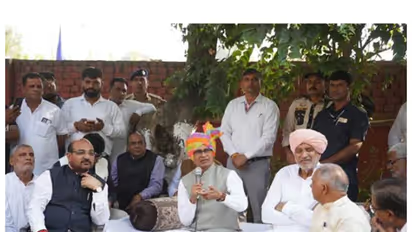
Union Minister for Agriculture and Farmers’ Welfare and Rural Development Shivraj Singh Chouhan on Thursday formally launched the nationwide ‘Khet Bachao Abhiyan’ from the historic town of Taraori in Haryana’s Karnal district. According to a release from the Ministry of Agriculture & Farmers Welfare, he engaged directly with farmers and stressed that serving the farming community was his highest duty.
During an interactive Kisan Chaupal organised as part of the campaign. Chouhan reiterated that, under the leadership and guidance of Prime Minister Narendra Modi, protecting the dignity, honour and self-respect of farmers and farming remained a top priority for the Central Government. Haryana Agriculture Minister Shyam Singh Rana, local legislators, senior agricultural scientists from the Indian Council of Agricultural Research (ICAR) and the National Dairy Research Institute (NDRI), and a large number of progressive farmers attended the programme.
Focus on Balanced Soil Management
Opening the interaction, Chouhan said he regarded himself not as a leader holding a high office but as a servant of farmers and a committed farmer himself. “This turban symbolises the honour and self-respect of farmers, and I will never allow it to be lowered. The need of the hour is to bring modern practices and traditional wisdom together in a way that protects our soil while improving farmers’ incomes,” he said.
Expressing concern over excessive use of chemical fertilisers, Chouhan clarified that the objective of the Khet Bachao Abhiyan was not to oppose fertilisers indiscriminately but to promote their balanced and scientific use. Explaining the consequences of excessive application, he said that just as taking calcium supplements without a medical need could harm the body, applying chemical fertilisers unnecessarily was damaging soil fertility. He urged farmers to move away from competitive and imitative practices in fertiliser use. “If Ramlal applies four bags of fertiliser, Shyamlal should not feel compelled to apply four and a half bags. Farmers must break free from this tendency to imitate others. First, assess the soil through the Soil Health Card and then provide balanced nutrition according to its actual requirements,” he said. Such an approach would help reduce cultivation costs while protecting soil health for future generations, he added.
Promoting Natural Farming Practices
Addressing farmers’ concerns about natural farming, Chouhan shared his personal experience of cultivating vegetables, fruits and other crops on his own farm, where he also practises natural farming. He emphasised that natural farming could deliver good results when undertaken using scientifically appropriate methods. The correct proportions and timely application of Jeevamrit, Ghanjeevamrit and Beejamrit were important to its success, he said.
Chouhan encouraged farmers with landholdings of three to five acres to begin by adopting natural farming on just one acre and learning the complete process before expanding it to the rest of their land. Once farmers witnessed the benefits themselves, he said, others would be encouraged to follow the practice. He stressed that natural farming should not be dismissed as an unviable proposition, adding that farmers could benefit when they adopted the practice properly.
Livestock and Sustainability
Farmers raised questions during the Chaupal about the conservation of indigenous cattle breeds, the market value of their milk and advanced breeding technologies that increase the likelihood of producing female calves through sex-sorted semen. The issues were discussed in the presence of agricultural scientists. It was conveyed that the government was working to validate such technologies more widely and make them accessible to farmers at affordable rates. The discussion also highlighted the need to secure better market prices for milk from indigenous cows and the role of cow dung and cow urine in natural farming.
Chouhan praised Haryana’s farmers for their increased awareness of crop residue management and the reported sharp decline in stubble-burning incidents in the state this year. Recalling the smog and smoke that often characterised this period in previous years, he said farmers in Haryana had demonstrated how the adoption of crop residue management practices and technologies such as Super Seeders could help protect the environment. He described the efforts as an example for the rest of the country, crediting the collective commitment of farmers, the public and the government for the progress, the release said.
The Kisan Chaupal at Taraori served as a platform for farmers to raise issues arising from their day-to-day agricultural practices and discuss scientific solutions directly with the minister and agricultural experts. Chouhan assured farmers that the Agriculture Ministry would act on their suggestions and requirements and take concrete steps to address their concerns. The interaction reinforced the campaign’s focus on balanced fertiliser use, natural farming, improved animal husbandry and sustainable agricultural practices to protect soil health and strengthen farmers’ livelihoods. (ANI)
(Except for the headline, this story has not been edited by Asianetnews Editorial staff and is published from a syndicated feed.)Stay updated with the Breaking News Today and Latest News from across India and around the world. Get real-time updates, in-depth analysis, and comprehensive coverage of India News, World News, Indian Defence News, Kerala News, and Karnataka News. From politics to current affairs, follow every major story as it unfolds. IMD cities weather forecastsRain Cyclone Asianet News Official App