TN Assembly unanimously opposes Centre's FCRA Bill, seeks NEET ban
Synopsis
The Tamil Nadu Assembly unanimously passed two resolutions against the Centre: one opposing the Foreign Contribution (Regulation) Amendment Bill, 2026, and another seeking the abolition of NEET for medical admissions in the state.
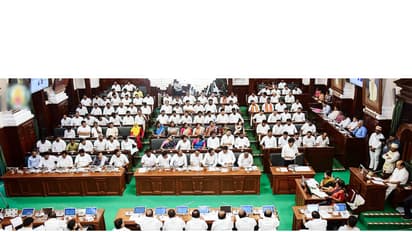
Chennai (Tamil Nadu) [India], August 11 (ANI): The Tamil Nadu Legislative Assembly on Tuesday delivered a twin political message to the Centre, unanimously adopting resolutions opposing the proposed Foreign Contribution (Regulation) Amendment Bill, 2026, and seeking the abolition of the National Eligibility-cum-Entrance Test (NEET) for medical admissions in the state.
The two resolutions, dealing with separate issues, brought ruling and opposition parties together around what they described as Tamil Nadu's interests, including state rights, social justice, access to education and the functioning of charitable and minority institutions. While the FCRA resolution urged the Union government to withdraw the proposed legislation in its present form and undertake wider consultations, the NEET resolution sought amendments to relevant central laws to discontinue the common medical entrance examination for undergraduate admissions in Tamil Nadu.
FCRA Resolution and State's Concerns
The FCRA resolution was moved by Tamil Nadu Minister Rajmohan, who raised concerns over the proposed changes and their possible impact on educational institutions, hospitals, elderly care homes and other organisations receiving foreign contributions. "The Union Government has introduced the Foreign Contribution Regulation Bill in Parliament to legally regulate international aid. Because of this, educational institutions run by minority organisations and others are being affected. Cancellation of registration and cancellation of renewal are also impacting them," Rajmohan said in the Assembly.
He said the proposed amendments could affect institutions involved in education, healthcare and social welfare and stressed that regulatory procedures should remain consistent with constitutional principles. "Hospitals, elderly care homes, and educational institutions will be affected through FCRA. The Tamil Nadu government objects to this," the Minister said. "Regulatory procedures must be in accordance with the Constitution," he added.
Rajmohan also objected to provisions concerning the government taking over, managing, disposing of or selling assets belonging to charitable organisations in cases where their FCRA registration is cancelled, not renewed, refused or surrendered. "The institutions that are being handed over to the government must be given an opportunity. If there are no charges against that institution, it should not be taken over through FCRA," he said.
At the same time, the Minister maintained that Tamil Nadu was not opposed to national security measures or regulation aimed at preventing the misuse of foreign contributions. "The state government is also firm on ensuring national security. Therefore, we have some objections," Rajmohan said. He said the state's objections were aimed at ensuring that legitimate educational, medical, charitable and social welfare institutions were not adversely affected. "Hence, the state government is moving a resolution urging the Union Government to withdraw the amendment bill," he said.
The resolution called for the withdrawal of the FCRA amendment legislation in its present form and sought comprehensive consultations with state governments and stakeholders, including charitable, religious, educational, medical and social organisations. Tamil Nadu also sought safeguards based on natural justice, proportionality, property rights, legitimate expectation and federalism. At the same time, the resolution acknowledged the need for transparency and accountability in the receipt and utilisation of foreign contributions.
The state's concerns centre particularly on provisions that could affect organisations following cancellation, refusal of renewal or surrender of their FCRA registration. Tamil Nadu has argued that any changes to the FCRA framework must strike a balance between national security and regulatory oversight on one hand and the legitimate functioning and constitutional rights of charitable and social welfare institutions on the other.
The Assembly's opposition to the FCRA Bill comes amid a wider political debate over the proposed legislation at the national level. DMK Rajya Sabha MP P Wilson said the party was firmly opposed to the proposed amendments and had already raised its concerns with Union Home Minister Amit Shah. "We are completely opposed to this bill because our leaders have clearly stated that the FCRA Amendment Bill 2026 should be withdrawn," Wilson said. He said the DMK had written to the Home Minister and attended a meeting on August 6 after being invited by the Union government. "We jointly submitted a memorandum and made it clear that we demand the withdrawal of the FCRA [amendments] and the repeal of Section 15. If the government is not considering this, they should refer it to a Joint Parliamentary Committee," Wilson said. "The Home Minister has asked us for a detailed report, and we are preparing it. We will hold a meeting with the core committee and submit it to the Home Minister," he added.
Resolution Seeking Abolition of NEET
The second major resolution adopted by the Tamil Nadu Assembly concerned NEET, an issue that has remained politically contentious in the state for several years. Tamil Nadu Health Minister K Arunraj moved the resolution seeking abolition of NEET for undergraduate medical admissions, arguing that the examination was against social justice, equality and the rights of states. "NEET is against Social Justice, Equality, and State Rights," Arunraj said while speaking in the Assembly.
The resolution seeks amendments to relevant central laws to discontinue the uniform NEET system for undergraduate medical admissions in Tamil Nadu. The state government has consistently argued that NEET places students from rural and economically disadvantaged backgrounds, particularly those studying in Tamil-medium schools, at a disadvantage because of the growing dependence on expensive private coaching. The government has also argued that a single entrance examination after 12 years of schooling places additional pressure on students and has proposed that admissions to undergraduate medical courses in Tamil Nadu be based on Class 12 examination marks.
Political Divide on NEET
The resolution received support from the DMK, AIADMK, Congress, PMK, DMDK, Left parties and other smaller parties. The BJP's lone MLA, M Bhojarajan, opposed the move and staged a walkout. Bhojarajan argued that NEET provides an opportunity to students and said the state should focus on making preparation for the examination accessible rather than abolishing it. "NEET is an encouragement for the people of Tamil Nadu. There is hope that the future will be better," Bhojarajan said. Citing an example from Pollachi, he said, "In Pollachi, 10 students from the same school have cleared the exam."
Bhojarajan questioned why the state government was not focusing on providing coaching facilities to students. "Why is the state government not seriously considering conducting coaching classes? Why are you thinking with an inferiority complex?" he asked. He said the government should ensure that students did not have to depend solely on wealthy individuals or expensive private coaching centres. "We don't want a situation where only wealthy private individuals provide coaching. The state government should come forward to provide a special scheme for students," Bhojarajan said.
The BJP MLA subsequently announced that he would not participate in the voting on the resolution and walked out of the Assembly. "I am not participating in the voting taking place in the Assembly. I am staging a walkout," he said. BJP state spokesperson Narayanan Thirupathy also criticised the Assembly's move against NEET and argued that any decision on the examination should be considered in light of the Supreme Court's role in establishing the framework. "As far as NEET is concerned, whatever they want to make, let them submit to the Supreme Court because NEET has been framed only in the direction of the Supreme Court," Thirupathy said.
He recalled that when NEET was introduced, the Centre had approached the Supreme Court seeking additional time for Tamil Nadu. "Even in Tamil Nadu, long back when NEET came, even the central government went to the Supreme Court and supported Tamil Nadu, saying, they need one more year. But the Supreme Court refused," he said. Thirupathy also argued that NEET had increased the number of government school students qualifying for medical education. "Before NEET, how many government school students qualified for medical education? Now, in the last seven or eight years, how many people are qualifying every year for medical education from government schools? NEET has helped poor rural school students," he said.
Cross-Party Support Against NEET
AIADMK, however, backed the Assembly resolution. AIADMK MLA O S Manian said, "AIADMK remains firm in its anti-NEET policy." DMK MLA Muthuraja also said his party supported the resolution against the examination. The support from the AIADMK was significant as the party and the DMK have frequently been political rivals in Tamil Nadu, but both have maintained opposition to NEET in the state.
DMK Rajya Sabha MP Tiruchi Siva said the party's position was based on the interests of Tamil Nadu's students rather than political considerations. "The Union government would have passed a resolution today and our party would have supported... so they would have said we do not want NEET exams," Siva said. "The Bill is pending with the President. We supported AIADMK's resolution against NEET as well because we don't see politics when it comes to the interest of the people of Tamil Nadu and the students," he added.
The Assembly's latest resolution comes after Tamil Nadu's repeated attempts to secure exemption from NEET. The state Assembly had earlier unanimously passed the Tamil Nadu Admission to Undergraduate Medical Degree Courses Bill, 2021, seeking exemption from the examination. The state government has repeatedly urged the Centre to grant approval to the legislation.
Wider Political Reactions
The debate over NEET has remained one of Tamil Nadu's most prominent political issues, with the ruling establishment maintaining that the examination affects social justice and equal access to medical education, while the BJP has argued that the state should improve coaching and support systems for students instead of seeking abolition of the common entrance test. The Assembly's twin resolutions also received support from Makkal Needhi Maiam founder and actor-politician Kamal Haasan, who described the developments as a positive sign of political unity in Tamil Nadu. Haasan, who is a Rajya Sabha MP, welcomed the unanimous adoption of the two resolutions, one seeking the complete abolition of NEET and the other calling for withdrawal of the proposed FCRA amendment legislation.
"It is heartening that two resolutions have been unanimously passed in the Tamil Nadu Legislative Assembly. The resolutions call for the complete abolition of the NEET entrance exam and the withdrawal of the Foreign Funding Regulation Bill introduced by the Union Government," Haasan said in a post on X. He said the support extended by political parties across ideological lines represented a broader consensus on issues concerning the state. "It is a welcome development that these resolutions have been passed with the unanimous support of all political parties in Tamil Nadu, beyond the BJP," he said. "Kudos to the Tamil Nadu Government. This trend of unity for the welfare of Tamil Nadu must continue," Haasan added.
Centre-State Relations in Focus
The two resolutions come against the backdrop of an ongoing debate over the Centre-state relationship, particularly in matters involving education, regulation of charitable organisations and the rights of states to determine policies affecting their residents. On the FCRA issue, Tamil Nadu has maintained that it supports national security and accountability in the use of foreign contributions but believes that the regulatory framework must distinguish between genuine violations and technical or procedural issues involving legitimate institutions. The state government has particularly highlighted the potential consequences of cancellation or non-renewal of FCRA registrations, including the implications for assets and institutions engaged in public welfare. The resolution seeks a framework that provides institutions an opportunity to be heard before coercive measures are taken and calls for wider consultation before the legislation proceeds.
The NEET resolution, meanwhile, reflects Tamil Nadu's long-standing demand for greater flexibility in determining medical admission policies. The state government maintains that the Class 12 board examination provides a more equitable measure of students' performance because it avoids creating an additional examination and reduces dependence on private coaching. The BJP has rejected that argument and maintains that NEET creates a common national standard for medical admissions while giving students from rural and government schools opportunities to compete. Bhojarajan's intervention in the Assembly focused on the need for greater state-backed coaching rather than abolition of the examination, while Thirupathy argued that the experience of government school students under NEET should be examined before drawing conclusions about its impact. The political divide over NEET has therefore remained sharp, even as the Assembly vote demonstrated broad support for the state's position. The FCRA resolution similarly reflects concerns that extend beyond party politics, with Tamil Nadu seeking greater consultation on legislation that it believes could affect institutions involved in education, healthcare, religion and social welfare. The Assembly's action places both issues firmly within the Centre-state political debate. While the Union government has maintained the need for national-level regulatory frameworks and common standards in areas under its legislative domain, Tamil Nadu has reiterated its demand for consultation and safeguards that account for the state's specific concerns. (ANI)
(Except for the headline, this story has not been edited by Asianet Newsable English staff and is published from a syndicated feed.)Stay updated with the Breaking News Today and Latest News from across India and around the world. Get real-time updates, in-depth analysis, and comprehensive coverage of India News, World News, Indian Defence News, Kerala News, and Karnataka News. From politics to current affairs, follow every major story as it unfolds. IMD cities weather forecastsRain Cyclone Asianet News Official App