Shashi Tharoor Pays Tribute to Indira Gandhi on 42nd Death Anniversary
Synopsis
Congress leader Shashi Tharoor pays tribute to former PM Indira Gandhi on her 42nd death anniversary, reflecting on their past meetings and her significant contribution to history during the 1971 Bangladesh Liberation War.
Shashi Tharoor Reflects on Indira Gandhi
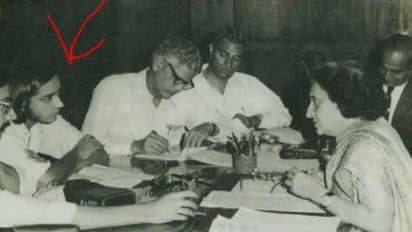
Congress MP Shashi Tharoor on Saturday remembered former Prime Minister Indira Gandhi on the 42nd anniversary of her assassination, recalling his interactions with her and describing her death as a profound personal blow. In a post on X, Tharoor said he had first met Indira Gandhi in 1974 as the president of the St Stephen's College students' union. He later interviewed her in early 1975 for a Swiss youth magazine and twice after her electoral defeat in 1977 for his doctoral dissertation on her foreign policy.
He wrote, "Recalling #IndiraGandhi on the 42nd anniversary of her tragic assassination today. I had the honour of meeting her, as President of the @StStephensClg students' union, in 1974 and later interviewing her, first in early 1975 for a Swiss youth magazine (see pic), and then twice, at greater length, after her electoral defeat in 1977, for my doctoral dissertation on her foreign policy."
Assessing a Political Legacy
Recalling her assassination in 1984, Tharoor said that despite his opposition to the Emergency and what he described as authoritarian excesses during her rule, her death had affected him deeply. Recalling #IndiraGandhi on the 42nd anniversary of her tragic assassination today. I had the honour of meeting her, as President of the @StStephensClg students union, in 1974 and later interviewing her, first in early 1975 for a Swiss youth magazine (see pic), and then twice, at greater length, after her electoral defeat in 1977, for my doctoral dissertation on her foreign policy. Despite my fierce opposition to the Emergency and the occasional authoritarian excesses of her rule, her tragic assassination in 1984 still felt like a profound personal blow. It took something vital away from our democracy that the political fate of our Prime Minister should be determined by bullets and not ballots.
It is difficult to single out one landmark moment in such a consequential life, but I would hail her triumph in the 1971 Bangladesh Liberation War, in which she acted with moral clarity to liberate millions, ended the world’s largest refugee crisis and rewrote the map of the subcontinent. 🙏🏼 प्रणाम and 🕉️ शांति ! — Shashi Tharoor (@ShashiTharoor) October 31, 2026
Impact of the Bangladesh Liberation War
"Despite my fierce opposition to the Emergency and the occasional authoritarian excesses of her rule, her tragic assassination in 1984 still felt like a profound personal blow. It took something vital away from our democracy that the political fate of our Prime Minister should be determined by bullets and not ballots," he wrote.
Tharoor also highlighted Indira Gandhi's role in the 1971 Bangladesh Liberation War, describing it as a landmark moment in her consequential political life. He said she had acted with moral clarity during the war to liberate millions, end what he described as the world's largest refugee crisis and reshape the map of the subcontinent. "It is difficult to single out one landmark moment in such a consequential life, but I would hail her triumph in the 1971 Bangladesh Liberation War, in which she acted with moral clarity to liberate millions, ended the world’s largest refugee crisis and rewrote the map of the subcontinent," he said.
Historical Context
Indira Gandhi, India's first woman Prime Minister, served from 1966 to 1977 and again from 1980 until her assassination on October 31, 1984. Born on November 19, 1917, she was the daughter of India's first Prime Minister, Jawaharlal Nehru. She was assassinated by two of her bodyguards at her residence in New Delhi on October 31, 1984. Her death anniversary is observed every year in remembrance of her contribution to the country's political history. (ANI)
Stay updated with the Breaking News Today and Latest News from across India and around the world. Get real-time updates, in-depth analysis, and comprehensive coverage of India News, World News, Indian Defence News, Kerala News, and Karnataka News. From politics to current affairs, follow every major story as it unfolds. IMD cities weather forecastsRain Cyclone Asianet News Official App