Scindia attends task force meet to boost NER's agri-horti ecosystem
Synopsis
Union Minister Jyotiraditya Scindia joined a high-level task force meeting with NER CMs and ministers in New Delhi to boost the region's agri-horti ecosystem, focusing on strengthening the value chain and improving market linkages for farmers.
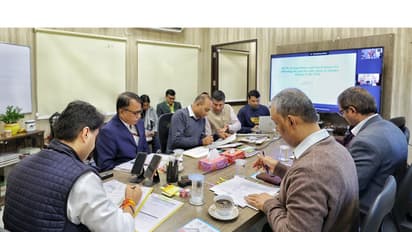
Union Minister for Communications and the Development of the North Eastern Region, Jyotiraditya M. Scindia, on Wednesday, participated in the High-Level Task Force Meeting on Agriculture and Horticulture. This meeting was convened by the Chief Minister of Sikkim, Prem Singh Tamang, in New Delhi. The meeting saw participation from the Chief Minister of Tripura, Manik Saha, the Agriculture Minister of Assam, Atul Bora, the Agriculture Minister of Arunachal Pradesh, Gabriel D. Wangsu, the Agriculture Minister of Sikkim, Puran Kumar Gurung, Secretary, MDoNER, along with other senior officers of MDoNER and State Governments, according to the release.
Strengthening Agri-Horti Ecosystem in NER
The HLTF deliberated upon the need for addressing key gaps in the value chain and market linkages across the North Eastern Region. The discussions focused on strengthening the agri-horti ecosystem by leveraging the region's inherent strengths, with specialisation, quality, and the ability to stand out as the unique selling proposition of agri-horti products from the NER. Need to systematically diagnose existing bottlenecks across the production, post-harvest, processing, marketing, and logistics segments of the value chain, while prioritising interventions and designing suitable investment mechanisms was also discussed.
Key Focus Areas: Reducing Losses and Costs
Reducing post-harvest losses and lowering marketing and logistics costs emerged as critical focus areas to enhance overall value realisation for farmers.
Charting a Strategic Roadmap
The importance of charting a clear roadmap that progresses from foundational interventions to full-scale value chain integration was also deliberated upon during the meeting. This includes developing a strategic infrastructure map to support export readiness, recognising priority commodities for each State, and promoting cluster-based development for each identified product to ensure scale, efficiency, and market alignment.
Blueprint-Based Approach for Implementation
A blueprint-based approach was proposed, beginning with selecting one product and covering its end-to-end value chain through clearly defined short-, medium-, and long-term plans, with product-specific targets and investment requirements. The approach also emphasised assessing, for every product, the number of farmers engaged across the NER and evaluating how farmers would benefit on a product-wise and state-wise basis. Once these interventions are implemented, the focus would be on measuring the resulting increase in farmers' incomes.
A Focused, Cluster-Driven Strategy
The HLTF reaffirmed that a focused, product-specific, and cluster-driven strategy would enable measurable and sustainable outcomes, strengthen market linkages, reduce inefficiencies across the value chain, and ensure long-term income enhancement for farmers across the North Eastern Region. (ANI)
Stay updated with the Breaking News Today and Latest News from across India and around the world. Get real-time updates, in-depth analysis, and comprehensive coverage of India News, World News, Indian Defence News, Kerala News, and Karnataka News. From politics to current affairs, follow every major story as it unfolds. IMD cities weather forecastsRain Cyclone Asianet News Official App