Pregnant Woman Gives Birth Outside UP District Hospital After Being Denied Admission, Inquiry Ordered
Synopsis
A pregnant woman from the Vanvasi community delivered her child on a roadside in Bhadohi, Uttar Pradesh, reportedly after being denied hospital admission. Officials have ordered an inquiry into the incident and allegations of caste or body odour being cited. Know details.
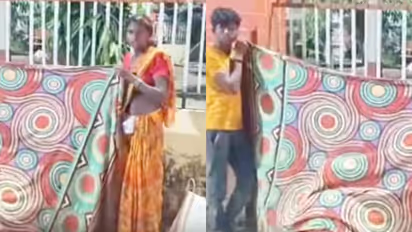
A pregnant woman gave birth on a roadside in Bhadohi, Uttar Pradesh, reportedly, on September 30, after she was allegedly denied admission to Maharaja Chet Singh District Hospital in Gyanpur. The distressing incident, captured in a viral video that quickly circulated across social media platforms, has sparked widespread outrage and prompted local officials to launch an urgent inquiry into emergency maternal care access and potential systemic failures.
The woman, a member of the vulnerable Vanvasi community, arrived at Maharaja Chet Singh District Hospital seeking urgent medical attention. She alleges she was refused entry and turned away, despite her critical condition. In stark contrast, the Chief Medical Officer (CMO) has countered this claim, asserting that the woman was not denied but rather referred to an alternate, higher-level medical facility due to a critically low haemoglobin level of 5 g/dL. This severe anaemia, which often requires immediate specialized care including blood transfusions, forms a key part of the official narrative, while the woman's allegation of outright denial continues to fuel public concern.
Inquiry Launched into Allegations of Discrimination
Officials have initiated a comprehensive investigation into the circumstances surrounding the roadside birth, with particular focus on the allegations of discrimination. Disturbing claims circulating widely suggest that the woman's caste status, as a member of the Vanvasi community, or even her perceived body odour, may have been cited as reasons for her alleged non-admission. These allegations, if proven true, point to a serious breach of medical ethics and fundamental human rights, raising significant questions about equitable access to emergency maternal care for marginalized communities in the region.
The Chief Medical Officer, whose name was not immediately available, has affirmed that stringent punitive measures would be implemented against any hospital staff or individuals found accountable for negligence, misconduct, or discriminatory practices. The administration maintains that the woman was formally referred to a specialized higher-level medical facility to receive the urgent and specialized emergency care, including blood plasma, necessitated by her critical haemoglobin levels. This official statement stands in direct contradiction to the woman's deeply troubling allegation of outright denial, forming the core of the ongoing investigative efforts.
Addressing Systemic Maternal Care Concerns
Beyond the immediate incident, this tragic event underscores broader, systemic concerns regarding public health infrastructure, patient access, and the treatment of vulnerable populations in healthcare settings. The ongoing inquiry aims not only to ascertain the specific facts of this case but also to ensure robust accountability within the healthcare system, particularly in how it serves communities like the Vanvasi. The incident highlights the critical need for equitable access to emergency services, free from discrimination.
The district administration has publicly stressed its commitment to taking decisive action if anyone is found responsible for negligence, improper conduct, or discriminatory behavior towards patients. The outcome of this high-profile inquiry is widely expected to address systemic issues related to emergency medical services, particularly for pregnant women, and to reinforce protocols that ensure all citizens, regardless of their social or economic background, receive timely and respectful medical care. Further details are awaited as the investigation proceeds, promising a thorough examination of both individual actions and institutional policies.
Stay updated with the Breaking News Today and Latest News from across India and around the world. Get real-time updates, in-depth analysis, and comprehensive coverage of India News, World News, Indian Defence News, Kerala News, and Karnataka News. From politics to current affairs, follow every major story as it unfolds. IMD cities weather forecastsRain Cyclone Asianet News Official App