PM Modi warns of challenges from AI, urges active lifestyle for balance
Synopsis
PM Modi highlighted health challenges from reduced physical labour due to technology. At the WHO summit, he championed traditional medicine like Ayurveda and Ashwagandha to restore balance and launched key Ayush initiatives for global well-being.
Prime Minister Narendra Modi on Friday emphasised that the lack of "physical labour" due to the convenience of resources can create unforeseen challenges for the human body, encouraging citizens to adopt a more active lifestyle.
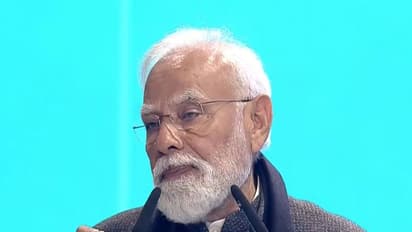
Addressing the closing ceremony of the 2nd WHO Global Summit on Traditional Medicine in New Delhi, PM Modi underlined that in the 21st century, the challenge of maintaining balance in life is set to become even greater, highlighting that the advent of a new technological era, with AI and robotics, represents the biggest transformation in human history, and in the coming years the way of living will change in unprecedented ways. He emphasised the need to remain mindful that such sudden lifestyle changes, coupled with the convenience of resources and facilities without physical labour, will create unforeseen challenges for human bodies. The Prime Minister underlined that traditional healthcare must not only focus on present needs but also address future responsibilities, which are a shared obligation for all, according to a release.
'Restoring Balance' a Global Urgency
Speaking about the theme of the event, 'Restoring Balance: The Science and Practice of Health and Well-being,' PM Modi said it reflects the foundational principle of holistic health. He remarked that Ayurveda equates balance with health, and only those whose bodies maintain this balance are truly healthy.
He pointed out that today, diseases ranging from diabetes, heart attacks, and depression to cancer often have lifestyle and imbalances as their underlying causes, including work-life imbalance, diet imbalance, sleep imbalance, gut microbiome imbalance, calorie imbalance, and emotional imbalance, the release stated. He stressed that many global health challenges are arising from these imbalances, with studies and data confirming the same, and acknowledged that health experts understand this even better. The Prime Minister underlined that 'Restoring Balance' is not just a global cause but a global urgency, and he called for faster steps to address it.
Advancing Ashwagandha with Evidence-Based Validation
Prime Minister remarked that when traditional medicine is discussed, a natural question arises regarding safety and evidence. He highlighted that India is consistently working in this direction. He noted that during this summit, the example of Ashwagandha was presented. He emphasised that for centuries, Ashwagandha has been used in India's traditional medical systems.
PM Modi pointed out that during COVID-19, its global demand for Ashwagandha rose sharply, and it began to be used in many countries. He underlined that India, through its research and evidence-based validation, is advancing Ashwagandha in a credible manner. He stated that during this summit, a special global discussion on Ashwagandha was organised. He mentioned that international experts deeply deliberated on its safety, quality, and usage. The Prime Minister affirmed that India is fully committed to making such time-tested herbs a part of global public health. He also released a commemorative postal stamp on Ashwagandha, symbolising the global resonance of India's traditional medicinal heritage, the release stated.
Summit Highlights and Key Initiatives
The Second WHO Global Summit on Traditional Medicine programme underscores India's growing leadership and pioneering initiatives in shaping a global, science-based and people-centred Traditional Medicine agenda. Prime Minister has constantly emphasised for mainstreaming traditional medicine and Indian Knowledge System through research, standardisation, and global collaboration.
Launch of Ayush Digital Portal and Quality Mark
In line with this vision, during the programme, the Prime Minister launched several landmark Ayush initiatives, including My Ayush Integrated Services Portal (MAISP), a master digital portal for the Ayush sector. He also unveiled the Ayush Mark, which is envisioned as a global benchmark for the quality of Ayush products and services. On the occasion, Prime Minister released the WHO technical report on training in Yoga and the Book "From Roots to Global Reach: 11 Years of Transformation in Ayush".
New WHO Regional Office Inaugurated
Prime Minister also inaugurated the new WHO-South East Asia Regional Office complex in Delhi, which will also house the WHO India Country Office, marking a significant milestone in India's partnership with the World Health Organisation.
Yoga Awards and Exhibition
Prime Minister felicitated the recipients of the Prime Minister's Awards for Outstanding Contribution to the Promotion and Development of Yoga for the years 2021-2025, recognising their sustained dedication to Yoga and its global promotion. The awards reaffirm Yoga as a timeless practice for balance, well-being, and harmony, contributing to a healthier and stronger New India.
Prime Minister also visited the Traditional Medicine Discovery Space, an exhibition which showcases the diversity, depth and contemporary relevance of Traditional Medicine knowledge systems from India and across the world.
Jointly organised by the World Health Organisation (WHO) and the Ministry of Ayush, Government of India, the Summit was held from 17 to 19 December 2025 under the theme "Restoring balance: The science and practice of health and well-being" at the Bharat Mandapam, New Delhi. The summit witnessed intensive deliberations among global leaders, policymakers, scientists, practitioners, Indigenous knowledge holders and civil society representatives on advancing equitable, sustainable and evidence-driven health systems. (ANI)
(Except for the headline, this story has not been edited by Asianet Newsable English staff and is published from a syndicated feed.)Stay updated with the Breaking News Today and Latest News from across India and around the world. Get real-time updates, in-depth analysis, and comprehensive coverage of India News, World News, Indian Defence News, Kerala News, and Karnataka News. From politics to current affairs, follow every major story as it unfolds. IMD cities weather forecastsRain Cyclone Asianet News Official App