PM Modi Launches Development Projects Worth ₹14,000 Crore in Gujarat
Synopsis
PM Modi inaugurated development projects worth ₹14,000 crore in Gujarat, including the 24th PM-KISAN installment, supporting millions of farmers with financial aid and unveiling new agricultural and railway infrastructure across the state.
PM Modi Launches Major Development Initiatives in Gujarat
Prime Minister Narendra Modi on Friday dedicated and laid the foundation stones for various development projects worth over ₹14,000 crore to the nation from Banaskantha district. On the occasion of the national-level celebration of PM Kisan Utsav Diwas, he released the 24th instalment of the Pradhan Mantri Kisan Samman Nidhi (PM-KISAN), transferring financial assistance directly to farmers' bank accounts across the country.
The Prime Minister also inaugurated the Bharat Bovine Breeding and Research Centre (BBBRC), the new potato expansion facility and the UHT-ASRS facility of Banas Dairy through virtual means. He also performed the ground-breaking ceremony for two new compressed biogas plants of Banas Dairy at Tharad and Radhanpur. Besides dedicating two new railway services to Gujarat, the Prime Minister inaugurated and launched several development projects worth crores of rupees in the metro, anganwadi, agriculture and animal husbandry sectors.
Empowering Farmers and Strengthening Agriculture
Describing farmers as among the strongest pillars of a developed India, PM Modi said that the welfare and empowerment of farmers had always remained the government's highest priority. He said the country's agricultural budget had increased more than fivefold compared to 2013-14. The PM-KISAN scheme had become an integral part of the lives of small farmers. More than ₹1,000 crore had been transferred to the bank accounts of over 50 lakh farmers in Gujarat, including approximately ₹50 crore benefiting thousands of farmer families in Banaskantha. On Friday, more than ₹18,000 crore was transferred to the accounts of nearly 10 crore farmers across the country.
The Prime Minister said that the government's farmer-oriented policies and decisions over the past few years had delivered benefits or savings worth more than ₹50 lakh crore to farmers. Citing five major examples, he said approximately ₹4.5 lakh crore had been directly transferred to the bank accounts of small farmers under PM-KISAN. More than 85 per cent of the country's farmers belonged to the small-farmer category, and the government had extended financial assistance to them. To protect Indian farmers from the impact of sharp increases in international fertiliser prices caused by global instability, the government had spent approximately ₹16 lakh crore on fertiliser subsidies. He said the government had fulfilled its commitment to providing Minimum Support Price (MSP) to farmers. Over the past 12 years, more than ₹24 lakh crore had been paid to wheat and paddy farmers through MSP procurement. Under the Pradhan Mantri Fasal Bima Yojana, farmers had received crop insurance compensation exceeding ₹2 lakh crore over the past 10 to 12 years. Similarly, the Pradhan Mantri KUSUM Yojana had helped reduce irrigation costs. Approximately 12 lakh solar pumps had been distributed under the scheme, providing additional electricity to farmers and saving them the expense of purchasing more than 800 million litres of diesel.
Advancements in Animal Husbandry and Rural Economy
PM Modi said agriculture was not merely a means of livelihood but an integral part of India's tradition and culture. Over the past 12 years, the government had emphasised the extensive use of science and technology in agriculture and animal husbandry. He cited Soil Health Cards as an excellent example of this transformation. Earlier, farmers did not have precise information about the type and quantity of fertilisers required for their fields. Soil Health Cards had helped modernise farming practices, and more than 26 crore cards were now available to farmers across the country. With climate change posing major challenges to agriculture, the government was continuously working to provide farmers with innovative, climate-resilient seed varieties. Approximately 3,000 new varieties of seeds had been made available to farmers in recent years.
Describing animal husbandry as an important pillar of the rural economy, the Prime Minister highlighted the significant contribution of rural women to this sector. He said the government had placed special emphasis on promoting science and technology in the dairy and animal husbandry sectors over the past decade. Better animal breeds could increase milk production, while timely vaccination and appropriate treatment could protect livestock from diseases. "Healthy livestock will also increase the income of my brothers and sisters engaged in animal husbandry," he said.
Referring to the National Gokul Mission, the Prime Minister said it was playing an important role in conserving indigenous livestock breeds and improving their quality through scientific methods. The newly established research centre in Banaskantha would contribute significantly to the breeding and genetic improvement of indigenous cattle breeds such as Gir, Sahiwal and Kankrej, as well as buffalo breeds such as Mehsana, Murrah and Jaffarabadi. It would be the country's first such research centre dedicated to the Kankrej breed. He said modern technologies such as In Vitro Fertilisation (IVF) were helping livestock farmers pass on the superior qualities of high-milk-yielding, healthy and low-maintenance cows to future generations.
Infrastructure and Future Vision
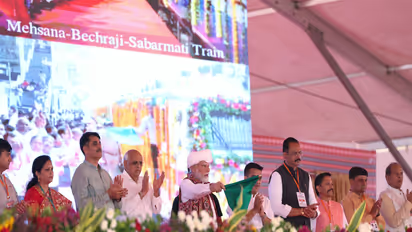
Highlighting infrastructure projects aimed at accelerating Gujarat's development, the Prime Minister said two new railway services had been flagged off, which include the Ahmedabad-Varanasi Sabarmati Express and the Mehsana-Becharaji-Sabarmati MEMU train He also laid the foundation stones for metro projects connecting GIFT City and the airport as part of the expansion of Ahmedabad Metro. The Ahmedabad-Mehsana Highway would be upgraded from four lanes to eight lanes. For the welfare of children and mothers in Gujarat, more than 4,000 modern anganwadis were inaugurated across the state. These facilities would benefit approximately four lakh children and pregnant women.
The Prime Minister said the government's objective was to ensure that livestock farmers earned income not only from milk but also from cow dung and agricultural residues. For this purpose, infrastructure for producing biogas, Bio-CNG and organic fertilisers was being developed in collaboration with cooperative institutions such as Banas Dairy. Foundation stones for two new Bio-CNG plants were laid on Friday. He said the government was committed to improving livestock health, increasing milk production and ensuring the productive utilisation of cow dung to enhance farmers' incomes. Animal husbandry was being transformed from a traditional occupation into a powerful means of increasing farmers' earnings and bringing prosperity to rural areas.
(Except for the headline, this story has not been edited by Asianetnews Editorial staff and is published from a syndicated feed.)Stay updated with the Breaking News Today and Latest News from across India and around the world. Get real-time updates, in-depth analysis, and comprehensive coverage of India News, World News, Indian Defence News, Kerala News, and Karnataka News. From politics to current affairs, follow every major story as it unfolds. IMD cities weather forecastsRain Cyclone Asianet News Official App