Operation Sindoor: China gave live intel to Pakistan, Turkey supplied drones, says Army Deputy Chief
Synopsis
During Operation Sindoor, India's response to the Pahalgam attack, China provided real-time intelligence to Pakistan, including deployment details, according to a senior Indian Army official.
In a startling disclosure, senior Indian Army official has revealed that China provided live intelligence to Pakistan during Operation Sindoor, India's swift and powerful military response to the Pahalgam terror attack that killed 26 civilians.
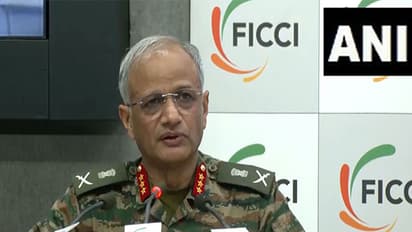
Speaking at a military technology summit organised by FICCI, Lieutenant General Rahul R Singh, Deputy Chief of Army Staff (Capability Development and Sustenance), said that Pakistan had real-time support from Beijing even while diplomatic talks were on.
"While DGMO-level talks were happening, Pakistan was receiving live inputs about our deployments from China," he said. "This is something we must act on — fast and decisively."
Not one, but three adversaries
Lt Gen Singh painted a broader picture of the challenges India faced during the operation.
"We were up against more than just Pakistan. China was offering full support, including weapons and intelligence. And Turkey also played a role by supplying combat drones like Bayraktar," he said.
He went on to say that 81% of Pakistan's military hardware is Chinese, giving Beijing a dangerous advantage — the ability to test its own equipment in real-time conflict scenarios.
"It's almost like they're using Pakistan as a live testing ground," he said.
Lt Gen Singh also sounded a warning and said that India must prepare for the possibility that future conflicts might not spare civilian areas.
"This time, our population centres were left alone. Next time, that may not be the case. We need to be fully prepared."
Operation Sindoor: Strategy backed by intelligence
The general offered rare insights into how Operation Sindoor was carried out. The mission was based on a combination of precise intelligence, smart technology, and joint military coordination.
"We shortlisted 21 possible targets and finalized nine in the last hour. Every move was backed by data and intelligence. And we made sure it was a tri-services strike — Army, Navy, and Air Force working together — to send a clear message: we are one force," he said.
Singh highlighted that India deliberately stayed in control of escalation, choosing when to act and when to stop.
"War is easy to start, but incredibly hard to stop. That's why the decision to halt the operation after reaching our objective was critical. It was a masterstroke."
Commenting on the ceasefire that followed, Lt Gen Singh said it wasn’t weakness — it was smart military and political timing.
"Our strike was ready. Pakistan realized it couldn't afford to go further. That's why they sought the ceasefire," he explained.
In his final remarks, Lt Gen Singh underlined a shift in India’s security approach.
"We are no longer in the era of silent suffering. If needed, India will respond, and respond hard. That message has gone out loud and clear."
Stay updated with the Breaking News Today and Latest News from across India and around the world. Get real-time updates, in-depth analysis, and comprehensive coverage of India News, World News, Indian Defence News, Kerala News, and Karnataka News. From politics to current affairs, follow every major story as it unfolds. IMD cities weather forecastsRain Cyclone Asianet News Official App