Nepal Flash Floods: How 9-Metre Water Surge in 30 Mins Unleashed Havoc? Read On
Synopsis
A massive flash flood has hit Nepal's Rasuwa district near the Tibet border. Over 750 people, including at least 133 Indians, are missing, and 157 deaths have been confirmed. Scientists are now saying a massive ice avalanche could be the reason behind the sudden, deadly surge of water.
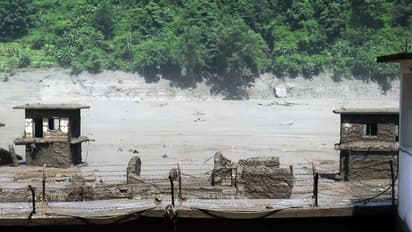
A massive flash flood in Nepal's Rasuwa district, near the Tibet border, has left over 750 people missing. The list of missing people includes at least 133 Indians. So far, 157 deaths have been confirmed. The sudden wall of water washed away homes, vehicles, bridges, and other infrastructure, causing widespread destruction.
Hydrology data showed something truly shocking. The water level in the Trishuli River at Galchchi shot up by a staggering 9 metres in just 30 minutes. At the same time, the water level at Malekhu rose by about 7 metres.
This kind of rapid rise points to a sudden release of a huge volume of water, not a typical flood. Scientists at the Kathmandu-based International Centre for Integrated Mountain Development (ICIMOD), along with their partners in Nepal and China, are now investigating if a massive ice and rock avalanche is the real culprit. Their initial assessment, based on video footage and reports from the ground, suggests that a huge chunk of ice and rock may have crashed into the Lende Khola, a tributary of the Bhote Koshi river. This impact could have displaced a massive amount of water, creating a powerful, debris-filled wave that carried silt and giant boulders downstream.
Another Devastating Flood Could Be on Its Way
Reports say the water level in the Bhote Koshi basin started rising rapidly around 9 AM local time. The floodwaters soon overflowed the riverbanks and rushed downstream into the Trishuli River, threatening communities in the southern districts of Nuwakot and Dhading. But scientists are also investigating a second, and possibly more dangerous, scenario. The debris from the avalanche might have temporarily blocked a narrow part of the river, creating a 'landslide dam'. Water can build up quickly behind such a blockage. If this natural dam suddenly breaks, it could release another, even more catastrophic, flood downstream.
Qiyanggang Zhang, the head of climate and environmental risks at ICIMOD, said, “The same area that was hit by floods in Rasuwa last year is at risk again.” He explained that they suspect an ice avalanche in the Lhende Khola area started it all, though the exact cause is still not confirmed.
Authorities have warned that there might still be a blockage upstream near the Nepal-China border, raising fears of a second flood. People near the Gyirong port have reportedly been asked to evacuate to safer places.
Did an Earthquake Play a Role in Nepal's Deadly Flood?
Earthquake monitoring data is also providing some important clues. A seismometer in Gyirong, located about 12 km from the disaster area, detected unusual signals at the time of the event. Another station in Zhangmu also recorded unusual activity. Scientists are now checking if these signals were generated by the suspected ice avalanche, although a direct link has not been established yet.
This disaster highlights the growing danger from the 'cryosphere'—the frozen parts of the Earth—in the rapidly changing Himalayas. Melting glaciers, unstable mountain slopes, expanding glacial lakes, and thawing permafrost are creating new risks across the world's highest mountain range. ICIMOD's Md. Farooq Azam has warned that such disasters are becoming more common, and the speed of these environmental changes is challenging the capabilities of our current monitoring systems.
For now, scientists are busy analysing satellite images, seismic records, and hydrological data. But the fact that the water level rose by nine metres in just half an hour is a scary reminder of how a disaster starting high up on a remote mountain slope can turn into a deadly flood hundreds of kilometres downstream in a matter of minutes.
Stay updated with the Breaking News Today and Latest News from across India and around the world. Get real-time updates, in-depth analysis, and comprehensive coverage of India News, World News, Indian Defence News, Kerala News, and Karnataka News. From politics to current affairs, follow every major story as it unfolds. IMD cities weather forecastsRain Cyclone Asianet News Official App