Madison Square Garden Event: Pluralism Cannot Mean Silencing Mohan Bhagwat | A Look at the Record of His Critics
Synopsis
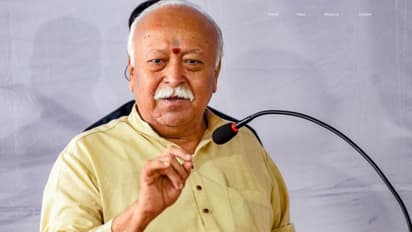
The row over Mohan Bhagwat’s Madison Square Garden visit should not be reduced to a simple clash between pluralism and Hindutva. The organisations opposing him have their own records of activism on India, Kashmir and the RSS. In a democracy, critics have the right to protest, but Bhagwat has the same right to speak and be challenged.
Article by: A Sakthivel
(lawyer, Social Thinker, Political & Policy Commentator)
The controversy surrounding RSS Sarsanghchalak Shri Mohan Bhagwat’s scheduled visit to Madison Square Garden in New York has been presented by some organisations as a battle between pluralism and Hindu nationalism. Organisations have announced their opposition to the programme and sought to portray the RSS and its leadership as fundamentally incompatible with the values of a democratic and pluralistic society. But before getting into the narrative being presented by these organisations, there is a much larger question that deserves to be asked: who exactly are the organisations leading this campaign, what have they themselves said about India, Kashmir, Hinduism and the RSS, whom do they represent, and are they really defenders of pluralism?
The documentary record of these organisations demonstrates that several of them have actively campaigned against Indian government policies, supported protest movements in India, challenged India’s national security policies and sought international pressure on New Delhi. That record is directly relevant when they present themselves as neutral arbiters of whether an Indian social and cultural leader should be given a public platform.
CAIR’s Record on India and Kashmir
The role of the Council on American-Islamic Relations, or CAIR, in this campaign deserves particular scrutiny. CAIR describes itself as a Muslim civil rights and advocacy organisation. However, its own public record shows that it has repeatedly taken strong positions on India’s domestic politics and Kashmir. In its submission to a US congressional hearing following the 2019 constitutional changes, CAIR described India’s revocation of Article 370 as an “illegal revocation” and accused the Indian government of imposing collective punishment in Kashmir. CAIR has repeatedly criticised the Indian government and adopted strongly worded positions concerning India’s Kashmir policy.
Therefore, when CAIR campaigns against the head of the RSS, its long-standing agenda and public positions concerning India and its leaders are relevant to understanding the campaign.
CAIR and the Hamas Controversy
There is also a documented controversy surrounding CAIR’s history in the United States that should be discussed accurately. The US Department of Justice Inspector General recorded that the FBI’s 2008 policy restricting certain non-investigative contacts with CAIR was based in part on evidence presented during the Holy Land Foundation terrorism financing trial. The Inspector General noted that evidence presented during the trial linked CAIR leaders to Hamas and that CAIR had been named as an unindicted co-conspirator in the case.
There is another historical controversy that should also be distinguished from CAIR’s present-day institutional position. CAIR itself acknowledges that its then-future executive director, Nihad Awad, said in 1994, before CAIR was formed, that he supported the Hamas movement more than the PLO. The historical record and the controversy surrounding its links and statements are legitimate matters for public scrutiny, particularly when CAIR seeks to portray another organisation as beyond the boundaries of democratic discourse.
IAMC and Its Campaigns on India
The Indian American Muslim Council, or IAMC, presents an even clearer example of an organisation that has repeatedly intervened in debates concerning India’s internal affairs. IAMC has published extensive campaigns and reports attacking the Indian government’s policies, particularly on Kashmir, religious freedom and national security legislation. Following the 2019 changes relating to Article 370, IAMC described the government's action as unconstitutional and accused it of repression in Kashmir. IAMC continued to describe the revocation of Article 370 as a major human rights violation and called upon the international community to hold the Indian government accountable.
IAMC’s own publications also demonstrate the breadth of its political campaign. Its reports have repeatedly accused the Indian government of discrimination against minorities and have urged international policymakers to intervene in India. Its position therefore goes well beyond criticism of a particular policy. It represents a sustained campaign of international advocacy directed at India’s elected government.
IAMC has also demonstrated its willingness to support political and protest movements within India. In July 2026, IAMC publicly announced that it had joined international solidarity efforts supporting India’s student protest movement. Its Boston chapter and the Boston South Asian Coalition organised a solidarity rally at Harvard Square in support of the movement, which was demanding accountability from the Indian government over examination-system failures.
This establishes that these organisations are actively participating in political campaigns concerning India and seeking to influence public opinion and policy from outside the country.
Justice For All and Its “Free Kashmir” Campaign
Justice For All is even more explicit about its ideological position. Its own “Free Kashmir” campaign states that it opposed the Government of India’s 2019 decision concerning Article 370 and describes the move in terms of occupation and denial of Kashmiri self-determination. More importantly, Justice For All says that its first major action after the revocation was to organise protests outside Indian government buildings across the United States. This is not simply commentary on Indian affairs. It is organised political activism directed at a policy decision of the elected Government of India.
Justice For All has also used extraordinarily strong language against the RSS and the Indian government, including through its “Save India from Indian Fascists” programme. It has repeatedly campaigned on Kashmir and Article 370. But when an organisation has spent years campaigning against the Indian government and the RSS, its opposition to Shri Mohan Bhagwat cannot suddenly be presented as an impartial defence of pluralism. Its own political record is part of the context.
Opposition to India’s Security Operations
Stop Operation Kagar Coalition-NYC represents another dimension of this activism, focusing directly on Indian counterinsurgency operations, including what it describes as Operation Kagar, and opposing the Indian government’s security policies. Lal Morich has participated in South Asian progressive and anti-Hindutva organising. Organisations such as 18 Million Rising and the Arab Resource & Organizing Center have also participated in wider coalition politics involving South Asian, anti-Hindutva and anti-Modi campaigns.
A Wider Anti-Government and Anti-Hindutva Network
The same pattern is visible in the wider coalition. DRUM, or Desis Rising Up & Moving, has participated in campaigns focused on Kashmir and criticism of the Indian government. The Boston South Asian Coalition has participated in international solidarity campaigns concerning political developments and protests in India. The Coalition of Seattle Indian Americans has been associated with campaigns critical of the Indian Government.
The Right to Protest Must Also Mean the Right to Speak
If CAIR, IAMC, Justice For All and other organisations are entitled to pursue their agenda, why should Shri Mohan Bhagwat not be entitled to speak at Madison Square Garden? The same democratic principle must apply to the other side. The right to protest is an essential part of democracy, but so is the right to speak. If pluralism means anything, it must mean that competing viewpoints are allowed to exist, even when some people find those viewpoints deeply uncomfortable or believe that they do not suit their agenda.
Universal Oneness and the Case for Dialogue
The event at Madison Square Garden has been described as the “Universal Oneness Celebration”, with the stated objective of bringing people together through dialogue and cultural engagement. The RSS has maintained that the programme is intended to facilitate interaction among communities and provide an opportunity to understand its worldview directly. Critics may disagree with that philosophy, and they are free to do so. But if the purpose of democracy is to encourage dialogue, the answer to disagreement should be more dialogue, not an attempt to prevent a speaker from being heard.
Let the Debate Happen
This is why the Madison Square Garden controversy should not be reduced to a simplistic confrontation between “pluralism” and the RSS. There is a legitimate debate to be had about the RSS, Indian nationalism, minority rights, Kashmir and the political direction of India. That debate should happen openly. Indian Americans are perfectly capable of listening to different viewpoints and reaching their own conclusions. They can hear Mohan Bhagwat, listen to his critics, examine the RSS’s record, examine the allegations against it and decide for themselves. Democracy does not require that every speaker be approved by every group before receiving a platform.
If the critics of the RSS genuinely believe that their arguments are stronger, they should welcome the opportunity for debate. If they believe Hindutva is incompatible with pluralism, they should explain why. If they believe the RSS has misunderstood India’s civilisational identity, they should make that argument. If they believe Mohan Bhagwat’s views are wrong, they should challenge those views publicly. There is no need to fear a debate when one believes one’s own case is stronger.
The RSS does not need immunity from criticism, nor does Shri Mohan Bhagwat need protection from disagreement. What they deserve is the same basic democratic opportunity that their critics demand for themselves: the opportunity to be heard. The audience can agree, disagree, question, challenge or reject what is said. That is how free societies work.
Let Bhagwat speak. Let his critics speak. Let the people decide. That is not a threat to pluralism. That is pluralism itself.
Disclaimer: The opinions expressed are solely those of the author and do not reflect the views or stance of the organization. The organization assumes no responsibility for the content shared.
Stay updated with the Breaking News Today and Latest News from across India and around the world. Get real-time updates, in-depth analysis, and comprehensive coverage of India News, World News, Indian Defence News, Kerala News, and Karnataka News. From politics to current affairs, follow every major story as it unfolds. IMD cities weather forecastsRain Cyclone Asianet News Official App