ISRO launches Navy's heaviest communication satellite GSAT-7R (CMS-03)
Synopsis
ISRO has launched the Indian Navy's GSAT-7R (CMS-03), India's heaviest communication satellite weighing around 4,400 kg. The indigenously developed satellite was launched by the LVM3 rocket from Sriharikota to boost naval communications.
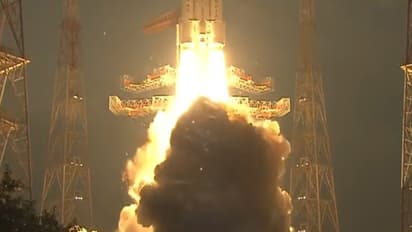
Indian Space Research Organisation (ISRO) on Sunday launched the Indian Navy's GSAT 7R (CMS-03) communication satellite. The indigenously developed satellite is India's heaviest communication satellite to date, weighing around 4,400 kg. The launch took place from the second launch pad of the Satish Dhawan Space Station in Sriharikota, Andhra Pradesh, at 5:26 pm. The satellite would enhance the Navy's space-based communications and maritime domain awareness capabilities with indigenous, state-of-the-art components developed specifically to meet the Indian Navy's operational requirements.
About the GSAT-7R (CMS-03) Satellite
"This satellite is India's heaviest communication satellite to date, weighing approximately more than 4,400 kg, and includes many indigenous state-of-the-art components developed specifically to meet the Indian Navy's operational requirements," the Indian Navy said.
CMS-03 is a multi-band communication satellite that will provide services over a wide oceanic region, including the Indian landmass, according to ISRO.
LVM3 Launch Vehicle and Mission
The satellite was launched by the famous LVM3 launch vehicle, which successfully landed India on the lunar South Pole in the Chandrayaan-3 mission. This will be the vehicle's fifth operational flight.
"CMS-03, weighing about 4400kg, will be the heaviest communication satellite to be launched to Geosynchronous Transfer Orbit (GTO) from Indian soil. The previous mission of LVM3 launched the Chandrayaan-3 mission, in which India became the first country to land successfully near the lunar south pole," ISRO said in a statement.
Launch Profile and Technical Specifications
The launch vehicle had been assembled earlier and had been on the launch pad since October 26 for pre-launch operations. The LVM3-M5 launch had eight sequences, with the CMS-03 being separated from the vehicle at an altitude of approximately 179 kilometres at a velocity of around 10 km per second.
The launch vehicle had a height of 43.5 meters, with a total liftoff mass of 642 tonnes. The vehicle uses three stages of propellants to enable the satellite to reach the Geosynchronous Transfer Orbit (GTO).
Stay updated with the Breaking News Today and Latest News from across India and around the world. Get real-time updates, in-depth analysis, and comprehensive coverage of India News, World News, Indian Defence News, Kerala News, and Karnataka News. From politics to current affairs, follow every major story as it unfolds. IMD cities weather forecastsRain Cyclone Asianet News Official App