Indian Navy committed to safe passage of oil tankers in Hormuz Strait
Synopsis
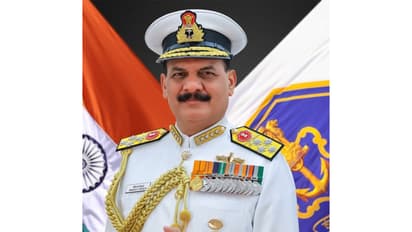
Outgoing Navy Chief Admiral Dinesh K Tripathi affirmed the Indian Navy's commitment to securing the Strait of Hormuz, highlighting the inseparable link between maritime and energy security amid regional instability and asymmetric threats.
Outgoing Chief of the Naval Staff (CNS) Admiral Dinesh K Tripathi on Saturday said the Indian Navy remains fully committed to ensuring the safe passage of oil tankers through the Strait of Hormuz, warning that regional instability, asymmetric threats and attacks on merchant shipping continue to pose serious risks in the strategic waterway.
In an interview to ANI, Admiral Tripathi underlined India's strong strategic interests in the Gulf region and stressed the "inseparable link between maritime security and energy security" in the Strait of Hormuz amid ongoing tensions in West Asia.
Challenges in the Region
"The primary challenges in this region include regional instability, asymmetric threats, attacks on merchant shipping, missile and drone threats, navigational safety concerns, and the increasing complexity of maritime traffic management during periods of heightened tension," he said.
Indian Navy's Proactive Measures
He added that India has significant stakes in keeping maritime trade and energy flows uninterrupted. "To safeguard India's maritime interests and ensure the safe passage of trade, the Indian Navy has proactively stepped up its presence. We have maintained a sustained operational presence, enhanced aerial surveillance, and implemented Mission-Based Deployments across critical maritime routes in the region. Maritime security and energy security are inseparable. Distance from conflict no longer means distance from consequences," the Navy Chief said.
Long-term Approach to Anti-Piracy
On the issue of piracy, Admiral Tripathi said the Navy follows a long-term approach rather than a reactive one. "Piracy thrives in instability and cannot be treated as a temporary problem; it must be addressed through a permanent framework of presence, partnerships, and preparedness. The Indian Navy has maintained one ship continuously in the Gulf of Aden for anti-piracy duties since 2008, safely escorting more than 3,800 merchant vessels to date, reinforcing our position as a First Responder and Preferred Security Partner. Persistent forward presence remains central to anti-piracy operations," he said.
Key Operational Priorities and Achievements
Highlighting key operational priorities, he noted major achievements over the last two years, including operational readiness, maritime security and indigenisation. "First is the successful execution of Operation Sindoor, which clearly demonstrated the Navy's operational reach, combat readiness, and absolute deterrence capability. Also, ongoing Operation Urja Suraksha has ensured that the security of our energy lifelines coming out from the Persian Gulf is secured. Second is maintaining a relentless operational tempo as a first responder and preferred security partner. Third is our sustained strides towards Atmanirbharta, which have transformed us from a 'Buyer's Navy' to a 'Builder's Navy'," Admiral Tripathi added.
Economic Implications of Hormuz Disruptions
The remarks come amid rising global concern over the security of key maritime routes in the Persian Gulf, especially the Strait of Hormuz, through which a large share of global oil trade passes. According to the Finance Ministry's Monthly Economic Review for May 2026, disruptions in the Strait of Hormuz remain the "single most consequential variable" for India's external sector and inflation outlook. It warned that prolonged energy supply shocks could intensify price pressures and affect growth.
The review, released by the Department of Economic Affairs (DEA), said India's near-term economic outlook remains one of "cautious resilience", supported by stable domestic fundamentals, strong services exports, resilient labour markets and comfortable foreign exchange reserves. However, it cautioned that the global environment has become significantly more challenging following the West Asia conflict.
Stay updated with the Breaking News Today and Latest News from across India and around the world. Get real-time updates, in-depth analysis, and comprehensive coverage of India News, World News, Indian Defence News, Kerala News, and Karnataka News. From politics to current affairs, follow every major story as it unfolds. IMD cities weather forecastsRain Cyclone Asianet News Official App