India moves from pessimism to confidence under Modi: Shekhawat on Budget
Synopsis
Union Minister Gajendra Singh Shekhawat lauded the Modi govt for moving India from pessimism to confidence since 2014. He termed the Union Budget a 'continuity budget' aimed at making India a developed nation by 2047.
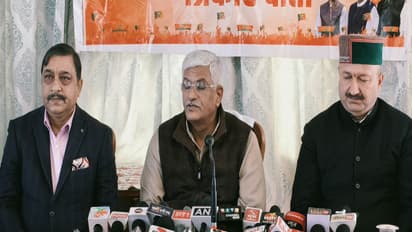
Union Culture and Tourism Minister Gajendra Singh Shekhawat on Sunday said that since the formation of the Narendra Modi-led government in 2014, India has been moving steadily towards a clearly defined goal, with consistent policy direction and decisive leadership aimed at transforming the lives of ordinary citizens and positioning them as drivers of national development.
Addressing a press conference here on the Union Budget, Shekhawat said that before 2014, India was grappling with deep public disillusionment caused by corruption, weak governance, diplomatic setbacks and a deteriorating economic scenario, which had shaken global confidence in the country. However, over the last 12 years, the government has worked with a clear roadmap to realise the vision of making India a developed nation by 2047. He said that looking back from 2026, both India and the world now acknowledge that the country has successfully emerged from an era of pessimism to one of confidence, credibility and sustained growth.
A 'Continuity Budget' for a Rising Economy
The minister described the Union Budget as a "continuity budget", stating that every budget since 2014 has built upon earlier announcements and ensured their implementation on the ground, helping India move step by step towards its long-term objectives. Shekhawat noted that India is among the world's top economies and is steadily progressing toward becoming the third-largest.
He said that at recent global economic forums in Switzerland, India was at the centre stage and was described as the "lighting lamp of the global economy", even as major economies across the world continue to struggle with post-COVID pressures. He said India has not only achieved a sharp V-shaped recovery after the pandemic but has also emerged as the world's fastest-growing major economy due to strong leadership, timely decisions and structural reforms. ]The minister said the 2026 Union Budget reflects stability, inclusivity and sustainable growth, guided by three core principles articulated by the Finance Minister: action over delay, reform over rhetoric, and people over popularity.
Guiding Principles and Duties
Shekhawat said that the government has, for the first time, clearly defined three duties in the budget: sustaining high economic growth in a sustainable manner; fulfilling citizens' aspirations through capacity building; and ensuring balanced, inclusive development under the philosophy of Sabka Saath, Sabka Vikas. He said that crores of people have been lifted out of poverty, a large aspirational middle class has emerged, and addressing its hopes and expectations is now a key responsibility of the government.
Highlighting regional balance, he said special focus was given to previously neglected regions, including the North-East and aspirational districts, through targeted programmes, the results of which are now visible and are being recognised globally as successful development models.
Seven Pillars of Growth
The minister said the budget rests on seven fundamental pillars: boosting manufacturing; preserving India's cultural heritage; strengthening MSMEs as engines of employment and exports; massive infrastructure development; sustainable urbanisation; green growth; and long-term economic stability. He noted that infrastructure investment has increased significantly, with an allocation of Rs 12.5 lakh crore, creating a multiplier effect across sectors such as steel, cement, logistics, and employment.
Shekhawat said India has transformed into a global manufacturing hub for smartphones, exporting devices worth over ₹1 lakh crore, and is emerging as the "pharmacy of the world". He also highlighted initiatives in semiconductors, bio-manufacturing, green hydrogen, critical minerals, and energy independence, aimed at securing India's future needs over the next century.
Focus on Key Sectors
Youth, Tourism, and Agriculture
"On youth-centric policies, he said India's demographic dividend has been placed at the centre of policymaking. Over 50,000 young people were consulted for budget inputs through platforms such as the Viksit Bharat Young Leaders Dialogue, helping shape a roadmap from education to employment," he added. He also highlighted major initiatives in tourism, including interest-free long-term loans for infrastructure, the development of 15 world-class heritage destinations, the training of 10,000 tourist guides, and the creation of a National Hospitality Institute. He said these measures are especially significant for states like Himachal Pradesh, which have strong tourism potential.
Addressing agriculture and rural development, Shekhawat said the budget focuses on high-value crops, livestock development, food processing, reducing food waste, and the use of artificial intelligence-based platforms to support climate-resilient farming and crop forecasting. Women's empowerment, MSME support and financial inclusion remain key priorities.
Fiscal Discipline and State Support
On fiscal discipline, the minister said the government is committed to reducing the fiscal deficit below 4.3 per cent, maintaining a healthy debt-to-GDP ratio and safeguarding future generations from excessive financial burden. He highlighted improvements in ease of doing business, faster tax refunds, GST reforms and increased transparency, which have significantly benefited taxpayers and businesses.
Shekhawat said states, including Himachal Pradesh, have benefitted from higher devolution of central taxes, which increased from 31 per cent to 41 per cent, along with direct transfers to Panchayati Raj institutions and urban local bodies. He cited a significant increase in Himachal Pradesh's revenue receipts since 2014 and larger allocations under the Finance Commission awards and infrastructure schemes.
He also referred to enhanced disaster management funding, stating that disaster relief funds are now permanently available with states to enable quick response without waiting for central approvals, alongside strengthened NDRF and SDRF norms.
India's Growing Global Stature
Shekhawat said India's growing global stature is a result of strong diplomatic efforts under Prime Minister Modi, with the country now negotiating on equal footing with major global powers and blocs. He asserted that the Union Budget 2026 reinforces India's journey towards self-reliance, sustainability and inclusive prosperity, while ensuring that states like Himachal Pradesh continue to be active partners in the nation's development story. (ANI)
(Except for the headline, this story has not been edited by Asianet Newsable English staff and is published from a syndicated feed.)Stay updated with the Breaking News Today and Latest News from across India and around the world. Get real-time updates, in-depth analysis, and comprehensive coverage of India News, World News, Indian Defence News, Kerala News, and Karnataka News. From politics to current affairs, follow every major story as it unfolds. IMD cities weather forecastsRain Cyclone Asianet News Official App