India-China Forge Landmark 12-Point People-Centric Agenda to Boost Border Peace, Trade, Tourism and Pilgrimage
Synopsis
India and China take a major step to ease tensions with border talks, resumption of direct flights, tourist visas, and trade points. PM Modi and FM Wang Yi highlight peace, people-to-people ties, and upcoming SCO and BRICS cooperation.
India and China on Tuesday took a significant step toward easing tensions and improving bilateral ties, with both sides agreeing on multiple measures to strengthen dialogue, border management, and people-to-people exchanges. The development follows the official visit of Chinese Foreign Minister Wang Yi, who was invited by India’s National Security Advisor, Ajit Doval. Wang Yi was in India from August 18-19 and engaged in high-level discussions with Indian leaders.
High-Level Meetings and Border Dialogue
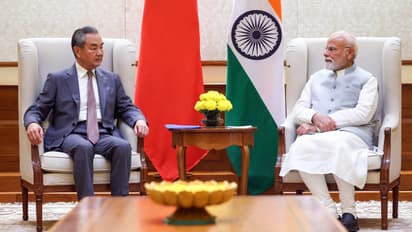
During his visit, Wang Yi co-chaired the 24th round of the Special Representatives’ dialogue on the Boundary Question with NSA Doval today. He also held bilateral talks with External Affairs Minister Dr. S. Jaishankar on August 18 and met Prime Minister Narendra Modi today.
Both sides highlighted the progress made since the Kazan summit, emphasizing that “peace & tranquility has been maintained in the India-China border areas since the 23rd SR Talks.” They reiterated the need to maintain stability along the border to support the overall growth of bilateral relations.
Key Agreements on Border Management
The Special Representatives reached consensus on several steps to advance dialogue and manage the border situation:
- Political Perspective – Both sides stressed the importance of taking a political view of the overall bilateral relationship while seeking “a fair, reasonable and mutually acceptable framework for settlement of the boundary question” based on the 2005 Agreement on Political Parameters and Guiding Principles.
- Expert Group Formation – An Expert Group under the Working Mechanism for Consultation and Coordination on India-China Border Affairs (WMCC) will explore early progress in boundary delimitation.
- Working Group on Border Management – A new group under the WMCC will enhance effective border management to maintain peace and tranquillity.
- Expansion of General Level Mechanisms – In addition to the Western Sector mechanism, new General Level Mechanisms will be created in the Eastern and Middle Sectors, with early meetings planned.
- De-escalation Discussions – Both sides agreed to use diplomatic and military border management mechanisms to discuss de-escalation, starting with principles and modalities.
The next round of Special Representative talks will be held in China at a mutually convenient time.
Strengthening Bilateral and Economic Engagement
Discussions with External Affairs Minister Dr. Jaishankar focused on cooperation beyond the border, emphasizing people-to-people, economic, and regional engagement. Key agreements include:
- Strategic Leadership Guidance – “The strategic guidance of the leaders of India and China plays an irreplaceable and crucial role in the development of India-China relations.” Both sides agreed that a stable, cooperative relationship is essential for realizing the countries’ development potential.
- SCO Summit Participation – China welcomed PM Modi’s attendance at the Shanghai Cooperation Organisation (SCO) Summit in Tianjin, while India reaffirmed support for China’s SCO Presidency.
- BRICS Cooperation – China will support India in hosting the 2026 BRICS Summit, and India will support China for the 2027 BRICS Summit.
- Dialogue Mechanisms – Both sides agreed to resume official bilateral dialogues and exchanges, including the Third Meeting of the India-China High-level Mechanism on People-to-People Exchanges in India in 2026.
- Commemorative Events – Continued collaboration on events marking 75 years of diplomatic relations in 2025.
- Flight and Visa Facilitation – Agreement to resume direct flight connectivity between China and India and facilitate visas for tourists, businesses, media, and other visitors.
- Pilgrimage to Kailash-Mansarovar – Expansion of the Indian pilgrimage to Mt. Kailash/Gang Rinpoche and Lake Manasarovar/Mapam Yun Tso in Tibet starting 2026.
- Trans-Border River Cooperation – Maintaining communication under the India-China Expert Level Mechanism on Trans-border Rivers, with China agreeing to share hydrological data during emergencies.
- Border Trade – Reopening trade at Lipulekh Pass, Shipki La Pass, and Nathu La Pass.
- Investment and Trade Facilitation – Implementing concrete measures to enhance trade and investment flows.
- Peace and Tranquility – Both sides committed to jointly maintaining border peace through friendly consultations.
- Multilateral Cooperation – Upholding multilateralism, maintaining a rules-based global trading system with the WTO at its core, and promoting a multipolar world that safeguards developing countries’ interests.
PM Modi Welcomes Progress
Earlier today, PM Narendra Modi underscored the importance of peace along the India-China border, reiterating India’s commitment to “a fair, reasonable and mutually acceptable resolution to the boundary question.”
Modi said, “Stable, predictable and constructive ties between India and China will contribute significantly to regional as well as global peace, and I am looking forward to meeting Chinese President Xi Jinping on the margins of the upcoming SCO Summit in Tianjin.”
He also highlighted the steady progress in bilateral ties since his talks with President Xi in Kazan last year, noting that it has been “guided by respect for each other’s interests and sensitivities.”
The Prime Minister’s Office added that Modi welcomed the resumption of the Kailash Mansarovar Yatra, thanked Xi for the SCO summit invitation, and conveyed India’s support for China’s SCO presidency.
Context: Border Standoff and Disengagement
While the military standoff in eastern Ladakh has eased, frontline forces have not yet fully de-escalated. Both sides currently maintain around 50,000 to 60,000 troops in the region. The standoff, which began in May 2020, included the deadly Galwan Valley clashes.
The completion of troop disengagement at Demchok and Depsang last October marked a significant step in reducing tensions. Recent months have seen measures to rebuild ties, including the resumption of the Kailash Mansarovar Yatra and issuance of Chinese tourist visas by India.
Wang Yi’s visit signals renewed momentum in India-China relations, focusing on dialogue, trade, people-to-people connections, and peace along the border. Both sides have expressed optimism that these steps will contribute to a stable, predictable, and constructive bilateral relationship, benefiting regional and global stability.
Stay updated with the Breaking News Today and Latest News from across India and around the world. Get real-time updates, in-depth analysis, and comprehensive coverage of India News, World News, Indian Defence News, Kerala News, and Karnataka News. From politics to current affairs, follow every major story as it unfolds. IMD cities weather forecastsRain Cyclone Asianet News Official App