Independence Day 2025: The Kerala 'Sardar' Who Saved Thousands During Partition
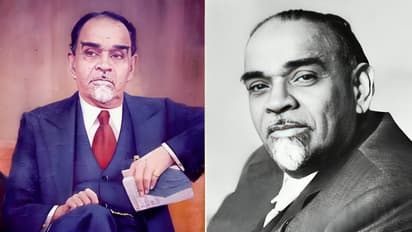
Synopsis
Sardar KM Panikkar, a diplomat from Kerala, saved over a thousand refugees during Partition by escorting them safely across Bikaner’s borders. Despite his heroism, his remarkable act remains largely forgotten in Indian history.
As India marks its Independence Day on August 15, we honour our freedom fighters, yet some remarkable heroes remain hidden in history and one such figure is Sardar KM Panikkar. Panikkar was not just a writer or poet. Born in Travancore to Puthillathu Parameswaran Namboodiri and Chalayil Kunjikutti Kunjamma, he grew into a multilingual writer, historian, diplomat, educationist, and journalist. He studied in Madras and later at the University of Oxford. Panikkar taught at Aligarh Muslim University and the University of Calcutta before becoming editor of the Hindustan Times in 1925. He authored several books, including Malabar and the Portuguese (1929) and Malabar and the Dutch (1931), earning praise from leaders like Jawaharlal Nehru and V. K. Krishna Menon.
Service to the nation and daring rescue during Partition
After independence, Panikkar joined India’s first delegation to the United Nations under Vijay Laxmi Pandit. He served as India’s first ambassador to China and later as ambassador to Egypt in 1952. In 1956, he became the first president of the Kerala Sahitya Academy.

The Partition of India in 1947 brought widespread violence and chaos. At that time, Panikkar was Secretary to the Chamber of Princes in Bikaner. Refugees were pouring in from Pakistan, and the Muslim population in Bikaner feared revenge attacks from nearby Sikh communities.
Panikkar realised that unless the violence was stopped at Bikaner’s borders, it could spread to other parts of Rajasthan and beyond. With the support of Maharaja Sadul Singh, he sent the princely army to Ganga Nagar with orders to shoot rioters and impose fines on communities involved in violence.
Leading refugees to safety
When his calls for help from the central government went unanswered, Panikkar decided to act himself. He arranged for convoys to escort Muslim refugees safely across the state, some by special trains on the Bikaner State Railway, others on foot across the desert. The first group reached Pakistan unharmed. Encouraged, he sent a second convoy, thousands of men, women, and children—on a 350 km journey across the sands with only a police escort. This group also reached Pakistan safely.
A lasting but little-known legacy
The Partition deeply affected Panikkar, who later called it a time of ‘inhuman cruelty’ and ‘barbarism’ on both sides. He continued to serve India as a diplomat until his death in 1963 while serving as vice chancellor at Mysore University. His act of courage saved at least a thousand lives, yet his story remains little known. Sardar K. M. Panikkar's life shows that history often forgets even its most selfless heroes.
Stay updated with the Breaking News Today and Latest News from across India and around the world. Get real-time updates, in-depth analysis, and comprehensive coverage of India News, World News, Indian Defence News, Kerala News, and Karnataka News. From politics to current affairs, follow every major story as it unfolds. IMD cities weather forecastsRain Cyclone Asianet News Official App