How India’s Skynet Intel Exposed Pakistani Kamikaze Drone Operations
Synopsis
An indigenously developed drone forensics tool – Skynet Intel played a significant role during Operation Sindoor against Pakistan in May 2025 by enabling the Indian Army to extract and analyze metadata from intercepted UAVs.
New Delhi: An indigenously developed drone forensics tool – Skynet Intel played a significant role during Operation Sindoor against Pakistan in May 2025 by enabling the Indian Army to extract and analyze metadata from intercepted Unmanned Aerial Vehicles (UAVs). The system helped recover flight logs, GPS coordinates, and detailed operational histories of hostile drones.
In the early hours of March 10, around 5:00am, Pakistan launched multiple Turkish-made Baykar YIHA III kamikaze drones across the International Border towards densely population areas of Amritsar, military installations at Hoshiyarpur and Jalandhar in Punjab but all were brought down by Indian Army’s Air Defence (AAD) units.
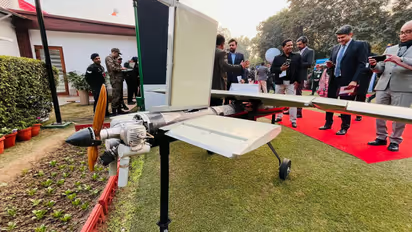
On Monday, the Army displayed the captured Pakistani Byker YIHA III kamikaze drone at its chief General Upendra Dwivedi’s residence, on the occasion of celebration of Vijay Diwas or Victory Day, marking India's victory over Pakistan in the 1971 war leading to liberation of Bangladesh.
Using Skynet Intel, the Army conducted detailed forensic examinations of the recovered drones, providing commanders on the ground with valuable operational intelligence and insights into enemy tactics.
What is Skynet Intel Tool
Speaking about the Skynet Intel tool and its usage in extracting data from captured drones, an official said: “This drone took off from Lahore airbase and it was heading towards one of the army installations in the Punjab sector. While decoding we have found out the take-off point – from where it was launched, the flight path – which was pre-decided, the destination – where it was heading to and various payload data which includes camera, IRs, radars, sensors.”
“With all these data, the tool analyses and gives out complete mission details of the drone which enables the user in finding out various tactical and strategic decisions and the intent of the mission what the enemy was planning,” he said.
During Operation Sindoor, Pakistan extensively used Turkish-made drones, including ‘YIHA-III’ and 'Songar' armed drones.
The particular drone, which was at the display at the Gen Dwivedi’s residence, was intended to target an Indian Air Force base in Punjab’s Hoshiyarpur. When it shot down, it was flying at an altitude of 2,000-meter with a payload of 10-kg of explosives. However, it did not reach the destination and was shot down by the AAD unit near Amritsar.
Skynet Intel, an indigenous drone forensics tool, created under the iDEX DISC-9 programme in collaboration with the Army Cyber Group and Indian industry partners.
“The project stems from the Army’s early recognition that UAVs would play a decisive role in future operations, an assessment validated during Operation Sindoor, where drones significantly enhanced battlefield awareness,” an official said.
It has been designed for secure, air-gapped Army networks. Skynet Intel features intuitive dashboards, fast reporting and a modular architecture scalable to new UAV technologies.
Stay updated with the Breaking News Today and Latest News from across India and around the world. Get real-time updates, in-depth analysis, and comprehensive coverage of India News, World News, Indian Defence News, Kerala News, and Karnataka News. From politics to current affairs, follow every major story as it unfolds. IMD cities weather forecastsRain Cyclone Asianet News Official App