Game-Changer for Indian Artillery: IIT Madras’ Ramjet Shells Extend Range to 70 km
Synopsis
IIT Madras developed ramjet-assisted artillery shells, a significant defence technology breakthrough. This innovation embeds a ramjet engine into standard shells, increasing the range of existing gun systems by nearly 50% without reducing lethality.
In a major breakthrough in defence technology, the Indian Institute of Technology Madras (IIT Madras) has developed ramjet-assisted artillery shells capable of increasing the range of existing gun systems by nearly 50 percent without compromising lethality.
The technology has been tested through multiple trials across a variety of artillery platforms, with results showing significant improvements in firing range.
By embedding a ramjet engine into a standard 155-mm artillery shell, the Advanced Towed Artillery Gun System (ATAGS) achieved a range increase from 40 km to 70 km.
The K9 Vajra self-propelled howitzer saw its range extended from 36 km to 62 km, while the Dhanush artillery gun’s range improved from 30 km to 55 km.
Unlike rocket-assisted projectiles or incremental aerodynamic improvements, as per an official from IIT Madras, the innovation enables sustained propulsion after the shell exits the gun barrel, resulting in longer range, deeper strike capability and enhanced operational flexibility – all without the need for new artillery platforms or costly missile systems.
What is ramjet technology?
A ramjet is a type of engine that uses the vehicle’s high speed to compress incoming air, mix it with fuel, and generate thrust without moving parts like turbines.
In artillery systems, ramjets allow shells to travel much farther after being fired, extending range without changing the gun itself. “This gives armed forces greater reach and flexibility while keeping costs and complexity low.”
The innovation has now addressed one of the most persistent challenges in modern artillery – increasing firing range without sacrificing mobility, deployability or lethality.
“While missiles offer long-range strike capability, they are expensive and complex.”
“Artillery guns remain the backbone of battlefield firepower due to their simplicity, survivability and cost-effectiveness, but have traditionally faced hard technological limits on range.”
The project – ramjet-propelled artillery shells led by Prof PA Ramakrishna, along with Lt Gen P R Shankar (Retd), Prof HSN Murthy, Prof G Rajesh, Prof M Ramakrishna, Prof Murugaiyan, Lt Gen Hari Mohan Iyer (Retd), Prof Lazar C, and Dr Yogesh Kumar Velari was launched in 2020 in collaboration with the Indian Army.
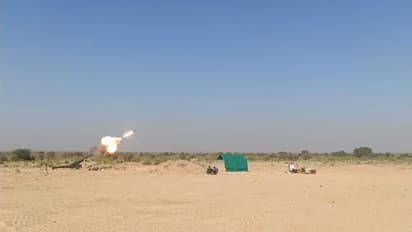
The official said that the project has undergone extensive gun and field trials at Deolali and Pokhran, successfully validating clean gun exit, stable flight and reliable ramjet ignition.
Elaborating on the current status of this project, Prof PA Ramakrishna, Department of Aerospace Engineering, said, “If fully realized, this technology could allow Indian artillery units to engage targets at nearly 50% more distances, offering commanders greater tactical flexibility, deeper strike options and enhanced deterrence — without the need for new gun platforms or costly missile systems.”
“Importantly, the design ensures that the extended range does not dilute battlefield impact, maintaining the lethality required for frontline operations,” he added.
Shedding light on the next stems, Prof PA Ramakrishna further said, “The same technology when adopted to rockets can enhance the range significantly. Some projects in this direction are already underway.”
Stay updated with the Breaking News Today and Latest News from across India and around the world. Get real-time updates, in-depth analysis, and comprehensive coverage of India News, World News, Indian Defence News, Kerala News, and Karnataka News. From politics to current affairs, follow every major story as it unfolds. IMD cities weather forecastsRain Cyclone Asianet News Official App