Delhi Private University Bill: 25% Seats for Local Students, Fee Regulation and UGC Rules
Synopsis
Delhi Cabinet has approved the Private University Bill, paving the way for new private universities with 25% seats for Delhi students, fee oversight, UGC compliance and mandatory NEP 2020 implementation.
The city of Delhi seems to be inching closer to experiencing one of its biggest changes within its higher education sector following the approval of the Delhi Private University Bill in a Cabinet meeting presided over by the chief minister, Rekha Gupta.
It is important to note that although the Bill has been approved, it still needs to pass through the Delhi Assembly before it becomes operational.
Arrangement of Land is Not the Government’s Responsibility in Private Universities
In order for private universities to become operational under the new arrangement, the organisations will have to provide land through purchase or lease for a minimum period of 30 years on their own accord. This is because the Delhi government will not be providing land for these universities.
The universities will be required to provide adequate infrastructure like classrooms, laboratory, library, computer lab and other student-related facilities. Also, appointment of teachers must adhere to UGC norms.
25% Seats for Delhi Students
One of the important clauses of the new law is that the private universities will have to give reservation of 25% seats to the students of Delhi for all courses offered by the universities.
The new law also plans to regulate the university fees. A separate regulatory committee will deal with the issues of fees, and the government will ensure that students are not burdened with unnecessary fees.
UGC Regulations & NEP 2020 Provisions Must Be Followed
Under the new law, the private universities will have to comply with all the rules of the University Grants Commission (UGC). They will also have to implement the provisions of the National Education Policy (NEP) 2020.
Affiliation to other colleges by the universities will not be allowed. However, the universities can open more campuses, regional centers and study centers wherever feasible under the law.
Education Minister Will Get Oversight Powers
Delhi Education Minister will act as Visitor of these universities. Among the powers provided are asking for information, conducting inspections and giving directions wherever required.
In any matter where there are potential violations, authorities may also look at issues related to administration, academics and finances of the institution.
Government says that students will be offered better opportunities
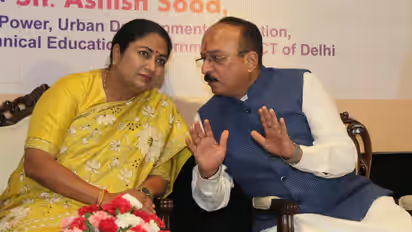
Education Minister Ashish Sood pointed out that Delhi presently doesn't have a separate law to cover private universities. This Bill has been introduced as a measure to fulfill this need as well as provide quality education to students.
According to the government, the move could lead to reduction in number of Delhi students who have to go to other states or foreign countries in search of specialized courses and advanced facilities. Passing of this Bill from the Assembly can change the education system of Delhi to a large extent.
Stay updated with the Breaking News Today and Latest News from across India and around the world. Get real-time updates, in-depth analysis, and comprehensive coverage of India News, World News, Indian Defence News, Kerala News, and Karnataka News. From politics to current affairs, follow every major story as it unfolds. IMD cities weather forecastsRain Cyclone Asianet News Official App