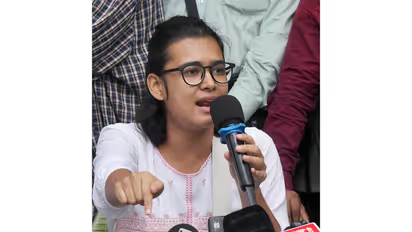
Delhi High Court Reserves Order on Plea by AISA Leader Neha Bora
Synopsis
The Delhi High Court reserved its order on AISA leader Neha Bora's challenge against a preventive notice issued under Sections 126 and 130 of the BNSS, focusing on procedural safeguards and the legal requirements for seeking bonds.
Legal Challenge Regarding BNSS Notice
New Delhi [India], October 22 (ANI): The Delhi High Court on Thursday reserved its order on a plea filed by AISA leader Neha Bora challenging a notice issued to her under Sections 126 and 130 of the Bharatiya Nagarik Suraksha Sanhita (BNSS), in proceedings concerning a bond for maintaining peace. Justice Subramonium Prasad heard detailed arguments from senior advocate Gopal Sankaranarayanan, appearing for Bora, and Additional Solicitor General Chetan Sharma and Central Government Standing Counsel Ashish Dixit, representing the State, before reserving the order.
The hearing primarily concerned whether the Special Executive Magistrate (SEM) had applied his mind to the material before issuing the notice and whether the statutory requirements for initiating preventive proceedings had been satisfied. Bora’s counsel argued that the notice was legally and constitutionally flawed and that the authorities had failed to record the requisite satisfaction. The State defended the proceedings, contending that they were preventive in nature and based on material indicating a likelihood of breach of peace.
Court Observations on Personal Liberty
During the hearing, the court emphasised the importance of procedural safeguards when personal liberty is at stake. “In a matter where liberty is under challenge, the only safeguard available to a citizen is the procedure, the requirement. The only safeguard is the requirement of the law to be met,” the court observed.
Arguments from the Petitioner
Sankaranarayanan submitted that Bora had been seeking reforms and had called for a gathering at Mandi House after Jantar Mantar was denotified as a protest site. He said a press conference was held at the Press Club on October 15, followed by a social media post at 4 pm on October 16. According to the counsel, the post was a reaction to the change in the designated protest site and did not contain any call for violence or unlawful activity. He argued that the post merely announced a meeting at Mandi House and did not incite violence, promote a breach of peace or call upon people to assemble to commit an offence.
The counsel submitted that Bora was detained barely 10-15 minutes after reaching the Mandi House area on the evening of October 16. He alleged that she was detained after raising slogans and was subsequently taken to the RK Puram police station, with her whereabouts remaining unknown to others until the early hours of the following morning. Sankaranarayanan also argued that the protest at Connaught Place was organised by a different organisation, whereas Bora had called for a gathering at Mandi House.
Questioning the contents of the notice, he said it contained factually incorrect allegations, including a reference to hoisting the national flag without permission. He argued that the notice was a cut-and-paste document that did not demonstrate independent application of mind by the SEM. The counsel further submitted that even an interim bond could not be required without the legally mandated inquiry and consideration of the relevant material. He argued that hearsay information could form the basis of a show-cause notice only after the authority had applied its mind to its credibility. Sankaranarayanan maintained that his challenge was not to the merits of the allegations but to compliance with the law. He submitted that the failure to follow the prescribed procedure entitled Bora to invoke the High Court’s jurisdiction under Article 226 of the Constitution.
Judicial Scrutiny of BNSS Provisions
The bench questioned whether the magistrate could require a person to furnish a bond while an inquiry was still pending and examined the relationship between Sections 126, 130 and 135 BNSS. The court also asked whether combining Sections 126 and 130 in the notice indicated that the magistrate had already formed a predetermined opinion. It questioned whether the magistrate had independently assessed the credibility of the information received before concluding that a breach of peace was likely. The bench further asked the ASG whether the documents forming the basis of the magistrate’s opinion would be supplied to the other side before the hearing. Sharma replied in the affirmative.
At one stage, the court asked whether it would be more prudent for Bora to await completion of the inquiry before approaching the High Court. It observed that the scope of judicial review under Article 226 would depend on the stage of the proceedings and the nature of the satisfaction recorded by the magistrate. Sankaranarayanan, however, maintained that the notice was ex facie legally and constitutionally flawed, arguing that the SEM had not recorded the requisite independent opinion.
The court also highlighted the stigma associated with proceedings requiring a person to furnish a bond for good behaviour even before the inquiry is completed. “The concern of the petitioner is that I am already branded as a bad boy and asked to say, ‘You shall be a good boy’. It is that stigma which a person has which has led to this proceeding. It has a facet in Article 21,” the court observed. The bench compared the requirement to furnish a bond pending an inquiry to a form of suspension until the inquiry is concluded.
State's Defense and Contentions
Opposing the plea, ASG Chetan Sharma argued that Sections 126 and 130 BNSS must be read together and cannot be treated as separate provisions in the context of preventive action. He submitted that Section 126 comes into play when there is a likelihood of a breach of peace and that the law empowers authorities to take preventive measures to maintain public tranquillity. The ASG argued that the petition effectively asked the High Court to substitute its opinion for that of the magistrate, even though the SEM had not reached a final decision on whether a bond should be furnished. He emphasised that the notice had not resulted in the imposition of a bond or any penal consequence and that Bora had been given the option of appearing personally or through a lawyer.
Sharma also contended that the SEM had examined the kalandara before issuing the notice. When the court asked whether any material other than the kalandara had been considered, the ASG referred to a general diary entry, previous FIRs, the situation on the streets and an explanation from the investigating officer, who had been called by the magistrate. Dixit informed the court that the kalandara was accompanied by FIRs and general diary entries. The ASG argued that the possibility of a breach of peace had to be assessed in the context of the prevailing circumstances and that preventive proceedings should not be defeated by what he described as an overly technical interpretation of the statutory provisions.
Sharma referred to six FIRs against Bora and alleged repeated violations, arguing that the authorities had sufficient grounds to examine the possibility of a breach of peace. He also referred to a gathering involving CJP leaders and advocate Prashant Bhushan, alleging that calls for regime change had been made at the event and that Bora had been present. Bora responded that advocating regime change was not wrong in a democracy. The court questioned whether it needed to examine that issue while deciding the legal challenge before it. The ASG further submitted that an order under Section 163 BNSS was in force in the Mandi House area. He argued that this contradicted Bora’s position that she had been acting independently of other organisations. Sharma alleged that Bora had been stopped at a police barricade displaying the prohibitory order and had moved towards Connaught Place. He maintained that the authorities were concerned about the possibility of a breach of peace in the national capital. The ASG concluded that the case could not be viewed as one involving a completely innocent person, referring to the previous FIRs and the circumstances cited by the police. The High Court reserved its order after hearing both sides.(ANI)
(Except for the headline, this story has not been edited by Asianetnews Editorial staff and is published from a syndicated feed.)Stay updated with the Breaking News Today and Latest News from across India and around the world. Get real-time updates, in-depth analysis, and comprehensive coverage of India News, World News, Indian Defence News, Kerala News, and Karnataka News. From politics to current affairs, follow every major story as it unfolds. IMD cities weather forecastsRain Cyclone Asianet News Official App