Chhattisgarh: Health warriors hold night camps in Sukma amid IED threats
Synopsis
Health workers in Chhattisgarh's Sukma district conduct night medical camps to reach remote villages. Braving rough terrain and IED threats, the initiative under Mukhyamantri Swasth Bastar Abhiyan ensures healthcare for villagers busy during the day.
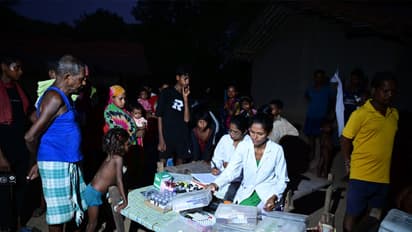
Daring challenging geographical condition, rough terrain and Improvised Explosive Devices (IEDs), which was planted of naxals and still pose serious threat even after the eradication of naxalism, warriors of health department are reaching the remote forested villages in Sukma district of Chhattisgarh and conducting night medical camps to ensure maximum outreach of Mukhyamantri Swasth Bastar Abhiyan.
As most of the villagers go to the forest for the collection of tendu leaves and to undertake agricultural-related activities during the day hours, the team of the health department were facing difficulties in carrying out door-to-door screening and medical checkups. To deal with the problem, the administration started conducting night health camps.
Campaign's Success and Strategy
With the reform-oriented vision of Chief Minister Vishnu Deo Sai towards improving the health of tribal communities living in the Bastar region, Mukhyamantri Swasth Bastar Abhiyan was launched. The district administration claims that health screening of nearly 70 percent of the district's population has been completed under Mukhyamantri Swasth Bastar Abhiyan.
"Ever since Mukhyamantri Swasth Bastar Abhiyan was launched in Sukma district, over 2 lakh beneficiaries have undergone health check-ups. More than 5000 people have been referred for treatment and 1407 people have been treated so far," said Sukma Collector Amit Kumar.
The Collector further elaborated that the most important aspect is that many people remain busy with different kinds of work during the daytime. For example, during the ongoing tendu leaf procurement season, people often could not be found at home during the day.
"Since people return to their homes at night, the district administration decided to start night camping as well. Under this initiative, health teams visit villages where people are usually unavailable during the daytime," Kumar said. They organize health camps at night and, when necessary, even stay there overnight to conduct medical examinations.
"Because of this effort, our health data is continuously improving, and so far, health check-ups of nearly 70 percent of the population in Sukma have been completed," said Amit Kumar.
Impact on Ground and Villagers' Response
Night camps are being organised in remote villages of Sukma as a move to ensure maximum outreach of Mukhyamantri Swasth Bastar Abhiyan's benefit to people, said CMHO Dr R K Singh.
Speaking about the night camp, Community Health Officer (CHO) Sandhya Nag, who was conducting the night camp at the forested village Gumodi, said that the commencement of the night camp is benefiting the population in remote villages across the district and people here are immediately referred to the health facilities as required.
"Night medical camps are being organised in the village several times a month and we people are receiving healthcare facilities through this," said a resident of village Gumodi Sunil Kumar Mandavi, adding that previously, they had to travel several kilometres just to avoid problems like cough-cold and fever. We are receiving the ambulance facility as well when required, said Mandavi.
Upon receiving the benefits of Mukhyamantri Swasth Bastar Abhiyan, the villagers expressed gratitude towards Chief Minister Vishnu Deo Sai. (ANI)
(Except for the headline, this story has not been edited by Asianet Newsable English staff and is published from a syndicated feed.)Stay updated with the Breaking News Today and Latest News from across India and around the world. Get real-time updates, in-depth analysis, and comprehensive coverage of India News, World News, Indian Defence News, Kerala News, and Karnataka News. From politics to current affairs, follow every major story as it unfolds. IMD cities weather forecastsRain Cyclone Asianet News Official App