Boeing 787 electrical faults: Pilots' body demands DGCA probe
Synopsis
The Federation of Indian Pilots has urged the DGCA to investigate recurring electrical faults in Boeing 787s, citing a third incident of uncommanded fuel switch movement. The issue is linked to a fatal Air India crash and another recent grounding.
FIP Demands Immediate Investigation
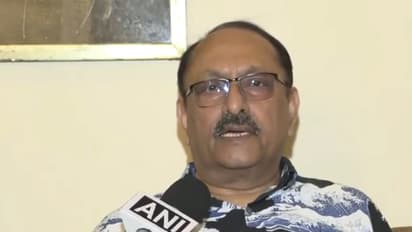
Federation of Indian Pilots (FIP) President Captain CS Randhawa on Monday urged the Directorate General of Civil Aviation (DGCA) and the Aircraft Accident Investigation Bureau (AAIB) to immediately investigate possible electrical faults in Boeing 787 aircraft, citing repeated incidents involving uncommanded movement of fuel control switches.
Captain Randhawa said this was the third known incident in which uncommanded movement of fuel control switches had been recorded on a Boeing 787 aircraft. He said the first such incident took place on February 17, 2019, involving an ANA flight landing at Osaka.
Speaking to ANI, Captain CS Randhawa said, "The first incident on the Boeing 787-800 aircraft took place on 17 February 2019 at Osaka on an ANA flight, which was landing at Osaka, where both fuel control switches on touchdown, when the throttles were brought to idle position, both these switches went to cutoff position automatically due to an electrical malfunction of the TCMA. We have been relating the same theory for the Air India 171 crash on 12th June at Ahmedabad. This is the third incident where there has been an uncommanded movement of the fuel control switches on the Boeing 787 aircraft."
He added, "Right after the accident of Air India 171, we have been reiterating to the Ministry of Civil Aviation, DGCA and the AAIB that please check the electrical systems of this aircraft, as it is prone to having electrical malfunctions of the TCMA and other electric components."
Randhawa further said there have been cases of water seepage and leakage from the front toilet or front galley into the electronic bay of the aircraft, leading to short-circuiting.
"Yet, Boeing has not found it appropriate to check the electrical systems of the Boeing 787 aircraft, even after repeated warnings. We have been stressing the need to check these electrical systems to avoid future accidents or incidents. Yet, to date, there has been no action by the DGCA or the AAIB," he said.
"It is pertinent for the DGCA and the AAIB to investigate the electrical systems and the connection between the TCMA and the fuel control switches on the Boeing 787 aircraft flying in India. This needs to be investigated immediately to avoid any future incident or accident related to the issue," he added.
Aviation Expert Echoes Concerns
Aviation expert Harsh Vardhan said that following the Air India 171 crash, the fuel control mechanism of Boeing 787 aircraft has come under focus and needs close examination.
Speaking to ANI, Harsh Vardhan said, "After the Air India 171 crash, the fuel control mechanism of the 787 and Boeing aircraft has come into focus. So it does bring up a very sensitive point and needs to be investigated."
He said Air India had grounded the aircraft and must establish the pilots' observations by corroborating them with the flight data recorder and other records.
"If you remember, even in 2018, there were guidelines by Boeing and the FAA about the sensitivity of the fuel control mechanism. We now need to look at it more seriously," he said.
Harsh Vardhan further said that this was one area where investigation needed to be more intensive.
"Now, coming to the correlation of this particular incident with the Air India 171 crash, right from the beginning, I maintained that while there are many areas of investigation, somewhere there is a system malfunction related to the fuel control mechanism," he said.
"We need to investigate deeper. The manufacturer would always want to justify their machine, the simplest way is to blame the pilot for it. In the interest of safety, there is a need to investigate deeper. Unfortunately, the Government of India's agency, the Aircraft Accident Bureau, does not have the competence. We need to bring more expertise here to establish the cause," he added.
Air India Grounds Aircraft
Meanwhile, an Air India Boeing 787-8 aircraft was grounded after a pilot reported a possible defect in the fuel control switch.
An Air India spokesperson said one of its pilots had reported a possible defect on the fuel control switch of a Boeing 787-8 aircraft, and the matter had been communicated to the DGCA. The spokesperson said the airline was engaging the Original Equipment Manufacturer (OEM) to check the pilot's concerns on priority.
"We are aware that one of our pilots has reported a possible defect on the fuel control switch of a Boeing 787-8 aircraft. After receiving this initial information, we have grounded the said aircraft and are involving the OEM to get the pilot's concerns checked on a priority basis," the spokesperson said.
"The matter has been communicated to the aviation regulator, DGCA. Air India had checked the fuel control switches on all Boeing 787 aircraft in its fleet after a directive from the DGCA, and had found no issues. At Air India, the safety of our passengers and crew remains top priority," the spokesperson added.
Details of Air India 171 Crash
An Air India Boeing 787-8 aircraft had crashed on June 12, shortly after take-off from Ahmedabad. The accident killed 260 people, including 229 passengers, 12 crew members, and 19 people on the ground.
A preliminary investigation into the crash revealed that seconds before the aircraft lost power, one pilot asked the other why he had cut off fuel to the engines. The second pilot reportedly replied that he "did not do so". The report stated that both engines shut down one second apart shortly after take-off, causing the aircraft to lose altitude rapidly before crashing near the airport boundary. (ANI)
(Except for the headline, this story has not been edited by Asianet Newsable English staff and is published from a syndicated feed.)Stay updated with the Breaking News Today and Latest News from across India and around the world. Get real-time updates, in-depth analysis, and comprehensive coverage of India News, World News, Indian Defence News, Kerala News, and Karnataka News. From politics to current affairs, follow every major story as it unfolds. IMD cities weather forecastsRain Cyclone Asianet News Official App