Assam boosts innovation with MC²+ IGNITE, IIT Guwahati partnership
Synopsis
Assam CM Himanta Biswa Sarma launched the MC²+ IGNITE outreach programme at IIT Guwahati, where an MoU was signed to strengthen the state's innovation ecosystem. The initiative aims to create opportunities in technology, especially in the energy sector.
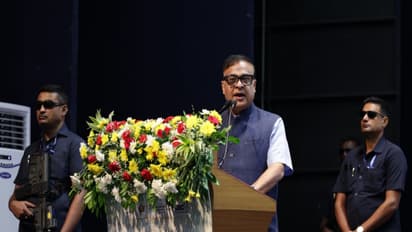
Taking an important step towards strengthening Assam’s ecosystem for innovation, entrepreneurship and deep technology, Assam Chief Minister Himanta Biswa Sarma on Thursday launched the MC²+ IGNITE - IIT Guwahati outreach programme at IIT Guwahati, where an MoU was also signed between MC²+ and IIT Guwahati.
As part of the programme, the MC²+ co-working Node at the NRL Centre, Guwahati, was also inaugurated. The MC²+ (Multiply, Collaborate, Create) initiative brings together the MC²+ Foundation, IIT Guwahati, Oil India Limited (OIL) and Numaligarh Refinery Limited (NRL) to create greater opportunities for innovation, technology development and entrepreneurship, particularly in the energy and allied sectors.
Assam Model of Entrepreneurship
Speaking on the occasion, Sarma said that Assam is entering an important new phase of economic development. "Over the last several years, the State has strengthened its infrastructure, connectivity, human development and industrial base, creating greater access to national and international markets. The next stage must focus on enhancing the productive capacity of Assam’s people and enterprises through innovation, technology and entrepreneurship," he said.
Sarma reiterated the need to develop an Assam Model of Entrepreneurship rooted in the State’s strengths, responsive to its developmental challenges and ambitious enough to compete in national and global markets. He said that Assam’s agriculture and horticulture sectors offer considerable opportunities in processing, logistics, and value addition, while the State’s rich biodiversity can support biotechnology and sustainable bio-based enterprises. Bamboo, handloom and handicrafts can be integrated with modern technology, design and global markets, while tourism can generate new technology-enabled businesses and experiences.
Sarma said that Assam’s unique developmental challenges can themselves become opportunities for innovation. He said that Assam should increasingly develop technologies suited to its own geographical, environmental and economic conditions and subsequently take those solutions to the rest of India and the world. "Gradually, Assam is creating technology for itself. We should now look towards making Assam a leader, and wherever possible a monopoly provider, of specialised services and solutions that emerge from our own strengths. If we can solve Assam’s problems, we can develop solutions for many parts of the world facing similar challenges," he said.
Focus on Energy Sector and Innovation
Highlighting the potential of Assam’s energy sector, Sarma said that the State’s long association with oil and gas has now entered a new phase. "Assam has moved beyond being merely a crude-producing State and today possesses capabilities in refining, petrochemicals, biofuels and emerging clean-energy technologies. The next generation of the State’s energy industry must be driven increasingly by knowledge, innovation and technology," the Chief Minister said.
The Chief Minister said that, "Technologies developed elsewhere cannot always provide the right answers for Assam. We need our own young people to develop solutions suited to our conditions, solutions that can serve the rest of India and the world." He also highlighted the emerging opportunities arising from the energy transition, including biofuels, green hydrogen, energy storage, energy efficiency, digital technologies and decarbonisation. He said the next phase of Assam’s energy journey should carry value beyond the boundary walls of refineries and industrial plants and create new enterprises, technologies, intellectual property, products and services within the State.
Strengthening Startups, Industry, and Academia
Sarma stressed the importance of developing a deeper relationship between startups, industry and academic institutions. He cited the example of NRL, which has invested approximately Rs. 50 crore in startups, including ventures such as Zymolent, working on cellulose enzyme technology for second-generation ethanol, and LW3, which is developing blockchain-based traceability solutions for green hydrogen and digital battery passports.
The Chief Minister encouraged OIL and NRL to deepen their engagement with startups by opening more industrial challenges to innovators and creating opportunities for promising technologies to be tested, validated and adopted in real operating environments. He said this is where the MC²+ initiative can make an important difference by strengthening the pathway from innovation to validation and from validation to commercial deployment.
MC²+ IGNITE Programme and IIT Guwahati MoU
Referring to the ongoing MC²+ IGNITE programme, with 30 startups and a Rs. 30 crore grant pool across seven focus areas, Sarma said the programme can provide entrepreneurs not only with financial support but also access to technical expertise, mentorship, academic capabilities and industry linkages, thereby helping bridge the critical gap between innovation and the market.
Sarma described the MoU between MC²+ and IIT Guwahati as an important development that will bring IIT Guwahati into a wider national network of partner institutions and expand opportunities for startups in Assam through mentorship, laboratory facilities and industry connections.
Government Support and Statewide Innovation
Sarma said the Government of Assam will continue to create an enabling environment for entrepreneurship and innovation through appropriate policies, infrastructure and institutional support. He said that the State government has created the Assam Innovation and Startup Foundation under the Department of Innovation, Incubation and Startups to connect the State’s innovation ecosystem with engineering colleges, polytechnics, ITIs, universities, incubation centres, startups and grassroots innovators across Assam.
He called upon MC²+ and AISF to build a statewide innovation funnel that connects industrial problem statements from Oil India, Numaligarh and MC²+ with talented young people across Assam, supports promising teams through incubation, mentoring and funding, anchors deep technology ideas at IIT Guwahati and takes validated solutions to industry for pilot deployment The Chief Minister moreover said that innovation should not remain concentrated in Guwahati or a handful of premier institutions.
Vision for a 'Technology State'
The Chief Minister said the larger objective of building a strong innovation and entrepreneurship ecosystem is to create a more productive, innovative and competitive Assam. A Viksit Assam, he said, will require strong infrastructure as well as strong enterprises; investment as well as innovation; and skilled people as well as entrepreneurs who are willing to create opportunities for others.
Sarma said the Assam Model of Entrepreneurship should ultimately reflect the distinctive strengths of the State- rooted in local needs, connected with industry, powered by technology and ambitious in its global outlook. "Our goal should not be merely to find solutions for Assam. Our goal should be to solve Assam’s problems so well that the solutions themselves become products, technologies and services that the world needs. That is how Assam can move from being a consumer of technology to a creator of technology, and from a resource State to a technology State," the Chief Minister added.
Chief Secretary Ravi Kota, CMD OIL Ranjit Rath, Director IIT-G Prof Devendra Jalihal, and host of other dignitaries were present on the occasion.
(Except for the headline, this story has not been edited by Asianet Newsable English staff and is published from a syndicated feed.)Stay updated with the Breaking News Today and Latest News from across India and around the world. Get real-time updates, in-depth analysis, and comprehensive coverage of India News, World News, Indian Defence News, Kerala News, and Karnataka News. From politics to current affairs, follow every major story as it unfolds. IMD cities weather forecastsRain Cyclone Asianet News Official App