ASI Resumes Excavations at Dronasagar to Trace Mahabharata Era Roots
Synopsis
The ASI has resumed excavations at Dronasagar in Kashipur to uncover the site's historical connection to the Mahabharata era, identifying ancient structures and artifacts during the preliminary stages of this significant archaeological dig.
ASI Resumes Archaeological Excavations at Dronasagar
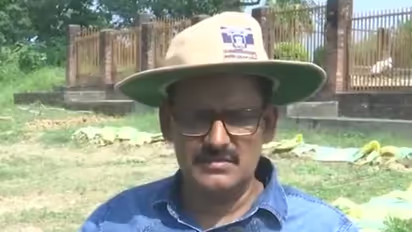
Kashipur (Uttarakhand) [India], October 25 (ANI): The Archaeological Survey of India (ASI) has resumed excavation operations at Dronasagar in Kashipur to investigate the historical validity of local traditions linked to the site of Guru Dronacharya's ashram from the Mahabharata period, an official said. Talking to ANI, Mohan Chandra Joshi, Superintending Archaeologist (In-Charge) for the ASI Dehradun Circle, highlighted the historical significance of the site, noting that earlier excavations had revealed structures spanning roughly two millennia.
Joshi said, "This is a very ancient site. YD Sharma conducted a formal excavation here in 1965, during which he uncovered various structures. He later carried out further excavations at the site in 1970–71, during which some structures were identified. The site holds a long history spanning approximately 2,000 years. Evidence of Painted Grey Ware (PGW) has also been reported here."
Defining the Cultural Sequence
"Based on this, many scholars associate the site with the Mahabharata era. Our main goal now is to conduct a systematic excavation down to the natural soil, allowing us to determine the site's complete cultural sequence and identify its origins," Dr Joshi added.
Initial Archaeological Findings
Detailing the progress made during the ongoing dig, Dr Joshi stated that several significant initial findings have already emerged, despite weather-related delays. "So far, we have conducted excavations for only about 20–25 days, with some interruptions caused by rain. Our findings include a small brick dating to the Shunga-Kushan period. At a higher level, we have uncovered a circular brick structure; for now, in this preliminary phase, we are identifying it as a circular well. We will be able to provide more definitive details once it has been fully exposed," the archaeologist said.
"As we excavate deeper, we are also working to trace the original foundation level of this circular brick structure. We aim to determine how many levels existed and whether brick structures were utilised across multiple phases. If it is indeed a brick well, we intend to trace its origin as we dig further down," he added. Further excavation is currently underway to uncover deeper archaeological strata at the site. (ANI)
(Except for the headline, this story has not been edited by Asianetnews Editorial staff and is published from a syndicated feed.)
Stay updated with the Breaking News Today and Latest News from across India and around the world. Get real-time updates, in-depth analysis, and comprehensive coverage of India News, World News, Indian Defence News, Kerala News, and Karnataka News. From politics to current affairs, follow every major story as it unfolds. IMD cities weather forecastsRain Cyclone Asianet News Official App