Aravalli Range: Green Lungs of Delhi NCR Face Grave Ecological Threats
Synopsis
The 2-billion-year-old Aravalli Range, a vital ecological barrier for Delhi NCR, has lost 32% of its green cover due to mining and encroachment. The Aravalli Green Wall Project aims to combat desertification and restore its threatened ecosystem.
The 2-billion-year-old mountain belt system - Aravalli range spread across Delhi, Haryana, Rajasthan and Gujarat came into limelight, when the definition of ranges contradicts the public interest.
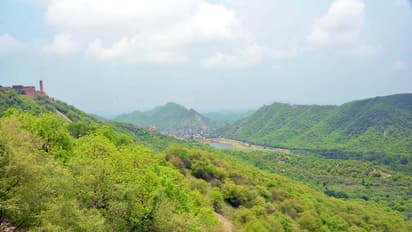
The Aravalli Ranges are known as "Green lungs" of Delhi NCR, and serve as a vital ecological barrier, by preventing the eastward spread of the Thar Desert and recharging groundwater in semi-arid regions.
The Aravalli Range faces increasing threats due to deforestation, mining, grazing, and human encroachment. Forest lands around Sariska and Bardod Wildlife Sanctuaries were diverted before the 1980s, reducing their forest cover, according to a report of the Ministry of Environment, Forest and Climate Change. The report further stated that Desertification is exacerbating as desert sands move eastward, compromising regions like Gurugram and Alwar. Mining activities have damaged aquifers, dried up lakes, and reduced the range's ability to support wildlife. The northern end of the Aravalli Range forms isolated and rocky hills and ridges in between Haryana and Delhi, whereas the south-western range passes through Gujarat and Rajasthan. According to the IOSR Journal of Humanities and Social Science, the mountains are divided into two main ranges - the Sambhar Sirohi Range and the Sambhar Khetri Range in Rajasthan, with an extension of about 560 km. Guru Shikhar is the highest peak of the Aravalli with 1722 meters, located near Mount Abu. The drainage ofthe Ganga and Indus is divided by one extension of the Aravalli, from Delhi to Haridwar.
Aravalli's Silent Disappearance: 32% Green cover eroded
The Green cover of the Aravalli range shows alarming figures, which may cause a major impact on the environment. In the research article titled "Assessment of Land-Use Dynamics of the Aravalli Range (India) using integrated geospatial and CART approach", authored by researchers from the Central University of Rajasthan (CURaj), including Prof. L.K. Sharma and others, it was stated that 32 per cent of "Green cover" was reduced from 1975 to 2019, driven by mining activities. It also mentioned that 8 per cent of the hills also vanished during this period. It was published in the international journal Earth Science Informatics (Springer) in January 2023. According to the article, if the loss of green cover continues, the losses could reach 22 per cent by 2059.
Epic Tidbits: Aravalli holds back the Desert & Leopards kingdoms
It is not wrong to say Aravalli's the 'grandparents of Indian mountain', yes, you heard right. It is the mountain belt formed during the Proterozoic Era (long before dinosaurs roamed or the Himalayas even existed). The most important proof came from a research paper written by two scientists, A.B. Roy and A. Kroner, and it was published in 1996 in a magazine called Geological Magazine. Now, one more interesting fact is associated with it...We all know about the Harappan civilisation, but have you ever thought that through those ages, the Aravalli ranges hosted massive copper suppliers- the Ganeshwar-Jodhpura Culture, which produced and supplied copper to the Harappan civilisation. The ranges are biodiversity hotspots for leopards, striped hyenas, Indian wolves, nilgai, jackals, porcupines, and the national bird, the peacock, as well. It has sanctuaries and reserve sites, which include Sariska Tiger Reserve, Jhalana Leopard Safari, and Mount Abu Wildlife Sanctuary. Well, there is also one fact that the Aravalli ranges have worn down 300-900 m (roughly 1000-3000 feet) elevation over billions of years of erosion and weathering, which is shocking, and it is published by NASA Earth Observatory. It even compared the Aravallis to the Appalachian Mountains of the United States.
Risk to Flora and Fauna due to Aravalli degradation
The activities like deforestation, mining and urbanisation could lead to an extensive impact on the mountain belt. There are around 300+ native plant species and 50 distinct flora species, 120 bird species and 25-30 mammal species, according to the manual "Plants of Northern Aravalli range in Delhi" published by the Department. Of Forest and Wildlife, GNCT of Delhi. Additionally, over 252 avian species have been recorded in the sanctuary, along with over 86 butterfly species and 28 species of Reptiles and Amphibians as reported by BNHS Conservation Education Centre-Delhi in their long-term study of the area. The failure to save the Aravalli Range would devastate a critical biodiversity hotspot that supports a vast array of life.
How Aravalli protect the environment
The Northern ecological shield - Aravalli ranges act as a wall, protecting against desertification by halting arid winds, sand dunes through the desert area and preserving soil fertility for agriculture. The porous and fractured rocks of the mountain support Luni, Banas and other streams by recharging and maintaining groundwater levels. It is a barrier against dust winds and large desert particles and influences the monsoon pattern as well.
Aravalli Green Wall Project
The Aravalli Green Wall Project is part of the Union Environment Ministry's vision to create green corridors across the country to combat land degradation and desertification. The initial launch of the project was done by Union Minister Bhupender Yadav in Haryana on March 25, 2023, but the project saw major expansion at the National level by relaunch by Prime Minister Narendra Modi on June 5, 2025. The project covered states of Haryana, Rajasthan, Gujarat and Delhi, where the Aravalli hills landscape spans over 6 million hectares of land.
The project will involve planting native species of trees and shrubs on scrubland, wasteland and degraded forest land, along with rejuvenating and restoring surface water bodies such as ponds, lakes and streams, according to a PIB release. The project will also focus on agroforestry and pasture development to enhance the livelihoods of local communities.
Project Objectives
The Aravalli Green Wall Project has the following objectives: to improve the ecological health of the Aravalli range. The aim of the project is to prevent eastward expansion of the Thar Desert and to reduce land degradation by creating green barriers that will prevent soil erosion, desertification and dust storms, according to the release. This green wall will help in carbon sequestration and mitigating climate change to enhance the biodiversity and ecosystem services of the Aravalli range by planting native tree species in the Aravalli region, providing habitat for wildlife, and improving water quality and quantity. Additionally, to promote sustainable development and livelihood opportunities by involving local communities in afforestation, agro-forestry and water conservation activities that will generate income, employment, food security and social benefits.
The Aravalli Range is not only an ecological feature but also has a profound and important effect on the social and economic well-being of the people who reside in its vicinity. The Aravalli Range is a significant contributor that influences water, air and climatic factors. The preservation of these ranges would be viewed as the sustainability of communities and a better future ahead for the generations.
(Except for the headline, this story has not been edited by Asianet Newsable English staff and is published from a syndicated feed.)Stay updated with the Breaking News Today and Latest News from across India and around the world. Get real-time updates, in-depth analysis, and comprehensive coverage of India News, World News, Indian Defence News, Kerala News, and Karnataka News. From politics to current affairs, follow every major story as it unfolds. IMD cities weather forecastsRain Cyclone Asianet News Official App