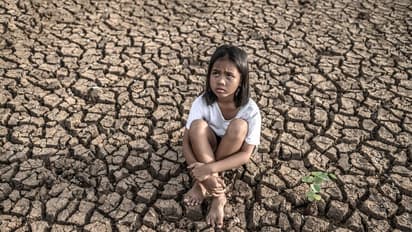
A new study shows that children born in 2020 could face four times more extreme weather events than older generations due to global warming, with heatwaves, floods, and crop failures hitting the poorest regions hardest.
Those born in 2020 and after face tough climate challenge
A new global study published in the journal Nature reveals how climate change will drastically impact people born in recent decades—especially those born in 2020 and after. Scientists found that if global warming reaches 3.5°C by 2100, nearly all children born in 2020 will face far more extreme weather events than older generations.
27
Children to face 4 times more heatwaves
For example, a child born in 2020 could face up to 26 heatwaves in their lifetime, compared to just 6 for someone born in pre-industrial times. That’s four times more heatwaves, plus increased risks of floods, droughts, and food shortages.
37
Climate models and population data used for study
Using climate models and population data, scientists studied six major types of extreme weather events: heatwaves, river floods, droughts, crop failures, tropical cyclones, and wildfires. They then calculated how many people across birth years from 1960 to 2020 would face "unprecedented lifetime exposure" (ULE) to these events.
Under current climate policies—which could lead to about 2.7°C warming by 2100—52% of children born in 2020 will face extreme heat levels never seen before in human history. If warming reaches 3.5°C, that number jumps to 92%. About 29% may face serious food shortages due to crop failures, and 14% could face major river flooding.
57
Severe impact in Africa and South Asia
The most vulnerable populations will be hit hardest. Poorer regions with fewer resources, like parts of Africa and South Asia, are more likely to face these severe impacts. These areas are often already suffering from climate problems and may not have the infrastructure to adapt.
67
Researchers say this is a warning sign
Without immediate global action to reduce carbon emissions, today's children will live through more climate extremes than ever before. They also warn that their estimates might be on the lower side, because their study did not include things like wildfire smoke crossing borders or migration due to climate disasters.
77
More studies hint at similar threat
Other studies have also shown similar findings. In Brussels, for instance, children born in 2020 could face 26 heatwaves if warming hits 3.5°C—this is well above the “unthinkable” limit of 6.
The authors say limiting warming to 1.5°C through stronger climate policies could help protect hundreds of millions of people, especially the youngest and poorest. It would prevent much of this extreme weather exposure from ever happening.