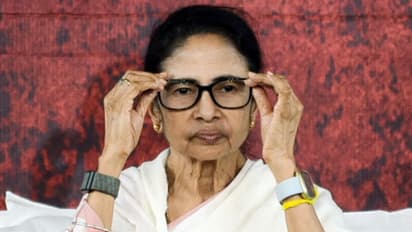
Mamata Banerjee’s political journey began in a modest Kolkata household and evolved through student politics, protests, and the formation of the Trinamool Congress, eventually leading her to become the Chief Minister of West Bengal.
Mamata Banerjee was born on Harish Chatterjee Street in Kolkata, where her family lived in a modest two-room house. At home, she was lovingly called “Monababa.” Her father worked as a government contractor, and the family managed a stable life until his sudden death when Mamata was just 15 years old. After that, the responsibility of caring for her mother and five younger siblings fell on her shoulders at a very young age.
25
Balancing Family Responsibilities and Education
Life became extremely challenging for Mamata Banerjee after her father’s passing. She reportedly woke up at 3:30 every morning to cook for her family and prepare her younger brothers for school. Despite financial struggles and household responsibilities, she continued her education and earned degrees in History, Education, and Law. During her student years, she became interested in politics and joined the student wing of the Congress party, the NSUI.
35
Formation of the Trinamool Congress
While working within the Congress party, Mamata Banerjee openly criticised leaders she believed were indirectly supporting Communist politics. She famously referred to such leaders as “watermelons” — green on the outside and red on the inside. Differences within the party eventually led her to form her own political party, the All India Trinamool Congress, on January 1, 1998. She also designed the party’s election symbol featuring two flowers growing from the soil.
Over the years, Mamata Banerjee built an image as a strong grassroots leader known for aggressive protests and direct public engagement. One major moment in her political career came in 1993, when she was reportedly dragged by police during a protest at the Writers’ Building in Kolkata. Another widely discussed incident happened in 1990, when she was injured during a political protest. Images of her with bandages became symbolic of her fighting spirit, and supporters increasingly began calling her “Didi.” In 2011, she led the Trinamool Congress to victory, ending the 34-year rule of the Left Front government in West Bengal.
55
Current Political Scenario in West Bengal
As counting continues for 293 assembly seats in West Bengal, early trends indicate a tough contest between the BJP and the Trinamool Congress. Initial figures suggest the BJP is leading on several seats, while the TMC is trailing behind compared to previous performances. Reports also indicate that Mamata Banerjee is facing a close contest in the Bhabanipur constituency against BJP leader Suvendu Adhikari. However, the final results are still awaited.