Union Budget 2026 Explained: A to Z Guide to Key Financial Terms Every Indian Must Know
Synopsis
Your ultimate guide to the Union Budget 2026–27: Understand A–Z of key terms like fiscal deficit, capex, GST, PSU, repo rate, subsidies, and tax instruments shaping India’s economy.
The Union Budget 2026–27, to be tabled in Parliament by Finance Minister Nirmala Sitharaman on February 1, 2026, will spell out how the government plans to tax, spend and borrow in the year ahead. This Budget comes at a time of global geopolitical uncertainty, trade pressures including a 50% US tariff on Indian shipments, and tighter fiscal space. Making this year’s presentation even more notable, Union Budget 2026 will be the first Budget in India’s history to be presented on a Sunday.
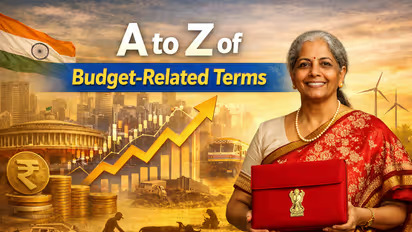
For most citizens, Budget coverage is packed with technical expressions that shape economic policy but often sound abstract. This comprehensive A-to-Z glossary explains every major term associated with the Indian Union Budget — and why it matters.
A
- Annual Financial Statement (AFS): The constitutional document that presents the Union Budget’s income and expenditure plan.
- Appropriation Bill: A law that authorises the government to withdraw money from the Consolidated Fund.
- Asset Monetisation: Raising funds by leasing or selling existing public assets.
- Agriculture Allocation: Budgetary spending aimed at farming, MSP, irrigation, and rural welfare.
B
- Budget Estimates (BE): Initial projections of government revenue and expenditure for the coming year.
- Budget Deficit: The shortfall when government spending exceeds its income.
- Bond Yield: The return earned on government securities, influencing loan interest rates.
- Borrowings: Funds raised by the government from markets to finance the fiscal deficit.
C
- Capital Budget: The part of the Budget dealing with long-term investments and borrowings.
- Capital Expenditure (Capex): Spending on assets like roads, railways, ports, and infrastructure.
- Capital Receipts: Funds that either create liabilities or reduce government assets.
- Cess: A tax levied for a specific purpose that is not shared with states.
- Consolidated Fund of India: The main government account for all revenues and expenditures.
- Charged Expenditure: Mandatory spending not subject to Parliament’s vote.
- Contingency Fund of India: A fund for meeting urgent, unforeseen government expenses.
- Customs Duty: Tax imposed on imported and exported goods.
D
- Debt-to-GDP Ratio: Government debt expressed as a percentage of the economy’s size.
- Direct Taxes: Taxes paid directly by individuals and companies, such as income tax.
- Disinvestment: Sale of government stake in public sector enterprises.
- Demand for Grants: Ministry-wise requests seeking Parliament’s approval for expenditure.
- Defence Expenditure: Budget allocation for military and national security needs.
E
- Economic Survey: A pre-Budget report reviewing economic performance and outlook.
- Excise Duty: Tax on domestically manufactured goods, mostly subsumed under GST.
- Extra-Budgetary Resources (EBR): Funds raised by PSUs outside the Budget framework.
- Employment Generation: Budget initiatives aimed at creating jobs and enhancing skills.
- Expenditure (Capital vs Revenue): Capital builds assets while revenue meets routine costs.
F
- Finance Bill: The legislation that gives legal effect to Budget tax proposals.
- Fiscal Deficit: The gap between total expenditure and non-borrowed receipts.
- Fiscal Policy: Government decisions on taxation and spending to manage the economy.
- Fiscal Consolidation: Efforts to reduce deficits and control public debt.
G
- GDP (Gross Domestic Product): The total value of goods and services produced in the economy.
- Nominal GDP: GDP measured at current prices, including inflation.
- Real GDP: GDP adjusted for inflation, reflecting actual economic growth.
- GST (Goods and Services Tax): India’s unified indirect tax on goods and services.
- Gross Borrowing: Total amount the government plans to borrow from markets.
- Green Growth: Budget focus on sustainable and climate-friendly development.
H
- Headline Inflation: Inflation measured using the Consumer Price Index (CPI).
- Health & Education Cess: A dedicated levy on income tax to fund social sectors.
- Household Consumption: Consumer spending trends that influence economic growth.
I
- Indirect Taxes: Taxes on goods and services such as GST and customs duty.
- Inflation: A sustained rise in general prices that reduces purchasing power.
- Interest Payments: Money paid by the government to service its debt.
- Infrastructure Spending: Public investment in transport, energy, and urban development.
J
- Jobs Allocation: Budget provisions supporting employment and skilling programmes.
- Jan Dhan-linked Schemes: Welfare schemes routed through financial inclusion accounts.
K
- Kisan Support: Government spending on agriculture, subsidies, and farmer welfare.
- KYC-linked Transfers: Welfare payments delivered through verified bank accounts.
L
- Liabilities: Government obligations arising from borrowings and pending payments.
- Liquidity: Availability of money in the financial system.
M
- Monetary Policy: RBI’s actions on interest rates and money supply.
- MSME Credit Support: Budget measures to ease loans for small businesses.
- Market Loans: Government borrowing through bonds and treasury bills.
N
- Non-Tax Revenue: Government income from dividends, interest, and fees.
- Net Tax Revenue: Tax income retained by the Centre after states’ share.
- Nominal Growth Assumption: Growth estimate used for Budget revenue projections.
O
- Off-Budget Borrowing: Borrowing routed through PSUs instead of the Budget.
- Outcome Budget: Assessment of results achieved from past Budget spending.
- Oil Subsidy: Government support to manage fuel price volatility.
P
- Primary Deficit: Fiscal deficit excluding interest payments.
- PSU (Public Sector Undertaking): Government-owned commercial enterprises.
- Public Account: Funds held in trust, such as provident funds and small savings.
- Pension Liabilities: Government obligations toward employee pensions.
Q
- Quarterly Borrowing Calendar: Schedule of government market borrowings.
- Quarterly Review of the Economy: A quarterly assessment of India's GDP provides insights into economic progress every three months.
R
- Repo Rate: Interest rate at which RBI lends to commercial banks.
- Reverse Repo Rate: Rate at which RBI borrows money from banks.
- Revenue Budget: Budget section covering routine income and expenditure.
- Revenue Receipts: Tax and non-tax income that does not create liabilities.
- Revenue Expenditure: Spending on salaries, subsidies, and interest payments.
- Revenue Deficit: Excess of revenue expenditure over revenue receipts.
- RBI (Reserve Bank of India): India’s central bank managing monetary policy.
S
- Subsidy: Government support to lower the cost of essential goods and services.
- Section 87A: Income tax rebate provision for lower-income taxpayers.
- Statutory Transfers: Mandatory tax devolution to states.
- Small Savings Schemes: Government-backed savings instruments like PPF and NSC.
- Surplus Budget: Situation where government income exceeds expenditure.
T
- Tax Buoyancy: Measure of how tax revenue grows with the economy.
- Tax-to-GDP Ratio: Share of national income collected as tax.
- TDS: Tax deducted at the time of making payments.
- TCS: Tax collected by sellers at the point of sale.
- Trade Deficit: Excess of imports over exports.
- Treasury Bills: Treasury Bills, or T-Bills, are short-term government debt instruments issued to raise funds for immediate expenditures on various programs and initiatives. They serve as a temporary tool for the government to generate revenue quickly.
U
- Union Budget: Annual financial roadmap of the central government.
- UT Allocations: Budgetary spending for Union Territories.
V
- Vote on Account: Temporary approval to fund government expenses before Budget passage.
- Voted Expenditure: Spending approved by Parliament through voting.
- Value-Added-Tax: This is an indirect tax levied on the added value of goods and services at different stages, from production to consumption by the end user.
W
- Welfare Spending: Government expenditure on health, education, food, and social security.
- Wage Bill: Total salary expenditure of government employees.
- Wealth Tax: Wealth Tax is a direct tax imposed on the total value of an individual’s assets as of the end of the financial year (March 31). It is charged at 1% on net wealth exceeding ₹30 lakh.
X
- X-Factors: X-factors in the Union Budget are unforeseen events—like natural disasters, economic shifts, or health emergencies—that can affect budget outcomes.
Y
- Yield Curve: Refers to income from government investments like bonds. Higher yields mean more profit; lower yields may prompt a review of revenue strategies.
Z
- Zero-Based Budgeting: Budgeting method where every expense must be justified afresh.
Why This Glossary Matters
These Budget terms shape tax relief, inflation, interest rates, infrastructure spending, welfare support and job creation. Understanding them allows citizens to look beyond headline numbers and grasp how Budget 2026 sets India’s economic direction for the year ahead.
Stay updated with all the latest Business NewsShare Market NewsIPOsGold PriceDA Hike8th Pay CommissionAsianet News Official App