Semiconductors- the long-awaited mission: A major boost to India’s technological leadership
Synopsis
A much-awaited program under the Atmanirbhar scheme, this would facilitate India’s technological leadership in areas of strategic importance towards economic self-reliance, says the author Dr MP Sukumaran Nair.
In the light of reports that inadequate availability of semiconductor components is holding back the electronics equipment assembly in several sectors, the Union government approved the comprehensive package amounting to Rs 76,000 crores for the development of semiconductor and display ecosystem to usher a new era in electronics manufacturing. A much-awaited program under the Atmanirbhar scheme, this would facilitate India’s technological leadership in areas of strategic importance towards economic self-reliance. The scheme envisages to incentivise companies or groups engaged in design, assembly and manufacture of semiconductor fabs, display fabs, silicon photonics and sensors. These components are extensively used in mobile phones, television, notebooks, servers, smart home, gaming, wearables, and Wi-Fi access points automobiles, diagnostic medical equipment, control automation and so on accelerated by the digital transformation.
From early 2020, global industry experienced chip supply disruptions on account of the coronavirus pandemic, US restrictions on Chinese chip industry and a fire disrupting production at a major chip manufacturing plant in Japan. The chip shortage did not become critical as economies began shutting down in the wake of global lockdowns and chip manufacturers began cutting back on production, anticipating a fall in demand. With work from home becoming the order of the day, demand for laptops, computers, TVs, gaming consoles, smartphones and other electronic devices began to surge and at this point chip shortage became critical. It was also accelerated by the signs of economic recovery in some countries
According to International Data Corporation (IDC), the premier global provider of market intelligence, advisory services and consumer technology markets, the worldwide semiconductor market is expected to grow by 17.3 per cent in 2021 as against 10.8 per cent in the previous year down due to Covid 19 impacts. Semiconductor manufacturers include integrated device manufacturers (IDMs) like Intel, Samsung Electronics, SK Hynix, and Micron Technology who have their own design, fabrication, and assembly capabilities and fabless companies like Qualcomm and Nvidia.Fabless manufacturers are those who only design chips and outsource their fabrication to specialized semiconductor foundries such as TSMC (Taiwan Semiconductor Manufacturing Company, world’s largest) or Global. US semiconductor companies have a stake of around 50 percent of the global market, followed by South Korea, Japan, Taiwan, and China.
Also read: Cabinet approves Rs 76,000 crore project for design and manufacture of semiconductor chips
Technology
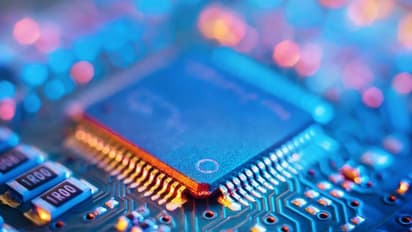
A semiconductor chip is a pack of electric circuit with transistors and wiring formed on a semiconductor wafer. An electronic device comprising numerous of these components is called integrated circuit (IC). These circuits are capable of running software, manipulate data and control the functions of electronic devices for specific purposes. Chip companies try to pack more transistors into chips, enhancing performance and making devices more power efficient. Bloomberg observes, building an entry-level factory that produces 50,000 wafers per month costs about $15 billion. Most of this is spent on specialized equipment—a market that exceeded $60 billion in sales for the first time in 2020. Besides the technology is closely guarded, it requires focussed research besides a huge investment. Most of the roughly 1.4 billion smartphone processors shipped each year are made by TSMC. Intel has 80% of the market for computer processors. Samsung dominates in supply of memory chips.
We do not have anything which could be called a world class semiconductor fabrication, assembly, and testing facility currently operating in India. Even though India unveiled its National Policy on Electronics in 2019, little progress was made in developing a world class semiconductor manufacturing facility for which an investment of the order of 3 to 6 billion USD will be required. What we already have are only baseline or research kind of facilities and therefore, in-house semiconductor fabrication, assembly, and testing needs to expand especially when the country is eying to become a 5 trillion-dollar economy by 2025. The Govt may probably be looking to bridge this huge gap between supply and demand with respect to semiconductor manufacturing through the proposed incentives.
Overcoming the entry barriers may be the first hurdle. Investment, technology and supply chains are the major ones. With determination all these are only surmountable as we have experienced in atomic energy and space travel. Start with assembly, testing and packaging and slowly move into design and fabrication of low and medium end chips. Assemble trained Indian manpower from abroad to strengthen R and D efforts required. Start-ups of Indian engineers may be encouraged to perfect new designs. Involvement of the private sector big players who are major consumers like the Tatas also in the development process will add momentum to the mission. State governments may also be asked to collaborate with resources at their command.
Also read: Cryptocurrency market mayhem: Prices of Bitcoin, Ethereum, Dogecoin, Shiba Inu tank in last 24 hours
Markets
New generation of smartphones are an important market for the semiconductor industry, especially devices supporting technologies such as XR, 5G, and AI. Servers and data centers are another important opportunity, with semiconductor innovation required to support cloud data centers and the rise in edge computing, supported by the development of AI chips. Industrial and automotive applications are also expected to experience increased demand: as manufacturing facilities and vehicles become smarter and ever more connected, the requirement for more advanced semiconductor technology to fulfill these tasks grows.
All the above justify the govt initiative to encourage and incentivise every part of the supply chain including electronic components, sub-assemblies, and finished goods leading to semiconductor chip production in the country. Once established, the ISRO style of indigenous cost cutting would render the country as the hub of manufacturing advanced quality chips at lower costs.
(Author- Dr MP Sukumaran Nair is a former Chairman, Public Sector Restructuring & Audit Board, Kerala and Secretary to Chief Minister, Kerala)
Stay updated with all the latest Business NewsShare Market NewsIPOsGold PriceDA Hike8th Pay CommissionAsianet News Official App