SEBI Official Outlines Roadmap for Scaling India Capital Markets
Synopsis
SEBI WTM KVR Murty calls for a shift to risk-based, anticipatory regulation to scale Indian capital markets, emphasizing the need for long-term capital formation to drive India's growth toward the Viksit Bharat vision.
SEBI Official Outlines Roadmap for Scaling India Capital Markets
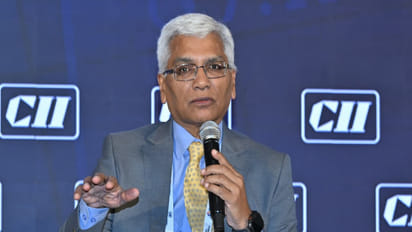
New Delhi [India], November 19 (ANI): Scaling India's capital markets for high growth requires transitioning from reactive rulemaking to optimum regulation and anticipatory, risk-based supervision, according to Securities and Exchange Board of India (SEBI) Whole Time Member (WTM) KVR Murty. Speaking at the CII-DFS Financing Summit 2026 in Mumbai on Thursday, Murty outlined a roadmap to expand the country's financial system toward the Viksit Bharat vision. He noted that sustaining a real GDP growth trajectory of 7.6 per cent to 9.1 per cent annually across decades demands risk-bearing, long-term capital formation.
"Scaling India’s capital markets for high growth requires transitioning from reactive rulemaking to optimum regulation and anticipatory, risk-based supervision….Traditional lending alone cannot carry a nation to that destination. It requires channelling domestic household savings and long-term global institutional funds directly into productive enterprise through vibrant, transparent securities markets," Murty said during his keynote address.
The regulator reported that All-India market capitalisation grew from Rs 412 lakh crore at the end of FY 2025-26 to Rs 507 lakh crore as of October 2026. This surge lifted the equity market capitalisation-to-GDP ratio above 100 per cent. In FY 2025-26, India ranked first globally in the number of Initial Public Offerings and third in funds raised through the primary equity market, hitting Rs 2.3 lakh crore.
"At SEBI, our commitment to optimum regulation ensures that market expansion goes hand-in-hand with investor protection and systemic integrity. By deploying technology-driven supervision, fortifying cyber-resilience, and enhancing ease of doing business, we continue to foster an ecosystem that is both agile and secure," Murty stated.
Sharing data at the summit, Murty noted that total demat accounts crossed 24.4 crore as of October 31, 2026, while unique investors rose to 15.4 crore. Average monthly gross Systematic Investment Plan (SIP) contributions increased by 9.0 per cent to Rs 31,766 crore during the April to September period of FY27. This domestic participation absorbed a cumulative net outflow of Rs 3.4 lakh crore by Foreign Portfolio Investors across FY 2025-26 and the first seven months of FY 2026-27.
"Ultimately, trust is our true market infrastructure. As India advances toward its long-term economic aspirations, our markets stand deep, transparent, and resilient, ready to reliably channel domestic and global savings into sustainable wealth creation and inclusive national progress," Murty added.
To support long-gestation infrastructure, SEBI operationalised Union Budget 2026-27 reforms across corporate debt, municipal bonds, Real Estate Investment Trusts (REITs), and Infrastructure Investment Trusts (InvITs). The regulator also launched the Demat 2.0 Corporate Bond Tokenisation Pilot, which integrates a shared ledger with the Reserve Bank of India's wholesale Central Bank Digital Currency for atomic settlement.
"To make economic expansion seamlessly investable, our roadmap focuses on reducing friction across the capital-raising lifecycle, streamlining IPO and rights issue timelines, rationalizing listing norms, and simplifying access for foreign portfolio investors and reverse-flipping enterprises," Murty said. (ANI)
Stay updated with all the latest Business NewsShare Market NewsIPOsGold PriceDA Hike8th Pay CommissionAsianet News Official App