Maharashtra govt partners with WUR to boost farming with AI, digital tech
Synopsis
Wageningen University signs an MoU with the Maharashtra government to bring AI and digital tech to its farming sector. The collaboration will focus on five pillars, including digital phenotyping, pilot projects, and knowledge exchange.
Wageningen University and Research (WUR) has signed a Memorandum of Understanding (MoU) with the Maharashtra government to bring advanced artificial intelligence (AI) and digital technologies to the state's farming sector. The agreement was finalised during the "AI 4 Agri 2026" summit held at the Bandra Kurla Complex (BKC) in the presence of the Chief Minister of Maharashtra.
The Five-Pillar Agreement
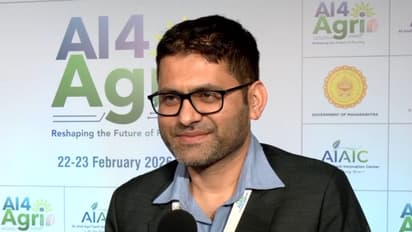
In an interview with ANI, Arun Kumar Pratihast, Senior Researcher at WUR, outlined the five pillars of the collaboration: AI and digital phenotyping, digital breeding, crop-specific pilot projects, knowledge exchange, and international learning. "So as you correctly tell, today we signed the MOU in front of our Chief Minister from Maharashtra. Within this MOU, we have five main points. So first is AI and digital phenotyping. Second is digital breeding and seed system. Third is crop-specific pilot projects. Fourth is knowledge exchange and capacity building and fifth international collaboration and learning. So these are the five points, the starting point, but we'll have specific projects to further elaborate these points in detail."
Implementation and Localisation Strategy
In the long term, the MoU serves as a framework for the state government and the university to identify specific local needs. Initial efforts will focus on using sensors to monitor crop growth and developing AI models specifically for the Maharashtra environment. "MOU is just the understanding. memorandum of understanding between two institutes. After that, we'll have further meetings, further collaboration with the government to really understand what is the need, and then we'll identify and further implement these programs. So for example, AI and digital phenotyping. So we'll have some crops where we set some sensor, we observe, for example, how the crops are growing. leaf allegation, crop growth, for example, and then we'll try to model that and then we'll develop different AI models that will fit for Maharashtra use case."
While WUR has operational models used in Europe, scaling these technologies in India requires local data. Pratihast emphasised that state agricultural universities will play a critical role in providing the contextual knowledge and data necessary to adapt European models to the Indian landscape. "Look, uh fastest is, it depends on many things. But what we'll try to do, basically, we have existing models which is operational in European scale. But here, for example, the state universities know the contents. And as you know, that any model, any AI model needs the data. Once you have the local data, local knowledge, then we can find in this developed model in Wageningen and test how we can re-adopt. So the role of local institute will be very crucial."
Co-designing with Farmers: The 'Citizen Science' Approach
A central part of the strategy involves "citizen science," which engages smallholder farmers in the design and training of AI systems. Rather than delivering a finished product, the goal is to involve farmers throughout the development process to ensure the tools are useful and accurate. "At Wageningen, what we try to do, we don't design the system for the farmers, but we design system with the farmers. And with the farmers means the citizen science. Last 15 years, I am working on the citizen science approach. We design many mobile apps. many ways to engage citizen science in co-design process where citizens can directly contribute the data, their knowledge, practices, and that can be used to retain the model. So you tell validation. Validation is not the only tip of the iceberg. Basically, if you want to have the proper engagement of a smallholder farmer, then you have to engage them in whole process. And that's why you call it co-design. So you need to understand from the beginning that how to design the system that is for them and with them. So you have to really think not only validation but also including in the designing and training process." (ANI)
Stay updated with all the latest Business NewsShare Market NewsIPOsGold PriceDA Hike8th Pay CommissionAsianet News Official App