LPG Use Lags in Rural India Due to High Cost, Poor Delivery: CEEW
Synopsis
A CEEW study reveals that despite LPG connections, usage remains low in rural India. Only 47% of users get doorstep delivery and just 23% use it exclusively, with high costs and logistical hurdles cited as major barriers to clean cooking.
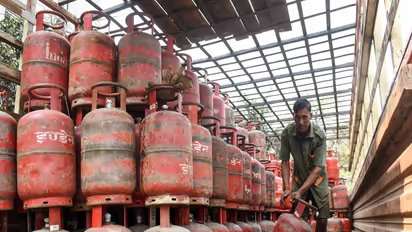
Among rural households, just 47 per cent of LPG users receive doorstep delivery, leaving refill cost and last-mile logistics as the binding constraints, according to three studies released by the Council on Energy, Environment and Water (CEEW).
The findings showed that while 73 per cent of rural households used LPG in the previous 90 days, only 23 per cent use it exclusively, with half still relying on firewood as their primary fuel.
The data revealed that informal connections purchased through local shops, roadside dealers, or unauthorised sellers at higher rates fill the void created by limited awareness and weak delivery networks.
Challenges for Vulnerable Groups
Migrant workers face severe barriers, with 79 per cent of migrant LPG users lacking a formal connection and under 4 per cent enrolled in the Pradhan Mantri Ujjwala Yojana (PMUY), despite the 2021 policy provision allowing simplified self-declarations.
In urban informal settlements, 70 per cent report exclusive use, yet 31 per cent of those without formal connections face rejection over missing address proofs, prompting 11 per cent to pay Rs 1,040 informally against the retail cost of Rs 803.
Among migrants, 70 per cent living in open spaces rely purely on solid fuels, while informal users pay Rs 71 per kg, exceeding formal rates by over 20 per cent.
Affordability a Key Barrier
Prarthana Borah, Fellow at CEEW said, "Clean air is inseparable from how people cook, work and live. These studies show that providing an LPG connection is only the first step. If families cannot afford regular refills, migrants are not aware of formal connections under PMUY, or cylinders do not reliably reach rural homes, households remain exposed to polluting fuels."
Borah further pointed out that India's clean air agenda must therefore “look beyond access to whether clean cooking is affordable, reliable and used sustainably."
Affordability forms a common challenge across all surveyed categories. At a price of Rs 400 per 14.2 kg cylinder, at least 80 per cent of respondents state they would switch exclusively to LPG.
The median willingness to pay stands at Rs 500, falling well below the current subsidised PMUY rate of Rs 642.
Policy Recommendations for Sustained Use
Abhishek Kar, Fellow at CEEW and co-author of the studies, stated: "Clean cooking policy now has to move from connection numbers to sustained use. For rural households, refill affordability and doorstep delivery matter most; for urban poor households, documentation and payment innovations like micro-payments are needed; and for migrants, additional subsidy and awareness are the missing links."
Kar also mentioned that a majority of migrant LPG users buy informally, paying a per-kg premium of more than 20 per cent over general users who can afford a full formal cylinder.
“These lived realities must guide the next phase of clean cooking action."
To address these deficits, the CEEW studies propose that the Ministry of Petroleum and Natural Gas raise the PMUY subsidy by approximately Rs 200 per cylinder. Recommendations also called for targeted migrant enrolment drives, smart-meter kiosk pilots, and differentiated distributor commissions to expand rural doorstep access.
(Except for the headline, this story has not been edited by Asianet Newsable English staff and is published from a syndicated feed.)Stay updated with all the latest Business NewsShare Market NewsIPOsGold PriceDA Hike8th Pay CommissionAsianet News Official App