India-Oman CEPA to boost trade, MSME exports, and energy security
Synopsis
India signed a Comprehensive Economic Partnership Agreement (CEPA) with Oman to expand trade and investment. The pact provides zero-duty access for 99.4% of Indian exports and targets key sectors like textiles, gems, and services to boost exports.
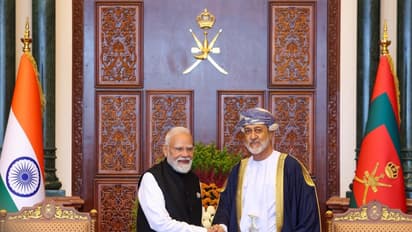
India has taken another significant step towards deepening its integration with global supply chains by signing a Comprehensive Economic Partnership Agreement (CEPA) with Oman, a move expected to expand bilateral trade, strengthen MSME-led exports and enhance India's energy security, according to Dipanwita Mazumdar, Economist at Bank of Baroda.
Expanding Market Access and Services
The agreement signed during Prime Minister Narendra Modi's visit to Oman earlier this week focuses on expanding trade and investment flows while creating new opportunities for labour-intensive sectors such as textiles, leather, footwear, gems and jewellery, and engineering products. These sectors, which are closely linked to employment generation, are expected to see improved market access in Oman under the pact. In addition, the CEPA significantly enhances commitments in the services sector, covering education, healthcare, computer services, professional services, business services and research and development.
Tariff Reductions and Protections
One of the key highlights of the agreement is zero-duty access on 98.08 per cent of Oman's tariff lines for Indian goods, covering nearly 99.4 per cent of India's exports to Oman by value. In return, India has offered tariff concessions on 77.79 per cent of its total tariff lines, accounting for about 94.8 per cent of imports from Oman. For export-sensitive items, particularly in agriculture, the agreement adopts a tariff-rate quota (TRQ) mechanism, allowing limited quantities to be imported at concessional rates.
Recent Trade Trends
India's exports to Oman stood at US$ 4.1 billion in FY25, accounting for about 0.9% of India's total exports. While exports moderated slightly after FY23, they have shown strong long-term momentum, growing at a five-year CAGR of 12.4%, significantly higher than the growth in India's overall exports during the same period. Exports during April-October 2025 were marginally higher than the corresponding period last year, indicating early signs of recovery.
On the import side, India's purchases from Oman rose sharply to US$ 6.6 billion in FY25, driven largely by petroleum products. Imports have grown at a five-year CAGR of 12.2%, faster than India's overall import growth. As a result, India's trade deficit with Oman widened sharply to US$ 2.5 billion in FY25, though the deficit has begun to narrow in the current fiscal year as export growth picks up.
Export-Import Basket Analysis
Manufactured goods dominate India's export basket to Oman, followed by petroleum products and agricultural goods. Within manufacturing, engineering goods and pharmaceuticals account for a substantial share, positioning them as key beneficiaries of the CEPA. The sectors explicitly targeted under the agreement together account for around 39% of India's exports to Oman, providing a direct boost to India's export competitiveness.
On the import front, crude petroleum and petroleum products form the bulk of India's imports from Oman. Notably, the unit value of petroleum imports from Oman is among the lowest within the Gulf Cooperation Council (GCC), making Oman an attractive and cost-efficient energy partner for India. This pricing advantage could help India contain its oil import bill and diversify sourcing options.
Strategic Implications and Outlook
According to Bank of Baroda's assessment, the India-Oman CEPA is strategically timed as global trade patterns undergo realignment due to rising tariffs and geopolitical shifts. The agreement strengthens India's access to overseas markets, supports MSME exporters and enhances resilience in energy imports. Overall, the pact is expected to play a constructive role in boosting exports, generating employment and improving trade competitiveness, reinforcing India's broader trade strategy in a challenging global environment. (ANI)
Stay updated with all the latest Business NewsShare Market NewsIPOsGold PriceDA Hike8th Pay CommissionAsianet News Official App