Indian exporters calm on US tariff threat, cite humanitarian trade
Synopsis
Indian exporters are not worried about the US tariff threat on Iran's trading partners, as their trade primarily involves humanitarian goods like food and pharmaceuticals, which are already exempt from existing US sanctions.
The Indian exporting community remains watchful yet composed following US President Donald Trump's announcement of a 25 per cent tariff on Iran's trading partners, as stakeholders emphasise that current bilateral trade primarily involves humanitarian goods already exempt from existing sanctions.
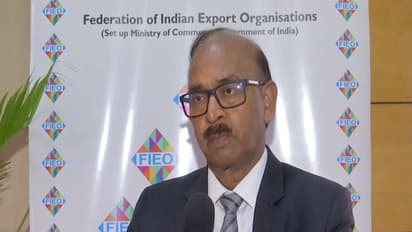
Speaking to ANI, Ajai Sahai, CEO & DG of the Federation of Indian Export Organisations (FIEO), said he is not unduly concerned about the statement, as Indian industry and banks deal only with Iran on goods that fall outside the scope of US OFAC sanctions. He noted that India's trade with Iran is centred on humanitarian products, primarily food items and pharmaceuticals.
"What we are dealing with Iran are the goods which are humanitarian in nature, primarily food products, as well as the pharmaceuticals. So we are not unduly worried about that," Sahai said. He acknowledged that while the "sweeping statement" put into the media has created uncertainty, further clarity is expected once an official executive order is issued by the US administration.
Currency Depreciation a More Pressing Concern
According to Sahai, a more pressing concern for exporters is the rapid depreciation of the Iranian currency, which erodes consumer purchasing power in that market. He explained that many Indian exports currently in the pipeline face risks not necessarily from the US tariff threat, but from the rial's depreciation. Sahai noted that no one anticipated the currency would plummet to such levels, making it difficult for consumers to afford imports and potentially causing buyers to back out of contracts.
Impact on Basmati Rice Sector
Akshay Gupta, Head- Bulk Exports, KRBL, the parent company of India Gate rice, said in a statement that "Iran has been a key market for Indian basmati rice from an export perspective. Rice exporters have observed significant consumer demand in this region. When trade with Iran was fully open, KRBL exported approximately 250,000 tonnes of basmati rice. However, over the years, sanctions and increased market restrictions have considerably impacted our business."
Gupta added that KRBL's current exposure to the Iranian market is limited to approximately USD 8-10 million and is being managed prudently. He noted that most trade is now conducted through the UAE, where Iranian importers operate locally, an arrangement that has helped mitigate risks. "This arrangement has helped us in mitigating risks. The re-imposition of US tariffs, including the proposed 25% levy under the Trump framework, adds an additional challenge to the Indian basmati rice sector," he said.
Broader Diplomatic and Trade Hopes
In the broader diplomatic landscape, Sahai highlighted the significance of recent comments by the new US Ambassador on trade negotiations. He described the ambassador's statement as encouraging, noting that it indicates the US is keen to continue dialogue. Sahai emphasised that constant communication is essential for negotiations to fructify and expressed hope that this engagement will resolve the remaining deadlock and pave the way for the India-US Bilateral Trade Agreement (BTA).
Budgetary Push for R&D and Skilling Urged
As the industry looks toward the upcoming Union Budget, FIEO has urged the government to prioritise Research and Development (R&D) and skilling to bolster India's manufacturing and export capabilities.
Incentivising Research and Development
Sahai suggested that the government should provide fiscal support, possibly through tax reductions, to incentivise R&D, which he characterised as a high-gestation activity with significant uncertainty. "If we want that high and sophisticated technology should find a place in India and become a hub for that, probably we have to invest a lot into R&D. And for that, R&D needs to be incentivised. So I would request the government to provide some kind of fiscal support, maybe in the form of tax reduction, where the entire burden is not on the government, the part burden is taken by the industry, part by the government."
Upskilling Labour for Competitiveness
He further stressed the need for intensified efforts to reskill and upskill labour, particularly in labour-intensive sectors, to ensure Indian products remain competitive in the global market. (ANI)
(Except for the headline, this story has not been edited by Asianet Newsable English staff and is published from a syndicated feed.)Stay updated with all the latest Business NewsShare Market NewsIPOsGold PriceDA Hike8th Pay CommissionAsianet News Official App