496 Million Indians Move Out of Poverty Between 2011 and 2023 Period
Synopsis
World Bank reports 496 million Indians lifted from poverty between 2011 and 2023, dropping the rate to 16.1 percent. Growth was driven by increased employment, food subsidies, and a significant rise in rural women entering the paid workforce.
Significant Reduction in Indian Poverty Levels
Around 49.6 crore (496 million) people in India moved above the lower-middle-income poverty line of USD 4.20 per day between 2011 and 2023, bringing the poverty rate down sharply from 57.7 per cent to 16.1 per cent during the period, according to the World Bank's October 2026 Poverty & Equity Brief.
“Between 2011 and 2023, the share of the population living below the Lower Middle-Income Country line (USD 4.20/day, 2021 PPP) fell from 57.7 per cent to 16.1 per cent, lifting an estimated 496 million people out of poverty, while extreme poverty (USD 3.00/day) declined from 27.1 per cent to 2.6 per cent,” the brief noted. Over the same timeframe, extreme poverty measured at USD 3 a day fell from 27.1 per cent to 2.6 per cent, with both benchmarks calculated using 2021 purchasing power parity.
Government Response and Economic Drivers
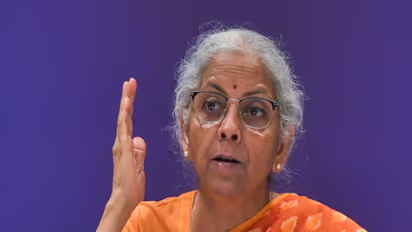
Reacting to the statistics, Union Minister for Finance and Corporate Affairs, Nirmala Sitharaman, hailed the government’s efforts in yielding tangible results for the country. “Under the leadership of Hon’ble PM Shri @narendramodi, the Government’s sustained policy efforts are yielding tangible results, strengthening the foundations for inclusive growth and greater economic opportunity. This is the reason why NDA govt wins people’s trust and mandate of our citizens,” Sitharaman stated on X.
She further noted, “We remain committed to building on this progress through productive employment, stronger household incomes and effective delivery of public services, so that aspirations of our people are met.”
Key Factors Behind Poverty Decline
The World Bank’s October 2026 Poverty & Equity Brief attributed this reduction to strong consumption growth, rising employment, particularly among women, and expanded social transfers such as food subsidies. Additionally, national access to electricity climbed to 99 per cent based on 2022 survey data.
The report also detailed projections for coming years, observing that “poverty is projected to continue declining, albeit more gradually, with the poverty rate at the USD 4.20/day line expected to fall from 14.2 per cent in 2026 to 12.1 per cent by 2028.”
Non-Monetary Metrics and Regional Challenges
On non-monetary metrics, multidimensional poverty recorded steep declines. As per the brief, non-monetary poverty fell from 53.8 per cent in 2005–06 to 16.4 per cent in 2019–21, reaching 15.5 per cent in 2022–23 under the World Bank index. Employment figures expanded by 13.4 crore between 2017 and 2023, an increase nearly double the growth of the working-age population. The brief pointed out that “much of the gain driven by rural women entering paid work and raising the number of earners per household.”
Despite convergence narrowing the rural-urban divide, the report emphasized geographic and wage disparities. Median earnings among the top 10 per cent of workers were roughly 13 times higher than the bottom 10 per cent in 2023. Furthermore, households in a contiguous belt from Uttar Pradesh to West Bengal represent about 57 per cent of the remaining poor population, making future national declines reliant on expanding productive employment in those regions.
Stay updated with all the latest Business NewsShare Market NewsIPOsGold PriceDA Hike8th Pay CommissionAsianet News Official App