Club World Cup: How Saudi side Al Hilal outplayed Man City in a 7-goal thriller
Synopsis
Saudi Arabia’s Al Hilal shocked Manchester City with a 4-3 extra-time win in the Club World Cup, pulling off one of the biggest upsets in the tournament’s history.
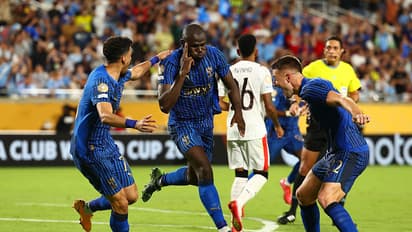
In what can only be described as one of the most seismic results in recent football history, Saudi Arabian powerhouse Al Hilal pulled off an astonishing 4-3 win in extra time over Premier League giants Manchester City on Monday night, knocking Pep Guardiola's side out of the FIFA Club World Cup in the process.
In front of a roaring crowd and against all odds, the Riyadh-based club showed grit, precision, and a level of resilience that left their more fancied opponents stunned. This wasn’t just a victory—it was a statement. A moment that will go down in Middle Eastern football folklore.
Man City vs Al Hilal: A Controversial Start, A Spirited Fightback
Manchester City were the first to draw blood, and in controversial fashion. Just nine minutes in, Bernardo Silva converted after a whipped cross from Rayan Ait-Nouri, despite protests from Al Hilal players who claimed the ball had been controlled by the arm in the build-up. The referee saw no issue, and the goal stood.
It could’ve been the beginning of a routine win for the English giants. But as the minutes passed, signs of vulnerability began to show. Al Hilal’s Moroccan goalkeeper Yassine Bounou, affectionately known as "Bono", pulled off a string of critical saves—including back-to-back stops against Jeremy Doku and Silva—that kept City’s lead narrow.
The warning signs were there. Al Hilal were quick, organised, and confident on the break. And City, despite their dominance in possession, failed to kill the game early.
Marcos Leonardo Sparks the Storm
The real drama began just one minute into the second half.
Former City player Joao Cancelo whipped in a low cross, which Ederson managed to parry. But chaos ensued—Malcom’s shot was blocked by Ruben Dias, only for the ball to loop perfectly for 20-year-old Brazilian striker Marcos Leonardo, who nodded in the equaliser.
Six minutes later, Cancelo again delivered a long ball over City’s high defensive line. Malcom latched onto it, outpaced his marker, and calmly slotted the ball past Ederson. In less than ten minutes, Al Hilal had turned the game on its head.
The Saudi fans erupted. On the touchline, Guardiola immediately rang in the changes, bringing on Rodri, Nathan Ake, and Manuel Akanji to restore order.
Man City Claw Back, but Al Hilal Rise Again
The substitutions had the desired effect—City steadied their shaky backline. And their pressure eventually told. A corner from Silva caused havoc in the box, and Erling Haaland was quickest to react, bundling the ball over the line to make it 2-2.
The Premier League champions looked poised for another dramatic escape. They dominated possession, and came close on multiple occasions—Bounou again denied Akanji and Dias, while Ali Lajami produced a heroic goal-line clearance to stop Haaland.
As the match moved into extra time, Guardiola replaced Haaland with Egyptian striker Omar Marmoush, hoping to unlock a tiring Al Hilal defence. But it was the Saudi side who struck first again.
Kalidou Koulibaly rose highest to meet Ruben Neves’ corner with a thumping header, putting Al Hilal back in front. City responded with a sublime equaliser—Rayan Cherki floated a delightful cross, and Phil Foden finished with flair from an impossibly tight angle.
But Al Hilal weren’t done. Sergej Milinkovic-Savic’s header was saved, but Marcos Leonardo, the young man with a heavy heart, was there again—bundling the ball over the line to make it 4-3. And this time, there was no coming back.
‘She Watched the Match’: A Striker’s Personal Triumph
After the match, an emotional Marcos Leonardo opened up about what the night meant to him.
“I’ve had a difficult time in the last two months. My mother spent 70 days in the ICU,” he revealed. “Today she’s fine, thank God. When I scored those two goals, I thought of her. She was able to watch the match.”
For Leonardo, this wasn’t just a breakout performance on the world stage—it was deeply personal. The emotion in his celebration said it all. In football, the moments that matter most are often born from adversity.
Bernardo Silva: ‘They Ran Way Too Many Times’
Man City’s captain on the night, Bernardo Silva, didn’t sugar-coat the result.
“We scored three and could’ve scored five, six,” he said. “It was all about controlling when we lost the ball, controlling the transitions, don’t let them run, and they ran way too many times.
“With one, two passes there was always a feeling of danger coming from them. When we allow teams to run like this we always suffer a lot, and today was the case.”
Silva’s analysis was brutally honest. For all their talent, City’s defensive shape and lack of counter-transition awareness were exposed by a hungry Al Hilal side who didn’t blink.
A Changing Football Landscape
With this result, Al Hilal move into the quarter-finals to face Brazilian club Fluminense—guaranteeing a non-European side will reach the semi-finals.
More importantly, their victory sends a powerful message. Football’s balance of power is shifting, slowly but surely. Backed by significant investment and driven by pride, ambition, and identity, clubs from the Middle East are no longer content to be footnotes in global competitions—they're writing their own headlines.
Al Hilal’s triumph over Manchester City wasn’t just a win—it was a watershed moment. A moment that reminded the football world that underdogs are dangerous when they believe.