T20 World Cup 2026: Why Australia's Group Stage Exit Is a Significant Setback? Explained
Synopsis
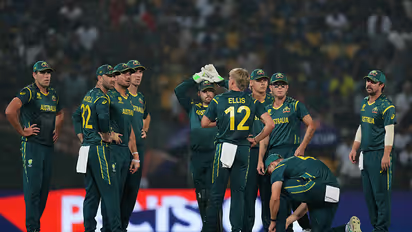
Australia were eliminated from the T20 WC 2026 in the group stage after a washout between Zimbabwe and Ireland ended their hopes. Their first early exit since 2009 followed losses to Zimbabwe and Sri Lanka, with a weakened pace attack proving costly.
Australia’s hopes of clinching the second T20 World Cup title were dashed after Zimbabwe secured their Super 8 berth following their abandonment of the Group B match against Ireland at the Pallekale International Stadium in Kandy on Tuesday, February 17.
Australia’s qualification for the Super 8 was hanging by a thread after two consecutive losses at the hands of Zimbabwe and Sri Lanka, and were at the third spot in Group B with two defeats and a win, and accumulated two points. The 2021 T20 World Cup champions' further progress in the tournament was dependent on Ireland defeating Zimbabwe in their final Group B clash, as only a Zimbabwe loss would have kept Australia’s slim Super 8 hopes alive.
With the match being abandoned due to rain and Zimbabwe qualifying for the Super 8 as the second-placed team in Group B, Australia’s campaign came to an abrupt end. Moreover, the Kangaroos slipped to fourth place after Ireland moved to third spot after gaining one point from the washout, taking them to a total of three points after four matches.
First Group Stage Exit Since 2009
Australia’s failure to qualify for the Super 8 stage of the T20 World Cup 2026 might be shocking, but it is not the first time they have suffered an early exit in the tournament’s history.
The last time Australia were knocked out of the group stage of the tournament was back in the 2009 edition, when the Kangaroos did not win a single match against West Indies and Sri Lanka in Group C, finishing at the bottom of the table and crashing out without progressing further.
Though Australia bounced back by finishing as runners-up in 2010 and semifinalists in 2012, they failed to progress beyond the Super 10 stage in 2014 and 2016, highlighting a period of inconsistency before their title triumph in 2021. Despite being the defending champions, Australia failed to go past the Super 12 stage in the 2022 edition after finishing third in Group 1, missing out on the semifinal berth.
In the last edition of the T20 World Cup, Australia’s run came to an end in the Super 8 stage, eliminated before the semifinals. However, the 2021 T20 World Champions will view their 2026 group-stage exit as a far more disappointing setback, as they failed to even reach the second round despite entering the tournament with high expectations.
Why Australia’s Group Stage Exit Is a Big Setback?
In any ICC tournaments, including ODI World Cups, T20 World Cups, and Champions Trophy, Australia were the favourites to win the title, given their strong record and ability to perform under pressure. Their early exit from the T20 World Cup 2026 marks a significant setback for the team that has been quite dominant in ICC events.
One of the key factors behind Australia’s group stage setback was the weakened pace bowling attack, as Pat Cummins and Josh Hazlewood’s unavailability due to injuries and Mitchell Starc’s retirement from the T20Is just months before the tournament left them short on experience and firepower in crucial moments.
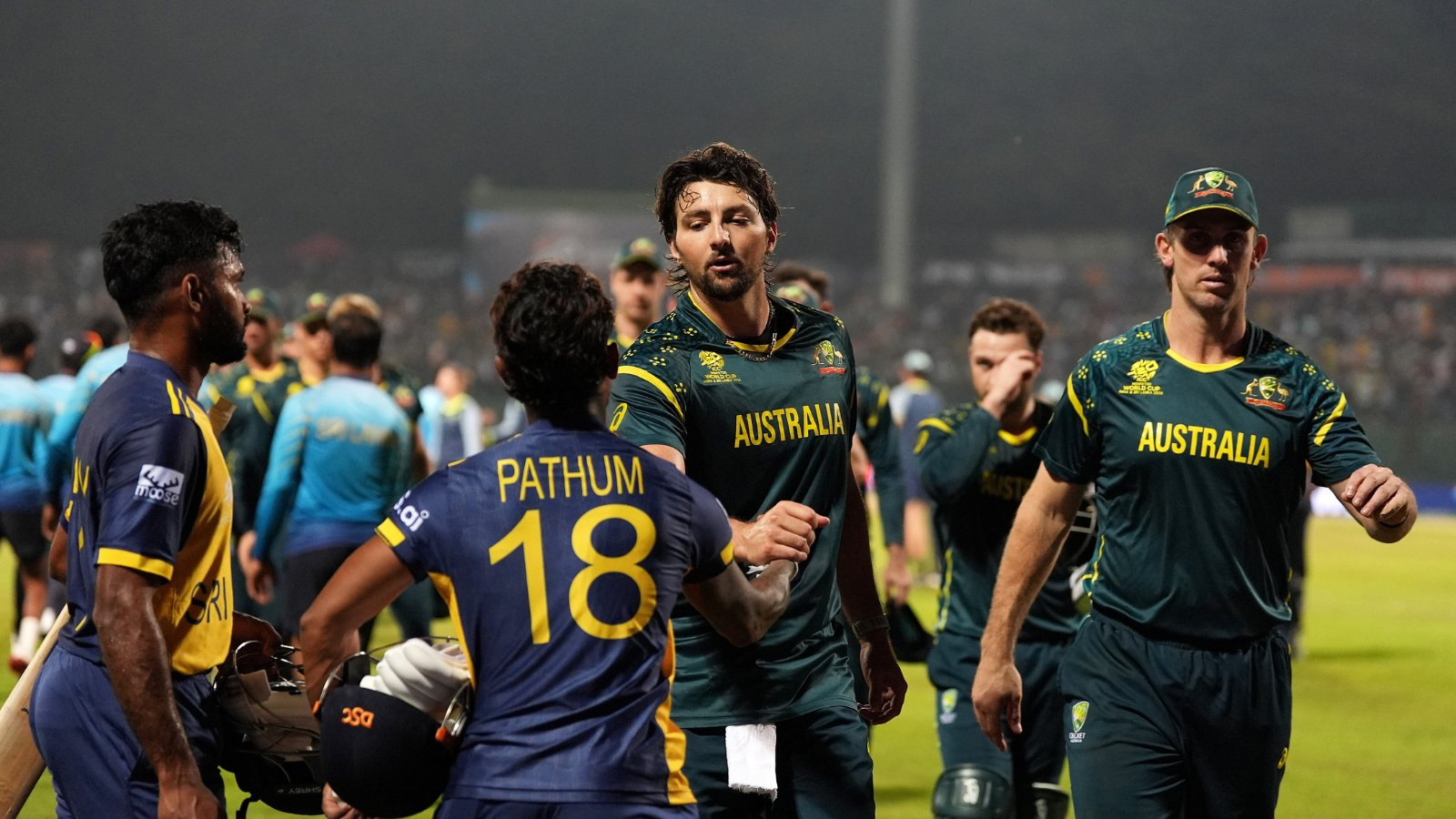
Moreover, Australia’s stunning defeat at the hands of Zimbabwe and Sri Lanka, which put them on the brink of an early exit, exposed their vulnerability under pressure and left them dependent on other results rather than controlling their own fate in the tournament. Since the 2023 World Cup triumph, Australia are yet to win any silverware, having fallen short in subsequent ICC tournaments despite entering the events as a strong contender.
Therefore, Australia’s early exit from the T20 World Cup marks a significant reality check for a long-considered powerhouse in ICC tournaments, raising serious questions about transition, squad depth, and their ability to maintain dominance in the evolving T20 landscape.
What Next For Australia?
Australia’s final group stage match against Oman will serve as a dead rubber, as the result will have no impact on the Super 8 qualification. However, the 2021 T20 World Cup champions will look to end their otherwise disappointment on a high note with a victory over Oman on Friday, February 20.
With Australia’s early exit from the tournament, Mitchell Marsh’s captaincy has come under scrutiny, as Cricket Australia may look to change the T20I leadership and overall squad direction ahead of the next global cycle, especially with a transition phase looming in the shortest format.

With Mitchell Starc retired from T20Is, and Pat Cummins and Josh Hazlewood struggling with injuries, selectors and team management will look to groom a new pace core and identify fresh leadership options to rebuild a side capable of competing consistently in future ICC events. After the T20 World Cup, Australia’s focus will be on ODIs as preparation for the 2027 World Cup.
Australia will enter the 2027 World Cup, co-hosted by South Africa, Zimbabwe, and Namibia, as the defending champions, having won the title back in 2023, and will aim to reassert their dominance in the 50-over format after a disappointing T20 campaign.