What Happens When a Minor Accident Damages Costly Car Sensors?
Synopsis
A minor crash may leave only a small dent, but modern cars can hide expensive sensor damage underneath. Learn how accidents can affect parking, ADAS and safety sensors and what drivers should check afterward.
A minor accident may leave only a small dent, but it can still affect the sensors fitted behind bumpers, grilles, mirrors or windscreens. These parts support parking assistance, warning systems and other safety functions.
If a sensor shifts, cracks or loses connection, the car may need detailed inspection, repair, replacement or calibration. Understanding what happens next can help owners handle the repair and insurance process with greater clarity and confidence.
Warning Lights and Features May Stop Working
The car may display a warning message after the accident. Some faults appear only when the feature is used. The vehicle may continue to drive, but drivers should not assume every assistance system works properly.
- Parking alerts may stop detecting nearby objects.
- A reversing camera may show a blank or unclear image.
- Collision warnings may become unavailable or respond incorrectly.
- A dashboard message may ask the driver to check the system.
These signs usually mean that the sensor, wiring or mounting position requires inspection.
The Garage Will Check More than the Dent
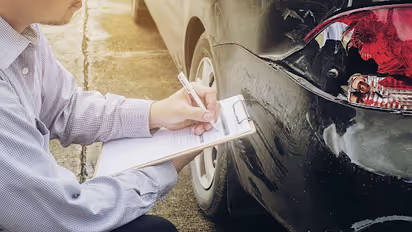
A technician will inspect the damaged panel and connect diagnostic equipment to the vehicle. This helps identify electronic fault codes that a visual check cannot find. The bumper may need removal to access affected components.
- The sensor surface may be cracked or pushed inward.
- A mounting bracket may have bent during the impact.
- Wiring or connectors may have become loose.
- Paint, dirt or panel damage may block the sensor.
- Nearby components may also need testing.
The inspection shows whether the part can be refitted or must be replaced.
The Repair Bill May Be Higher
Sensor damage can make a minor accident more expensive because several tasks may be involved. Apart from bodywork, the garage may charge for diagnosis, parts, labour and testing. The amount depends on the vehicle model, damaged component and required procedure.
- The bumper may need removal and refitting.
- A damaged sensor or camera may require replacement.
- Brackets, clips or wiring may need separate repairs.
- Scanning and calibration may be charged separately.
- Painting must not affect sensor operation.
An itemised estimate explains why a small impact has produced a larger repair bill.
The New Part May Need Calibration
Installing a replacement camera or radar unit may not complete the repair. Some systems require calibration so they measure distance, recognise road markings and detect surrounding vehicles correctly. A small change in position can affect readings.
- Calibration may be completed inside an equipped workshop.
- Some vehicles require a controlled road test.
- Manufacturer instructions determine the correct method.
- A final scan should confirm that faults are cleared.
- The garage should provide a testing record.
Without calibration, the system may appear active but give inaccurate information.
The Insurer Will Assess the Damage
With suitable own damage protection under new car insurance, accidental sensor damage may form part of a claim, subject to policy terms and assessment. The insurer may review photographs, the garage estimate, survey findings and damaged parts before approving repairs.
- Inform the insurer before major repairs begin.
- Photograph the impact area and the dashboard warning.
- Request an itemised estimate for parts, labour and calibration.
- Replace components when inspection is required.
- Follow the stated cashless or reimbursement process.
Deductibles, depreciation and other conditions may affect the approved amount.
Liability Only Cover Works Differently
Third party car insurance addresses legal liability for injury, death or property damage caused to another person. It does not pay for sensors fitted in the policyholder’s own car. Such repairs require own damage cover.
- Damage to another vehicle’s sensors may be entered as a third-party claim.
- Drivers should exchange registration and insurance details.
- Photographs can record the impact and damaged areas.
- The claim route depends on the circumstances and available cover.
Checking the policy type prevents confusion when the repair estimate arrives.
Final Thoughts
A minor accident can damage costly car sensors even when the visible impact seems small. The vehicle may need diagnosis, replacement, calibration and testing. Inform the insurer before repairs, keep all related documents and ensure every affected feature works properly before driving. Claim approval remains subject to policy terms and applicable deductions. Proper checks can prevent unresolved faults from affecting future journeys.