Can the Right Pillow and Mattress Reduce Snoring?
Synopsis
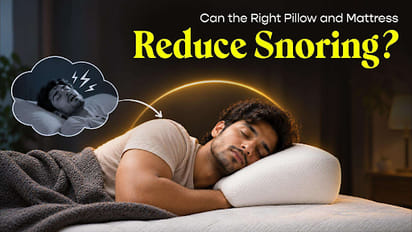
A pillow and a mattress can’t fix snoring on their own, but they can make the simple, doctor-approved habits easier to keep: sleeping on your side and keeping your upper body a little raised.
Snoring is one of those problems households joke about until the jokes stop being funny. There’s the nudge at 2 am, the pillow over the head, the partner who quietly relocates to the sofa. For many people snoring is harmless noise. For some it points to something that deserves a doctor’s attention. Either way, part of the fix often sits in the bedroom.
To be clear up front: no pillow or mattress cures snoring, and none replaces a medical check when one is needed. What they can do is support the habits that ENT specialists and hospitals in India commonly recommend, mainly staying off your back and keeping your upper body slightly raised. Here’s how that works, and where the pillow and mattress fit in.
Why snoring happens
Snoring is the sound of tissue vibrating in a narrowed airway. When you lie on your back, gravity can pull the tongue and soft palate towards the back of the throat, which narrows the passage further. Alcohol close to bedtime, extra weight, a blocked nose from allergies or a cold, and the shape of your own airway all add to it. That’s why the advice for snoring usually starts with sleep position and everyday habits rather than gadgets.
What ENTs and hospitals in India commonly advise
Read the snoring guidance published by Indian hospitals and the same few ideas keep coming back. A Manipal Hospitals guide reviewed by an ENT consultant lists sleeping on your side first, since sleeping on your back is a common reason for snoring. Apollo Hospitals suggests elevating your head and mentions special pillows. Sakra World Hospital points to side sleeping and raising the head of the bed by a few inches. The Merck Manual, an international medical reference, says much the same: sleep on your side or with your upper body raised, using a raised bed head or a wedge-shaped pillow, and lose weight if needed.
Other common advice includes avoiding alcohol and sedatives near bedtime, treating a blocked nose, and seeing a doctor if the snoring comes with warning signs. Notice what’s on the list: position and elevation. Those are exactly the two things a pillow and a mattress can influence.
Where your pillow comes in
A pillow has two useful jobs here: helping you stay comfortably on your side and gently raising your upper body.
Staying on your side is mostly a comfort problem. If your pillow is too low, your neck bends towards the mattress and you roll onto your back for relief. If it’s too high, the neck strains the other way. A pillow that fills the gap between your shoulder and your head is what makes side sleeping bearable for a whole night. SleepyCat’s Contour SoftTouch Memory Foam Pillow offers two heights in one pillow, so you can use the higher side when you’re on your side, and the Contour Natural Latex Pillow gives a breathable, springy alternative. Some side sleepers also like to hug a Cuddle Pillow, which gives the top arm somewhere to rest and can make rolling over less tempting.
For raising the upper body, a wedge tends to work better than a stack of pillows. Piling pillows up usually folds the neck forward, while a wedge lifts the whole upper body in one gentle slope, which is the approach medical references describe. SleepyCat’s Wedge Pillow is made for this.
One honest caveat. Pillows sold as anti-snore pillows get mixed results. HealthPartners puts it plainly: whether they pay off depends on the person. Think of a pillow as a way of making the right position easy, not as a treatment.
Where your mattress comes in
The mattress plays a quieter role, in two ways.
The first is pressure relief. Side sleeping puts your weight on the shoulder and hip, and a mattress that’s too firm can make that uncomfortable enough that people drift onto their backs during the night. A medium to medium-soft feel with good pressure relief makes it easier to stay put. SleepyCat’s Cloud Mattress is a layered, medium-soft build, and the Ultima Memory Foam Mattress adds 7-zone body support to ease pressure where it builds up.
The second is a cleaner sleep surface. A stuffy, blocked nose can make snoring worse, and dust mites and damp bedding can aggravate allergies, especially in humid months. Natural latex tends to resist dust mites and mould, which is one reason SleepyCat’s Ultima Natural Latex Mattress suits allergy-prone sleepers. Washing pillow covers and bedsheets regularly matters as much as any material.
Neither of these treats snoring. They remove obstacles to the habits that do.
When snoring is more than snoring
Occasional snoring is common. Loud, habitual snoring is different when it comes with pauses in breathing that your partner notices, gasping or choking at night, morning headaches, or daytime sleepiness despite a full night in bed. Hospital guides in India, such as this one from Iswarya Hospital, say these are reasons to see an ENT or a sleep specialist, who may advise a sleep study. They also note that rising obesity and lifestyle changes are making sleep disorders more common in India.
These signs can point to obstructive sleep apnoea, which needs a proper diagnosis and treatment. A pillow won’t treat that, so don’t let a bedroom fix delay a doctor’s visit.
A simple two-week setup to try
- Sleep on your side, with a pillow tall enough to fill the gap between your shoulder and head.
- Raise your upper body slightly with a wedge rather than a stack of pillows.
- Skip alcohol and sedatives close to bedtime.
- Wash pillow covers and bedsheets regularly, and air your mattress.
- Ask your partner to keep a rough count of how often you snore, so you can see whether anything changes.
If nothing improves after two weeks, or any warning sign shows up, book an appointment with an ENT.
Choosing between brands
Search for pillows and mattresses in India and the same names keep turning up: SleepyCat, Wakefit, The Sleep Company, Duroflex, Kurlon and Sleepwell. For this particular problem, the useful comparison isn’t softness claims. Look at whether the pillow range has options for side sleepers and for raising the upper body, how the mattress handles pressure relief, whether the materials suit allergy-prone sleepers, and whether you can lie down on them before you buy. SleepyCat’s Sleep Studios let you test a pillow and mattress in your real sleeping position, which is the best way to know if you’ll stay on your side.
The bottom line
A pillow and a mattress can’t fix snoring on their own, but they can make the simple, doctor-approved habits easier to keep: sleeping on your side and keeping your upper body a little raised. Get those right, keep your bedding clean, and see an ENT if the snoring is loud, persistent or comes with other warning signs.