Wall Street Is Selling Memory Stocks – Chipmakers Are Buying Them Back

Synopsis
Micron, SanDisk, and Western Digital reported record cash flows in their most recent quarterly reports, part of which is expected to go towards buybacks.
- SanDisk announced an additional $14 billion share buyback authorization on Wednesday.
- Micron is expected to announce a major buyback after December, when a limit on buybacks due to a chips grant from the U.S. government is set to expire.
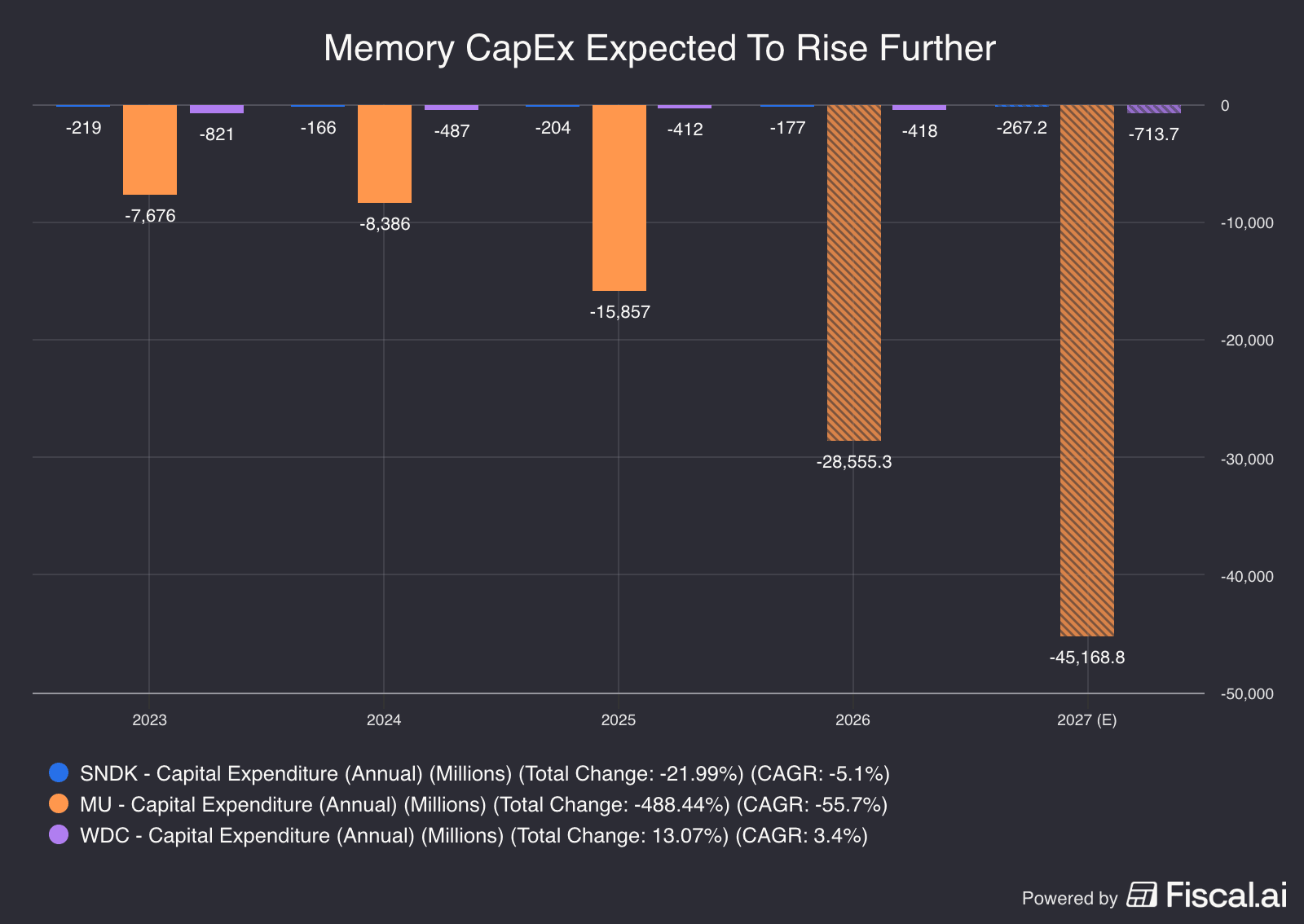
- Memory firms are also investing in capacity expansion at a rapid clip.
Even as memory stocks have pulled back, the companies are signaling even greater confidence.
SanDisk on Wednesday added a handsome $14 billion to its share buyback authorization, taking the total exercisable limit to $15.5 billion. The chipmaker, which along with Micron is at the center of a memory boom, said its sales rose 372% to $8.97 billion, beating Wall Street’s expectation.
Western Digital is fast exercising a $4 billion buyback plan it approved in February. Micron has been more restrained due to a limit on buybacks as part of its receiving grants from the U.S. government under the CHIPS Act, which lifts in December.
UBS recently said that Micron might announce a towering buyback then and could end up repurchasing more than 40% of its shares by 2026.
AI Boom Is Generating Record Cash For Memory Makers
The race to buy back company stock comes in the backdrop of surging memory sales, which have resulted in record free cash flows. Micron, SanDisk and Western Digital together reported $25.9 billion in free cash flow in the last reported quarter (Micron’s quarter ended in May, for the others June), up nearly three times from $9.5 billion in the sequentially prior quarter.

Note: The chart denotes quarters as per the calendar year.<
FCF for Micron and Western Digital are expected to rise in the coming quarters. Part of that is earmarked for capacity expansion.
Memory Capacity Expansion
Micron and Sandisk are both expanding manufacturing to meet AI-driven memory demand, but with different approaches.
Micron has committed to invest more than $250 billion in the U.S. through 2035, anchored by new DRAM fabs in Boise, Idaho and Clay, New York, while also expanding its Manassas, Virginia facility and recently breaking ground on a $24 billion NAND fabrication plant in Singapore.
The company is also adding manufacturing capacity in Taiwan following its acquisition of PSMC’s P5 fab.
Sandisk is not building greenfield fabs on its own but is deepening its long-standing manufacturing partnership with Kioxia in Japan, extending their joint venture at the Yokkaichi and Kitakami NAND plants through 2034. As part of the deal, Sandisk will pay $1.165 billion between 2026 and 2029 to secure manufacturing services and supply.
The other part of the FCF is expected to go into buybacks. CEO David Goeckeler said SanDisk is focused on building durable free cash flow while reducing the historical cyclicality of the NAND market through long-term customer agreements.
“Our technology and products are well positioned to create value for our customers and generate growing and durable free cash flow,” he said in the earnings statement.
To be sure, SanDisk’s guidance came below analysts’ high expectations, causing the stock to plummet to nearly 9% in overnight trading. Still, memory demand is exceptionally high.
Memory Demand Robust, But Stocks Turn Weak
Elon Musk on Tuesday said memory demand is not growing at 20% a year, which would already be high for the segment, but is instead rising 200% or more year over year, adding that such dynamics naturally position for a sharp price increase.
Still, memory stocks have tapered off of late, with investors booking profits after sharp rallies until June. Micron stock plunged 29% in July, marking its worst monthly performance since June 2005. SanDisk declined 47% last month.
The selloff presents a compelling opportunity for the companies to buy back their stock. It also signals that they expect their business and shares to go to greater heights.
On Stocktwits, the retail sentiment was ‘extremely bullish’ for SNDK and WDC, and ‘neutral’ for MU.
For updates and corrections, email newsroom[at]stocktwits[dot]com.<
Stay updated with all the latest Business NewsShare Market NewsIPOsGold PriceDA Hike8th Pay CommissionAsianet News Official App