Scott Bessent Says US Bonds Are ‘Best Performing’ As 10-Year Treasury Yields Touch 2007 Highs — Do Bond-Market Data Back Him Up?

Synopsis
In an interview with CNBC on Monday, Bessent said the U.S. bond market “is the most resilient in the world,” adding that it will have been “the best performing bond market” this month.
- Meanwhile, the U.S. 10-year Treasury yield has climbed to 4.784% at the time of writing, the highest since April 2007.
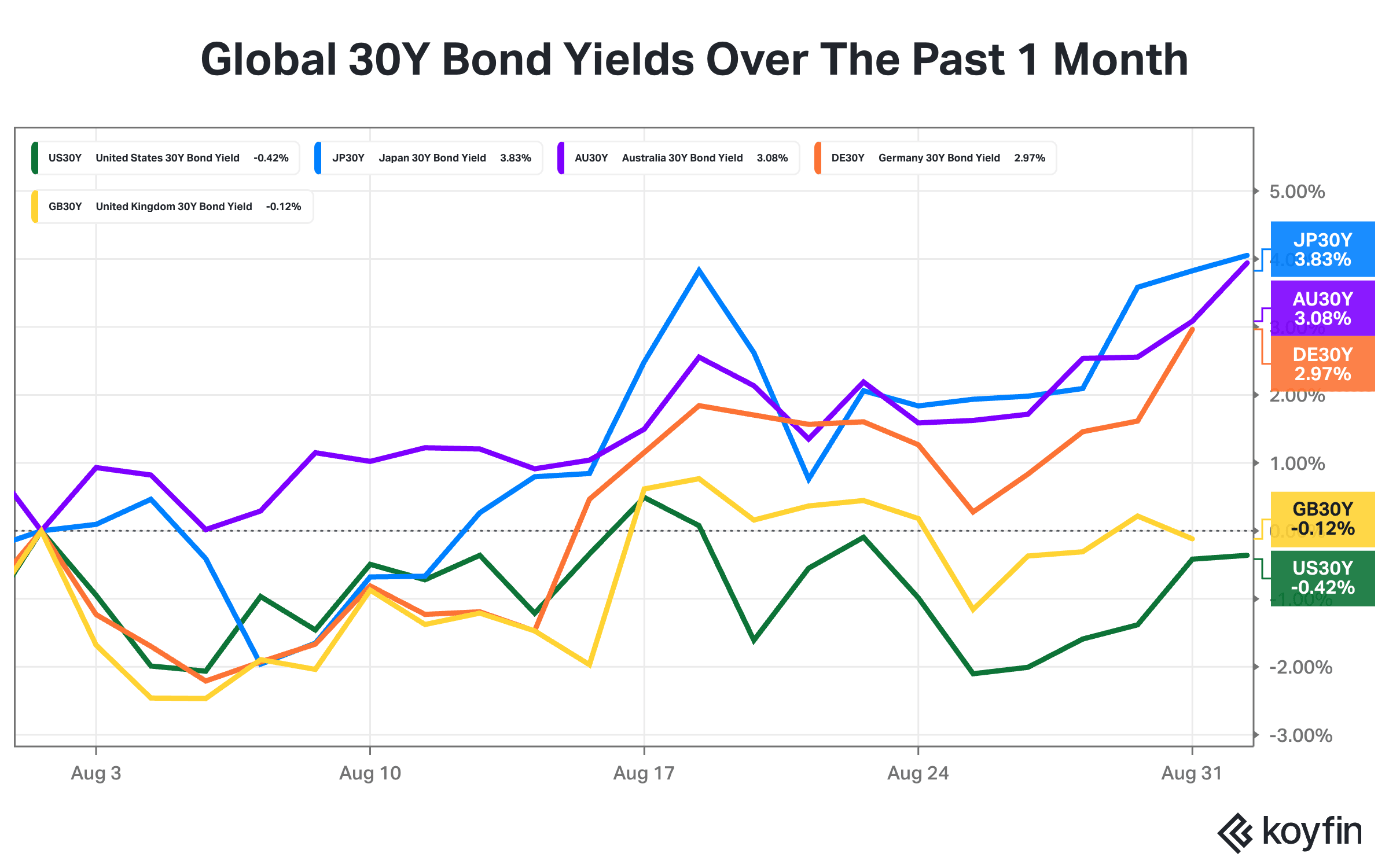
- Data from Koyfin shows that Japan’s 10Y yields provide the best returns over the past month, while the U.S. has lagged behind its global peers.
- Yardeni research in a post on Monday said that while the U.S. debt levels are “undoubtedly concerning,” the analyst said that the 10Y yield “is currently well below nominal GDP.”
U.S. Treasury Secretary Scott Bessent claims that the U.S. bond market is the “best performing” globally even as the 10-year Treasury yield has climbed to 4.784% at the time of writing, the highest since April 2007.
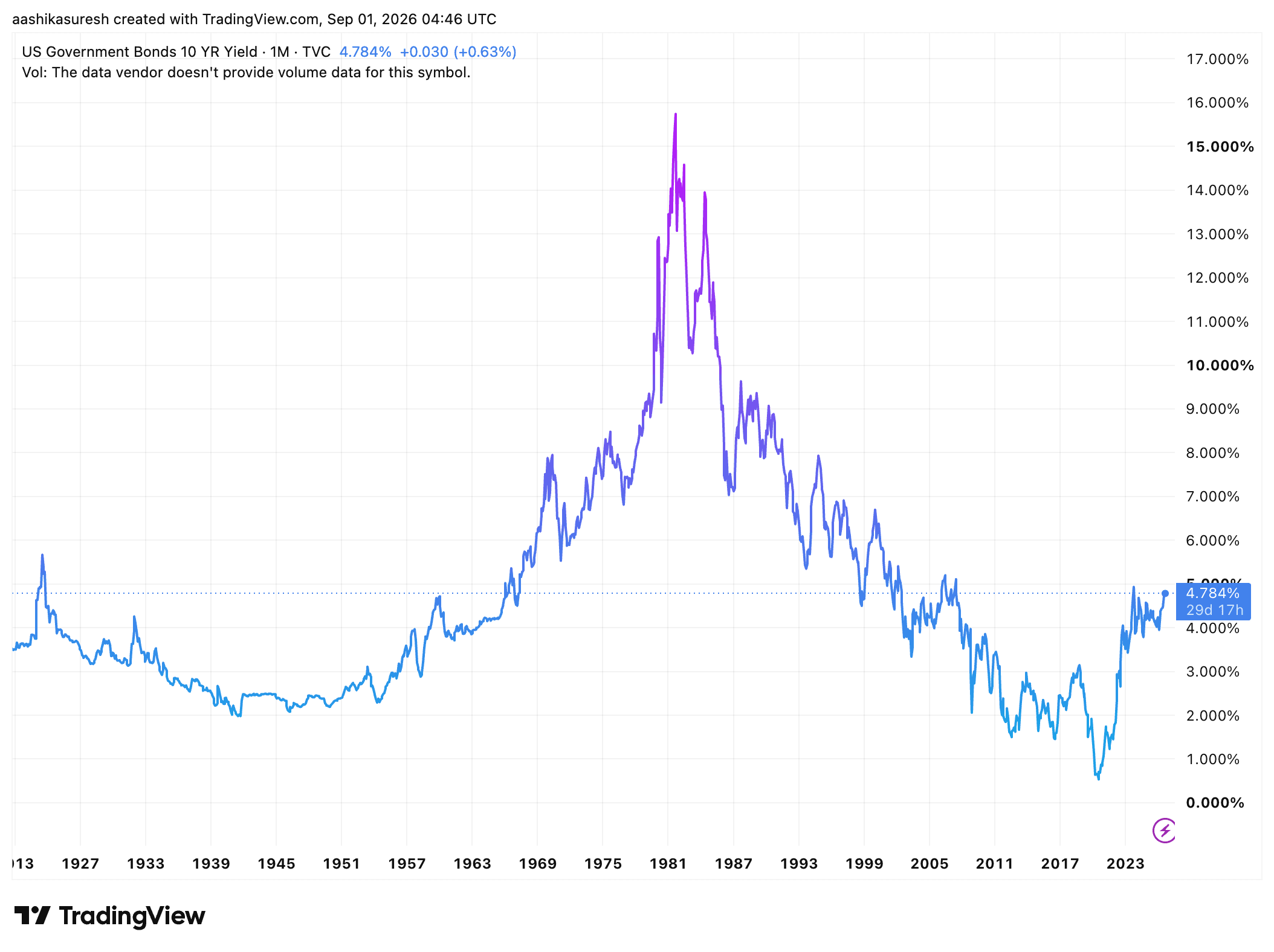
In an interview with CNBC on Monday, Bessent said that the U.S. bond market “is the most resilient in the world,” adding that it will have been “the best performing bond market” this month.
“The 30-year yield is down. The 10-year, the yield is flat. No other major bond market can say that,” he said. ”And if there were a problem in the U.S. bond market, Sara, then people would be selling U.S. bonds and buying other countries’ bonds. But we are the best-performing market.”
Bond Markets: What Does The Data Say?
Data from Koyfin shows that Japan’s 10-year yields provide the best returns over the past month, while the U.S. has lagged behind its global peers.

Meanwhile, the 30-year Treasury yields tell a similar story.
Despite the U.S. Treasury announcing in August that it is doubling its long-term debt buyback operations from $2 billion to at least $4 billion per transaction to improve market liquidity by Sept. 9, yields have climbed higher.
“12 days since U.S. Treasury intervention in the bond market was announced and yields are up to a new 19-month high,” market commentator The Kobeissi Letter said in a post on X, adding that “The bond market appears to be completely ignoring the U.S. Treasury. We simply cannot afford the 10Y Yield at 5%+.”
Why Are US Bond Yields Rising?
At the Jackson Hole symposium, Federal Reserve Chair Kevin Warsh struck a hawkish tone, emphasizing that inflation remains above the Fed’s 2% target and that recent progress has not been sufficient. His remarks increased expectations for a September rate hike, pushing Treasury yields higher as markets priced in a greater likelihood of tighter monetary policy.
According to data from CME FedWatch, the probability for a rate hike in September is at 66.4%, up from 41.4% a week ago.
The escalating conflict between the U.S. and Iran as the war stretches into its seventh month has pressured global oil prices and, in turn, further stressed bond markets. Meanwhile, U.S. gross national debt surpassed the $40 trillion threshold for the first time in August.
What Are Analysts Saying About The Bond Market?
Economist Peter Schiff raised concerns over rising yields in a post on X, saying, “The yield on the 10-year Treasury is now 4.78%, the highest since 2007. The high from 2006 was 5.15%. Once that's taken out, the next target is the 1999 high of 6.44%, then the 1994 high of 8.03%. In 1994 the national debt was well under $5 trillion. Now it's over $40 trillion!”
Bank of America rate strategists Meghan Swiber and Eleanor Xiao reportedly said in a note published Monday that despite the Treasury buybacks and other recent policy actions, “investors remain reluctant to add duration.” According to a Bloomberg report, the strategists believe a shrinking official-sector bid leaves the market increasingly dependent on price-sensitive private demand to clear ongoing Treasury supply.
However, like Bessent, some analysts believe the U.S. is still not in a debt crisis. Yardeni research in a post on Monday said that while the U.S. debt levels are “undoubtedly concerning,” the analyst said that the 10Y yield “is currently well below nominal GDP.”
The firm also said, “The Bond Vigilantes have been stirring lately, but the 10-year Treasury bond yield remains between 4.00% and 5.00%. We've contended that this range is the ‘old normal,’ i.e., the same range as in the years from before the Great Financial Crisis to the Great Virus Crisis (chart). This suggests the economy is back to normal and growing at a solid pace.”
Bond ETFs: Does Retail Feel Confident?
The iShares 10-20 Year Treasury Bond ETF (TLH), which tracks U.S. government bonds with maturity dates between 10 and 20 years, was down 0.62% overnight amid ‘neutral’ sentiment.
The iShares 20+ Year Treasury Bond ETF (TLT) was down 0.84% with sentiment dipping to ‘neutral’ from ‘bullish’ over 24 hours.
The iShares U.S. Treasury Bond ETF (GOVT), which is a basket of debt multiple-term securities issued by the U.S. government, was down 0.07% amid ‘bearish’ sentiment.
One user said, “$SPY $QQQ $DIA $IWM $TLT A 5% ten year yield simply does not work with overvalued equities. The market is doing a good job of ignoring high yields, but eventually reality will deliver a hard check.”
Another user said, “$TLT imagine buying usa bonds, the country its collapsing.”
Meanwhile, the SPDR S&P 500 ETF (SPY) and the Invesco QQQ Trust (QQQ) were trading lower at the time of writing, while the SPDR Dow Jones Industrial Average ETF Trust (DIA) was climbing higher.
For updates and corrections, email newsroom[at]stocktwits[dot]com.<
Stay updated with all the latest Business NewsShare Market NewsIPOsGold PriceDA Hike8th Pay CommissionAsianet News Official App