Is This The Big Tech Resurgence Investors Have Been Waiting For? AI Chip Stocks Step Back, Mag 7 Steps Up In July
Synopsis
Ahead of the Q2 earnings season, tech market trends are shifting.
- The selloff following Samsung's blowout report is a clear sign that investors see semiconductor rallies approaching their peak.
- Big Tech stocks are outperforming in July as memory stocks pull back from last month's highs.
- Based on forward P/E ratios and analyst upside projections, Nvidia and Microsoft stand out as the most compelling bets in the “Magnificent Seven.”
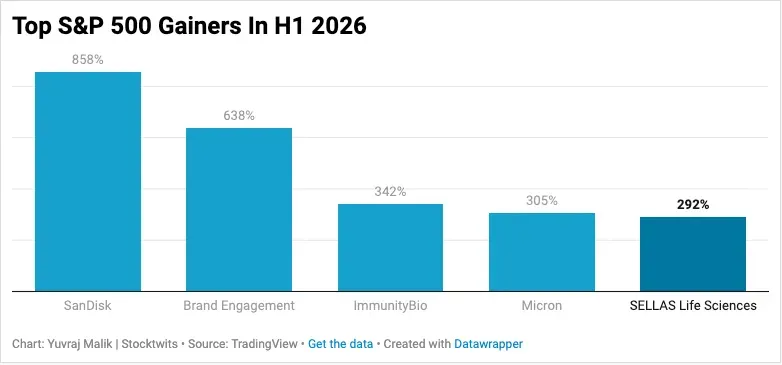
As the first full week of the second half of 2026 draws to a close, with earnings season just around the corner, a meaningful shift is taking shape in the tech market. Chip stocks that had surged sharply, including Intel, SanDisk, and Micron, have pulled back from last month's peaks, while long-underperforming Big Tech names have finally started to climb. Nvidia posted its best single-day gain in a month on Wednesday, and Apple shares are up over 8% in July alone, more than the stock's gain in the entire first half of the year.
Samsung's Earnings Report — The Turning Point?
The shift has a clear catalyst. Samsung, one of the world's largest chipmakers, reported that second-quarter revenue would more than double and profit would rise nearly 19-fold, yet shares fell sharply, dragging down peer SK Hynix and chip- and AI-linked stocks globally.
If the post-earnings drops following Nvidia's and Micron's most recent quarterly results hadn't already made the point, Samsung's reaction did. Investors appear to have concluded that the semiconductor rally — particularly in the memory space — has hit a ceiling, and that now is the time to take profits. Chip and memory companies will continue to mint money as AI development and data center construction accelerate, but the argument is that most of that growth is already priced in.
Tech Rotation
Some traders believe a major tech rotation is underway. Money is moving back into Big Tech, energy and materials, and finance equities, from trending sectors like memory chips or the newly listed SpaceX stock.

High Growth, Attractive Valuations Drive Investors Back To Big Tech
Big Tech had a difficult first half, weighed down by AI-related fears, geopolitical volatility, and investors chasing higher upside in emerging names. But sales and profits at the largest companies have continued to grow at a healthy pace despite the headwinds, and analysts are now arguing the market has underestimated the durability of that strength, particularly at Microsoft and Nvidia.
Bank of Americ set a $350 price target on Nvidia, forecasting nearly 80% upside. Among the “Magnificent Seven,” analysts see the highest implied upside in Nvidia and Microsoft, per Koyfin, and on a forward-earnings basis, both look relatively inexpensive within the group.
Moreover, Meta trades at the lowest forward multiple in the basket at 18.4x, followed closely by Nvidia at 20.5x and Microsoft at 20.7x — a notable contrast with Tesla's 178x, which reflects how much of the bull case remains speculative.
| Company< | 12-Month Forward P/E< | Analysts’ Upside Projection< |
| Microsoft | 20.7 | 40% |
| Amazon | 29.1 | 28% |
| Apple | 34.4 | 1% |
| Meta | 18.4 | 37% |
| Nvidia | 20.5 | 48% |
| Alphabet | 28.7 | 19% |
| Tesla | 178 | 8% |
Source: Koyfin<
Macro Backdrop, Retail View
The broader macro backdrop matters too. While recent reports suggest the U.S.-Iran ceasefire could officially unravel after weeks of back-and-forth between the two sides since it was first announced last month, market volatility has eased, and oil prices have steadily retreated since April, returning to roughly where they were before the conflict began.
On Stocktwits, retail sentiment was ‘bullish’ for META, NVDA, and TSLA, and ‘bearish’ for AAPL, AMZN, GOOGL, and MSFT. Over the past week, the message volume for Nvidia and Apple rose by 66% and 40%, respectively, while the message volume for all other Mag7 tickers dropped.
For updates and corrections, email newsroom[at]stocktwits[dot]com.<
Stay updated with all the latest Business NewsShare Market NewsIPOsGold PriceDA Hike8th Pay CommissionAsianet News Official App