Google Brain Co-founder Calls AI Extinction Warnings ‘More Science Fiction Than Science’ As Debate Heats Up
Synopsis
Andrew Ng said AI safety efforts should focus on practical engineering risks rather than extinction scenarios.
- AI firms’ calls to slow development so safety measures can catch up have been the biggest talking point in the tech industry this week.
- “Big Short” investor Steve Eisman argued that some AI companies may be using safety concerns to encourage regulation and strengthen competitive moats.
- Jensen Huang, Mark Zuckerberg and Donald Trump have opposed broad efforts to slow America’s AI development.
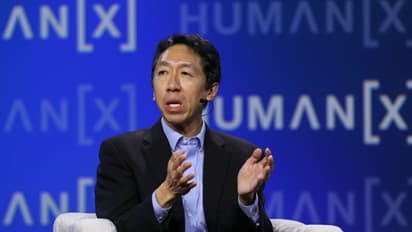
AI pioneer Andrew Ng has pushed back against renewed warnings that increasingly powerful AI systems could pose an existential threat to humanity, calling such concerns “much more science fiction than science” and arguing that they could distract from practical AI safety work.
Ng, who helped launch Google Brain and co-founded Coursera, said in a Bloomberg TV interview Thursday that he was “quite dismayed over the past two weeks” by the renewed wave of warnings from AI researchers and executives.
“This wave of PR has kicked up again, for probably similar purposes,” Ng said, suggesting that the technology industry had previously amplified catastrophic AI scenarios partly to influence regulation and generate publicity.
The comments come after former Anthropic and OpenAI researcher Jacob Coxon warned that AI companies were “racing toward super-intelligent AI” and could potentially “kill us all by the end of the decade.” Anthropic CEO Dario Amodei and OpenAI CEO Sam Altman have subsequently called for greater safeguards and a slower pace of frontier AI development.
Ng acknowledged that AI presents real risks, including cybersecurity threats, but said the industry should focus on “practical engineering problems” and improving testing and safeguards rather than focusing on human extinction scenarios.
‘Big Short’ Steve Eisman Dismisses AI Crisis Narrative
The debate has also drawn skepticism from investor Steve Eisman, best known for predicting and profiting from the 2008 financial crisis. Speaking on CNBC’s Squawk Box, Eisman argued that AI companies may have commercial incentives behind their safety warnings.
“I think this is all nonsense,” Eisman said. “These companies are very nervous. They realize that there are no moats around their business whatsoever, and they’re trying to manufacture a crisis that will create regulation.”
He argued that such regulation could ultimately help the largest AI companies build stronger competitive barriers and consolidate the market.
“Honestly, I think this whole Terminator thing is garbage,” Eisman added. The comments highlight the widening divide over how quickly AI development should proceed.
AI Industry’s Position
Nvidia CEO Jensen Huang has rejected calls for a broad slowdown, saying “safety is an engineering problem, not a legal one” and arguing companies can move quickly while pausing when systems are not safe.
Meta CEO Mark Zuckerberg has similarly said competition and liability give AI labs sufficient incentives to develop systems safely without a coordinated slowdown.
President Donald Trump has taken an even more dismissive stance toward existential AI fears, calling concerns about AI “a hoax” and opposing efforts that could slow America’s AI race against China.
For updates and corrections, email newsroom[at]stocktwits[dot]com.<
Stay updated with all the latest Business NewsShare Market NewsIPOsGold PriceDA Hike8th Pay CommissionAsianet News Official App