'Big Short' Investor Steve Eisman Says AI Industry 'Dodged A Big Bullet' With Jensen Huang's Return, But Only 'For Now'
Synopsis
In an interview with CNBC, Eisman said he expects Nvidia to "double down" on circular financing with Jensen Huang’s return.
- Eisman said risks remain, including heavy capital needs and a price war among Anthropic, OpenAI and a Chinese open weight model.
- According to him, Huang is not indispensable to the company and Nvidia could have continued operating under a different leader.
- He stated that he has lowered his portfolio risk and is uncertain about how to allocate his capital in the current market.
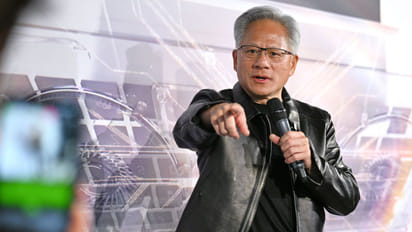
‘Big Short’ investor Steve Eisman said on Tuesday that the AI industry "dodged a big bullet up for now" after Nvidia (NVDA) reinstated Jensen Huang as CEO, but warned that the underlying risks facing the AI trade remain unresolved.
In an interview with CNBC, Eisman compared the AI trade to a patient. "The patient was dying and they resuscitated it," he said. "That doesn't mean that the patient doesn't still have major risks.”
NVDA stock dropped over 6% in morning trade after an over 30% rally in the previous session. The stock had surged after Huang's return eased investor concerns surrounding the CEO transition.
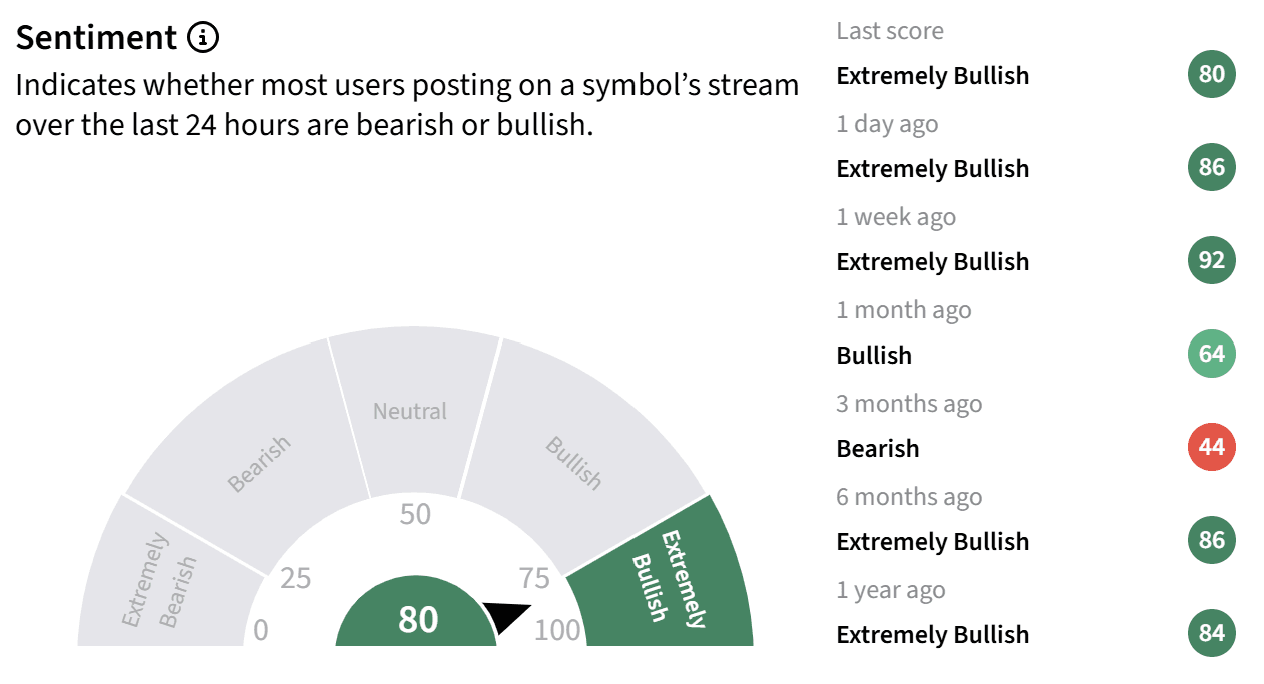
On Stocktwits, retail sentiment around the AI bellwether trended in ‘extremely bullish’ territory over the past day, accompanied by ‘extremely high’ levels of chatter.
Huang's Return Adds More Than $1 Trillion To Nvidia's Market Value
"Yesterday the market had a big rally because he came back," Eisman said. The jump in Nvidia’s share price added more than $1 trillion to its market capitalization, which is more than the gross domestic product (GDP) of countries like Taiwan, Belgium and Argentina.
Eisman is known for betting against subprime mortgages before the 2008 financial crisis. He is also the host of The Real Eisman Playbook podcast and a former senior portfolio manager at Neuberger Berman.
"The entire economy of the United States is dependent upon this [AI]. Period. It's one trade," he said. According to him, Huang is not indispensable to the company and Nvidia could have continued operating under a different leader.
AI's Capital Intensity, Price Wars Haven't Gone Away
Eisman said the risks that existed before Huang's departure remain, pointing to the industry's heavy capital requirements and intensifying competition among AI developers.
"The business is too capital intensive. There's a price war going on now between Anthropic, OpenAI, and the Chinese open weight model. All that is still true, but the industry dodged a big bullet up for now," he said.
He also questioned the durability of competitive advantages in the AI model business. Large language models (LLMs) "don't have any moats," Eisman said, raising concerns about how easily competitors could challenge established players and put pressure on pricing.
Nvidia's Jensen Huang To ‘Double Down’ On AI Financing Deals After Comeback
Eisman said he expects Huang's return to strengthen Nvidia's involvement in financing the broader AI ecosystem, particularly through investments in neocloud companies and AI developers. He stated Huang would likely "double down" on circular financing, which he expects to grow.
According to him, the ecosystem could have unwound if Huang had remained out of the picture, but his return has eased that risk for now. He nevertheless expects the issue to attract congressional scrutiny and said the story is “far from over.”
The scale of Nvidia’s investments and commitments has intensified debate about whether the company is helping finance demand for its own products. Nvidia has pushed back against the circular-financing characterization, stating that its investments are strategic and that customers pay for its products under normal commercial terms.
Eisman has not always been outright bearish on Nvidia. In March, he praised the company's 73% annual revenue growth as "incredible." However, he has also flagged customer concentration, pointing to the share of receivables tied to a small group of customers as a potential warning sign rather than an immediate crisis.
Wall Street Backs Huang's Return, But Not Everyone Is Convinced
Most Wall Street analysts have welcomed Huang's return, viewing it as a positive for Nvidia and the broader AI supply chain.
Yorkville Ives & Co. partner and senior managing director, Dan Ives, raised his Nvidia price target to $250, with a bull-case scenario of $300. He said the board had little choice but to bring Huang back, calling it the necessary move for the U.S. technology sector and global economy.
Meanwhile, Citi raised its price target to $240 from $225, saying Huang's reinstatement removed a key overhang tied to the CEO transition. Melius upgraded Nvidia to ‘Buy’ with a $220 price target, saying its longer-term concerns had been "significantly alleviated."
Mizuho, which has a ‘Buy’ rating and a $220 price target, called Huang's return a "major positive sign" for the supply chain, while BMO maintained its ‘Outperform’ rating and $240 target.
Skepticism remains elsewhere. Michael Burry, another investor featured in ‘The Big Short,’ called Nvidia “weaker, more craven” after news of Huang’s comeback surfaced.
Eisman, meanwhile, said he has reduced risk in his portfolio and is reluctant to make large bets while the market remains unsettled. "I really don't know what to do right now," he said. "I don't want to make a massive investment because something else could happen."
The broader market was mixed on Tuesday morning. The SPDR S&P 500 ETF (SPY) fell 0.59%, the Nasdaq-100 tracking Invesco QQQ Trust (QQQ) dropped almost 2%, while the SPDR Dow Jones Industrial Average ETF (DIA) edged 0.19% higher.
Read also: Dan Ives Calls Jensen Huang's Return To Nvidia The Start of ‘AI Godfather Part 2,’ But Warns Of More ‘Noise’ Ahead
For updates and corrections, email newsroom[at]stocktwits[dot]com.<
Stay updated with all the latest Business NewsShare Market NewsIPOsGold PriceDA Hike8th Pay CommissionAsianet News Official App