Why Nepal Ended Everest's $4,000 Trash Deposit Scheme After 11 Years
Synopsis
Nepal has scrapped Mount Everest’s $4,000 rubbish deposit scheme after climbers found ways to cheat it. Introduced in 2014, the plan failed to reduce waste at higher camps. Authorities are now replacing it with a non-refundable clean-up fee.
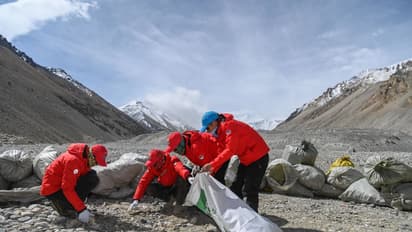
Mount Everest, the world's highest mountain, is still struggling with a huge rubbish problem. A clean-up scheme introduced more than a decade ago to reduce waste has now been scrapped after authorities admitted that climbers found ways to cheat the system, according to a report by Daily Mail. The scheme, launched in 2014, forced climbers to pay a deposit of $4,000 (about £2,964 or ₹3,65,000). They would only get their money back if they brought at least 18 pounds (8 kilograms) of rubbish down from the mountain. The idea sounded simple and effective. But after 11 years, officials now say the rubbish problem has 'not gone away'.
How the Everest rubbish deposit scheme worked
Under the programme, anyone climbing beyond Everest Base Camp had to take part. Climbers were expected to return with rubbish collected from the mountain when they came down. The scheme was introduced to clear waste left behind by earlier climbers. This included empty oxygen bottles, torn tents, food packaging, broken climbing gear and even human waste. Nepalese authorities hoped the money would push climbers to take responsibility for the mess left on the mountain over decades of expeditions.
How climbers cheated the system
Over time, officials realised many climbers were not following the spirit of the rule. Instead of bringing rubbish down from the higher camps, where most of the waste lies, climbers collected rubbish from lower camps, where waste is easier to reach and lighter to carry. This allowed them to meet the 8kg requirement without cleaning the most polluted areas of the mountain. Speaking to the BBC, Tshering Sherpa, Chief Executive Officer of the Sagarmatha Pollution Control Committee (SPCC), explained the problem clearly.
“From higher camps, people tend to bring back oxygen bottles only,” he said. “Other things like tents and cans and boxes of packed foods and drinks are mostly left behind there. That is why we can see so much waste piling up.”
No monitoring at higher altitudes
One major weakness of the scheme was the lack of monitoring. According to Sherpa, there was only one checkpoint, located above the dangerous Khumbu Icefall. Beyond that point, there were no officials watching what climbers threw away or carried back.
“Apart from the checkpoint above the Khumbu Icefall, there is no monitoring of what climbers are doing,” he said.
This made it easy for climbers to dump rubbish at higher camps without fear of punishment.
Everest tourism brings money and 'mountains of waste'
Mount Everest lies inside Sagarmatha National Park, in Nepal's Khumbu region. Tourism in the park has increased for years, but numbers rose sharply between 2014 and 2017, when visitor numbers doubled in just three years. While tourism brings millions of pounds to the Nepalese government and local communities, it also brings huge amounts of waste. Every climbing season, shocking images show camps covered in torn tents, broken equipment, food cans and human waste.
How bad is the rubbish problem on Mount Everest?
There are no official figures for the total amount of rubbish still on Everest. The SPCC only records how much waste is collected each year. However, research gives a worrying picture. A 2020 scientific paper estimated that around 50 tonnes of solid waste may have been left on Everest over the last 60 years. In 2022, the Nepalese Army said it removed 34 tonnes of waste from Everest and nearby mountains. This was higher than the 27.6 tonnes collected in 2021. Key facts about Everest waste:
- 900 to 1,000 tonnes of solid waste enters Sagarmatha National Park every year
- Around 50 tonnes of waste is estimated to be above Everest Base Camp
- One to three tonnes of human waste is left between Camp One and Camp Four
- Everest Base Camp alone produced 75 tonnes of waste in Spring 2023
- Around 20 tonnes of human waste is dumped into nearby pits every year
- There are 100 to 120 open rubbish pits inside the national park
Climbers create more waste than they return
Officials say the scheme failed for another reason: climbers create more waste than they bring back. According to Tshering Sherpa, an average climber produces about 12kg (26 pounds) of waste during six weeks of acclimatisation and climbing. This means even those who returned the required 8kg were still leaving behind rubbish overall. Despite warnings, most climbers still received their deposit back during the 11-year programme.
New rule: Non-refundable clean-up fee introduced
To tackle the problem more seriously, Nepalese authorities have now introduced a new rule. Instead of a refundable deposit, climbers will pay a non-refundable clean-up fee of around $4,000 (£2,964). This money will go into a dedicated fund to support cleaning and monitoring efforts on the mountain. Officials plan to set up a new checkpoint at Camp Two and deploy mountain rangers who will travel further up Everest to check waste disposal.
Sherpa community welcomes the change
Local Sherpa leaders say they have long questioned the old system. Mingma Sherpa, chairperson of the Pasang Lhamu rural municipality, told the BBC the community had raised concerns for years. “We had been questioning the effectiveness of the deposit scheme all this time because we are not aware of anyone who was penalised for not bringing their trash down,” he said. He added that the new system would finally create a proper fund for clean-up work.
"And there was no designated fund, but now this non-refundable fee will lead to creation of a fund that can enable us to do all these clean-up and monitoring works," he added.
Mount Everest remains one of the world’s most powerful symbols of adventure and human ambition. But it is also becoming a symbol of environmental damage. Officials hope the new fee and tighter monitoring will finally slow the build-up of rubbish. Whether it works or not, one thing is clear: the world's highest mountain can no longer carry the weight of careless climbing.