World Bank: India can unlock AI benefits with controlled data access
Synopsis
World Bank's Neelkanth Mishra says India can unlock AI's economic benefits by making enterprise data accessible while owners retain control, citing that 99% of corporate data is untouched and praising India's DEPA as a model for this.
Unlocking Enterprise Data: Key to India's AI Growth
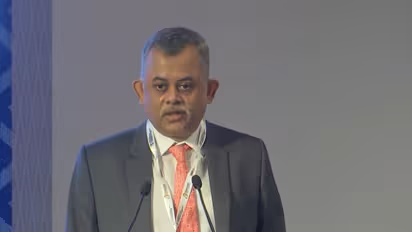
India can unlock a larger share of the economic benefits from artificial intelligence by making enterprise data more accessible while ensuring that data owners retain control over its use, said Neelkanth Mishra, Executive Director at the World Bank Group. Speaking at the IndiaAI Mission and World Bank Group's India launch of the World Development Report 2026, Mishra said 99 per cent of data held by corporations remains untouched by AI, making access to enterprise data a key challenge that India needs to address as AI adoption expands.
"99% of the data in corporations is untouched by AI," Mishra said, adding that companies are reluctant to share their data with AI models because "once you've shared it, it's gone". He described this as a "complete market failure" in the data market and said India's data architecture, including the Data Empowerment and Protection Architecture (DEPA), could help address the problem by enabling controlled data sharing.
India's Data Architecture as a Solution
"India's DPDP law, the data architecture which is based on DEPA... is a remarkable model for enabling data sharing where the owner of the data still retains control even as it makes it available for certain usage," he said.
World Bank Report's Advice for Developing Nations
Mishra's comments come as the World Development Report 2026 calls on developing countries to focus on adapting existing AI tools to local needs rather than spending heavily on building advanced systems from scratch. The report has highlighted applications such as AI-supported weather forecasts reaching more than 30 million farmers in India.
Future Outlook and Cautious Optimism
Mishra also cautioned against assuming that the current shortage of computing capacity would persist indefinitely or that value from AI would permanently remain concentrated among model developers and other upstream companies. "I think it's wrong to assume that the shortages of silicon will persist forever," he said, arguing that computing models and technologies would continue to evolve. "Whatever is the current stage, don't project it forever."
He said this should give India confidence that it would not necessarily become an "AI loser", while stressing that the country still has significant work to do in data access, infrastructure and other areas needed to expand AI adoption. "There is a lot of hard work to be done," Mishra said, adding that the World Development Report's recommendations could help countries "break out of some of the low income traps that we are stuck in." (ANI)
Stay updated with all the latest Business NewsShare Market NewsIPOsGold PriceDA Hike8th Pay CommissionAsianet News Official App