West Asia crisis: Risks loom for India if Strait of Hormuz is hit
Synopsis
Markets are resilient to the West Asia crisis for now, but a Jefferies report warns of risks for energy-dependent India. The situation is fragile, hinging on continued energy flows through the Strait of Hormuz, with any closure threatening growth.
The ongoing West Asia crisis has not yet triggered a sharp market correction, but risks to energy-dependent economies like India could intensify if disruptions in the Strait of Hormuz persist, according to a Jefferies report.
Why Markets Remain Resilient
The report notes that markets have remained relatively resilient despite escalating geopolitical tensions, highlighting that "markets have not corrected more given the historic newsflow in the Middle East."
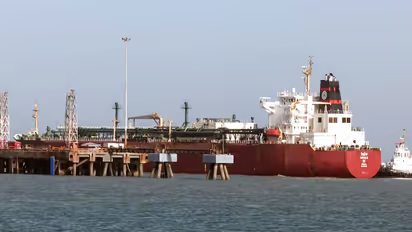
A key reason for the relative calm is continued energy flows through the Strait of Hormuz, which is critical for Asia, including India. The report highlights that "85 per cent of energy traffic through the strait is for Asia with China, India and South Asia accounting for around 60 per cent of the flows." This selective passage of ships by Iran has helped ease immediate supply concerns. As the report states, "Iran allowing selective passage of ships through the Strait of Hormuz... reduces the pressure on supply."
The Looming Threat of a Hormuz Closure
However, the report cautions that the situation remains fragile, especially for energy-importing economies. It warns that "the longer the Strait of Hormuz is closed, the more negative and prolonged the economic consequence." The report further emphasizes the fundamental linkage between energy and growth, noting that "economic growth is energy consumed," implying that any sustained disruption could directly hit growth trajectories of countries like India.
Geopolitical Shocks as Buying Opportunities
From a broader Asia perspective, the report suggests that geopolitical shocks have increasingly been treated by markets as temporary, with investors viewing such episodes as buying opportunities. It observes that "markets have become accustomed in recent years to such geopolitical events being a buying opportunity."
Vulnerability of Energy-Dependent Economies
While the report does not single out India in detail, the heavy dependence on Hormuz-linked energy flows implies vulnerability to oil price shocks and supply disruptions. At the same time, continued energy transit and market resilience suggest near-term stability, provided the conflict does not escalate into a prolonged blockade or wider military confrontation. The key risk trigger remains any sustained closure or escalation in the Strait, which could amplify inflationary pressures and weigh on growth across major Asian economies, including India. (ANI)
Stay updated with all the latest Business NewsShare Market NewsIPOsGold PriceDA Hike8th Pay CommissionAsianet News Official App