NALCO to invest Rs 30,000 crore in new smelter, power plant by 2031
Synopsis
State-run NALCO will invest around Rs 28,000-30,000 crore over 3-4 years for a new 0.5 MT aluminium smelter and a 1,000 MW captive power plant, aiming for completion by 2031, CMD Brijendra Pratap Singh announced.
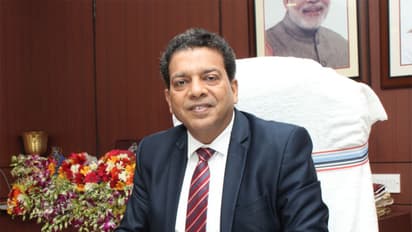
State-run National Aluminium Company Limited (NALCO) plans to invest around Rs 28,000-30,000 crore over the next three to four years to expand its aluminium production capacity through a new aluminium smelter and a 1,000 MW captive power plant, the company's Chairman and Managing Director Brijendra Pratap Singh told ANI on Tuesday.
"Our medium- and long-term priority is to set up a 0.5 million tonne aluminium smelter along with a 1,000 MW captive power plant. We are preparing the Detailed Project Report (DPR) this year. Next year we plan to complete the tendering process and begin groundwork, likely around August-September 2027," he told ANI in an exclusive interview. He further added that the company will try to complete both projects by the end of 2030 or in 2031. The investment will be around Rs 17,000 crore for the smelter and around Rs 10,000 crore for the power plant. "Overall, the investment will be somewhere around Rs 28,000-30,000 crore over the next three to four years," he said.
Sustainability Roadmap and Green Energy Goals
Outlining the company's sustainability roadmap, Singh said NALCO aims to meet 30 per cent of its total power requirement through green power by 2030 to reduce carbon emissions while balancing production costs.
"The biggest contributor to carbon emissions in aluminium production is power generation. We are targeting at least 30 per cent green power by 2030. Moving entirely to round-the-clock green power immediately is difficult because it costs around Rs 5.5-6 per unit, compared with our existing power cost of around Rs 3.15 per unit," he said. NALCO currently has 198 MW of wind power across four locations and 1 MW of solar capacity. The company is adding another 7 MW of rooftop solar, exploring floating solar projects and sourcing 150 MW of green power from Gridco during daytime, which is expected to reduce its carbon emissions by around 4-4.5 per cent.
Foray into Critical Minerals
On critical minerals, Singh said NALCO, through Khanij Bidesh India Ltd (KABIL), is advancing lithium exploration projects in Argentina. Invasive exploration is underway following completion of non-invasive exploration, and by October-November 2027 the company expects to know the quality of the lithium resource and whether commercial mining would be viable.
He added that NALCO is also working with the Bhabha Atomic Research Centre and Heavy Water Board for recovery of gallium from Bayer liquor and also working with CSIR-IMMT and NML Jamshedpur for recovery of rare earth elements like scandium from Red Mud.
Impact of Geopolitical Tensions on Costs
Referring to recent geopolitical tensions, Singh said higher prices of key raw materials such as caustic soda, calcined petroleum coke (CPC), furnace oil (HFO) and high-speed diesel (HSD) increased NALCO's production costs by around 10-15 per cent.
Although prices are now easing, he said the company's overall production costs are still expected to remain 5-10 per cent higher than last year.
Market Context and Expansion Rationale
The investment comes at a time when India's aluminium consumption is projected to rise from around 6.2-6.3 million tonnes currently to around 8 million tonnes by 2030.
Singh said India's primary aluminium production currently stands at around 4.3 million tonnes, with the gap between production and demand being met by secondary manufacturers using imported aluminium scrap. He said NALCO is expanding its aluminium production capacity from 0.46 million tonnes to 0.96 million tonnes, while other major producers are also increasing capacities.
Singh said strengthening India's aluminium recycling ecosystem would improve scrap availability and help secondary manufacturers bridge the demand-supply gap.
Immediate Capex and Ongoing Projects
As part of its immediate capital expenditure programme, Singh said NALCO's top priority is commissioning its fifth-stream alumina refinery, involving an investment of around Rs 5,700 crore, which will increase alumina production capacity from 2.1 million tonnes to 3.1 million tonnes. Around Rs 4950 crore has already been spent on the project.
The company is also developing the Potangi bauxite mine, with an investment of around Rs 2,000 crore, to supply ore to the expanded refinery.
Long-Term Raw Material Security
On long-term raw material security, Singh said NALCO has around 150 million tonnes of bauxite reserves at the Panchpatmali mines and another 110 million tonnes at Potangi, sufficient to support the expanded alumina refinery for the next 15-16 years.
He said the company has requested the Ministry of Mines and the Odisha government to consider giving preference to captive users while allocating future bauxite mines, while also participating in auctions to secure additional reserves.
Future Strategy and Corporate Structure
Singh also ruled out any merger or demerger plans, saying NALCO's focus remains on expanding its core aluminium business while evaluating opportunities to acquire critical mineral assets through auctions as part of its long-term diversification strategy. (ANI)
(Except for the headline, this story has not been edited by Asianet Newsable English staff and is published from a syndicated feed.)
Stay updated with all the latest Business NewsShare Market NewsIPOsGold PriceDA Hike8th Pay CommissionAsianet News Official App