India-US trade deal to match Bangladesh benefits for textiles: Goyal
Synopsis
Commerce Minister Piyush Goyal has countered concerns about the US-Bangladesh trade deal's impact on Indian textiles, assuring that India will also receive similar zero-tariff benefits under its own upcoming interim agreement with the US.
Commerce Minister Piyush Goyal on Thursday addressed concerns that the Indian textiles industry would be hit by duty differentials vis-a-vis Bangladesh after the neighbouring country signed a deal with the US. The US and Bangladesh signed an agreement on February 9, reducing reciprocal tariffs to 19 per cent from 20 per cent previously announced. Alongside, zero-tariff access for special textile and apparel products made with US cotton and man-made fibre was provided under the arrangement.
Goyal Counters Concerns, Reassures Industry
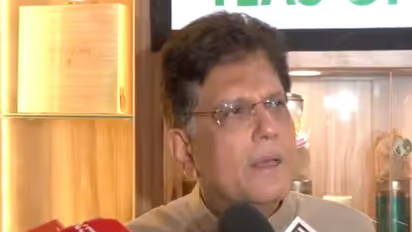
"India also has the same facility and India will also get it. Right now, our framework agreement is being made. When the interim agreement is finalised, then you will get to see this in the fine print," Piyush Goyal told reporters, as many in the Opposition have tried to corner the govermment.
"He (Rahul Gandhi) spread another lie in the Parliament that Bangladesh has got more benefits from the trade than India. Just as Bangladesh has a facility that if raw material is purchased from America, then if you process it and make cloth and export it, then it will be available at zero reciprocal tariff," the minister said, directly hitting out at the Leader of Opposition in Lok Sabha, Rahul Gandhi.
Rahul Gandhi, according to Piyush Goyal, should apologise to the farmers of India, fishermen, workers working in MSME and Vishwakarmas.
SBI Report on Potential Impact
According to a report from SBI Research, US imports around USD 7.5 billion of textile imports from India and around the same quantity from Bangladesh. "The recent trade deal between US-Bangladesh has reduced the tariffs on Bangladesh goods to 19 per cent. However, a certain clause that allows certain quantity of textile and apparel goods from Bangladesh imported at zero reciprocal tariff rate depending on the quantity of cotton and manmade fibre textile inputs imported from US has raised suspicion that it can harm Indian textile exporters as Bangladesh's imports could become more competitive for the US," the report read.
India-US Trade Deal Progress
India and the US also have finalized an interim trade deal framework last week, whose fine print is expected sometime in March. Both countries decided to address non-tariff barriers affecting bilateral trade.
On February 2, a phone call between Prime Minister Narendra Modi and US President Donald Trump led to the announcement of the conclusion of negotiations on the much-awaited trade deal. The Trump administration had imposed tariffs on major exporters to the US, including India. There was a 50 per cent tariff on goods from India entering the United States since August 2025. The tariffs have now been reduced to 18 per cent following the leaders' recent phone call.
The BTA, formally proposed in February 2025, seeks to more than double bilateral trade, from the current USD 191 billion to USD 500 billion by 2030. (ANI)
Stay updated with all the latest Business NewsShare Market NewsIPOsGold PriceDA Hike8th Pay CommissionAsianet News Official App